

What Would Happen If Oxygen Just Disappeared?

Oxygen is vitally important to us; not just because we need to breath it but because of how versatile and widely used it is:
• Everyone would get sunburnt as oxygen makes up the ozone and normally helps to block out UV light.
• The sky would get darker during the day if there were fewer oxygen molecules to scatter blue light; the sky would appear less blue and more black.
• All engines that use internal combustion would stop working as oxygen is fundamental for combustion.
• All pieces of untreated metal would suddenly weld to one another, as usually the oxidation layer on the metal prevents this.
• Your inner ear would explode as you would lose 21% of the air pressure in an instant, as if you had been suddenly transported to high altitude.
• Any building made of concrete would crumble as oxygen helps to bind all concrete structures.
• Water is one third oxygen, without it the Hydrogen becomes a free gas and expands, thereby destroying all living cells and evaporating the oceans.
• The earth below us would disappear and we would free fall. The earth's crust is made up of oxygen, about 45% so without it the majority of the earth's crust would disappear from beneath our feet.
References: http://www.breathing.com


Tips On Using Supplemental Oxygen With Children
Many babies and young children require oxygen treatment at home, and depending upon the condition this could be for a short period of time or long-term. Here are some tips to help make life a little easier when dealing with oxygen at home.

The nasal cannula that supplies the oxygen to their nose requires fixing securely to the child's face to ensure that the tubing does not become dislodged. Keeping the tubing fixed to a child can be difficult. You can use special cushioning plasters to have under the tubing so that it does not rub the child's face and the fixing tape can be applied over the tubing and stick to these cushioning plasters. Also when you need to re-secure the tubing it means that you won't have to keep pulling tape directly off of the child's skin.
However if your child requires oxygen overnight it is best to use tape directly onto the skin to ensure more secure fixing to the skin in case they move in their sleep and the tubing moves. You can wet the tape warm water or baby lotion though using tissue or cotton wool so that the tape can be removed more easily without pulling your child's skin or causing them discomfort.
Older children may not need the tubing to be taped as the tubing can be looped behind their ears abd the toggle pulled comfortably taught behind their head.
If your child has sensitive skin there are alternative tapes that can be used if your child has eczema or other sensitive or allergic reactions to the normal tape.
The use of petroleum-based creams such as Vaseline around the nose should be avoided as these react with oxygen and may cause soreness, however water based creams such as E45 or KY Jelly can be used instead.
If your child tries to pull the nasal cannula off then ensure that the tapes are secured closer to their nose, rather than on their cheeks and close to their ears to reduce the gap.
As your child gets older they become more active at night and they may wiggle around more. You could put mittens on your child's hands at night to prevent them from being able to tug at the tubing. Also the tubing should be checked so that it doesn't become wrapped around them. To prevent this you can thread the tubing down through their baby-gro or down through their pyjamas so that the tubing comes out by their feet and have the oxygen supply unit at the bottom of their crib or bed.
Some children resist wearing nasal cannulas or face masks and it can sometimes help to let them play with a spare one, to see it on another child or to put it on a favourite stuffed animal or toy. If your child's face becomes irritated by the cannula then try using a face mask instead or the use of a humidifier can keep the oxygen moist and prevent nose irritation from dry air.
Children are very adaptable and may not always let you know when something is wrong therefore you will need to be observant for any changes that may indicate that they are not receiving enough oxygen. Such as them feeling drowsy or tired, morning headaches, shortness of breath, less active, breathing harder or has blue lips or nail beds. If these symptoms appear then you will need to call your doctor. It may just be an indicator that the oxygen rate needs to be adjusted or there may be a medical problem.
References: http://www.alderhey.nhs.uk and http://patients.thoracic.org

How's Best to Chauffeur Your Oxygen Around?!
The wonder of lightweight and portable devices is that you can get out of the house and keep active, however it is medical equipment containing a gas that aids combustion, so safety precautions should be taken for your own safety.

• It is recommended that you carry a copy of your documentation with you such as your Medical Oxygen Data Sheet.
• Inform your car insurance company that you intend to carry oxygen in your car.
• Keep the car well ventilated, open a window and set the ventilation to take in air from outside.
• Do not smoke or allow others in the car to smoke.
• Never transport the liquid oxygen mother unit container in the car.
• If possible carry your spare cylinders securely in the boot of the car. Use a cargo net to secure them properly.
• Remember to also secure the ambulatory cylinders or portable liquid flask in your car to prevent any harm coming to passengers or to the vehicle.
• Keep the amount of oxygen that you transport to a minimum and don't transport large, high capacity cylinders in the car.
• Instead of placing the equipment loose on the back seat, strap it into the seat with a seat belt or place securely in the foot well in the back.
In summary remember that if loose the equipment could shift or move and damage the car, the passengers or the equipment itself so secure it well.
Also due to oxygen's ability to aid combustion you need to keep the car well-ventilated in case of a leak to prevent a build-up of the gas within the car and to not smoke around it.
Carry documentation in case of an accident as if you are unconscious the emergency services could then be made aware of it's presence and also of your medical need for oxygen which could save your life.
References: http://www.bochealthcare.co.uk
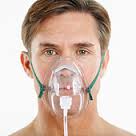
Which Oxygen Breathing System Is Best For Me?
Nasal Cannulas
Nasal Cannulas tend to be popular as they can be used for their simplicity and patient convenience.
Nasal Cannula prevents re-breathing of expired air and are comfortable for long periods of time.
There is increased patient compliance with a nasal cannula as patients are able to speak, eat and drink more easily as the mouth isn't covered. It is smaller and more discrete and patient's are more likely to wear it continuously.
Local irritation and dermatitis may occur if you are being prescribed a high flow rate of oxygen. The use of humidified oxygen is recommended with its use to reduce the dryness of the mucosal wall in the nasal cavities, particularly when using flows of greater than 4 l/min. They can withstand flow rates of 1-9 L/min up to 40% oxygen.
If you want to move around a lot some patients find that the tubing can slip off from around the ears or that they can rub the cheeks and ears, although special tube cushioning can be supplied to reduce this.
Face masks
Many patients prefer the traditional face mask.
There are a few different types of face masks but the basic principle is the same. They deliver a higher rate of oxygen than cannulas; up to 15 L/min of oxygen and up to 60% oxygen concentration, depending upon the patient's breathing and tidal volume.
They are normally soft and mould easily to the face, although they should be fitted to ensure that they do fit your face properly and that there are no gaps where the mask doesn't meet the face properly as the oxygen will escape through these gaps.
They have head straps or ear loops to allow easy fitting and removal. The clear ones allow others to visually spot any indications that you are in difficulty.
Most masks are careful to direct the oxygen directly into the nostrils and not upwards towards the eyes which can cause eye irritation. Some face masks have a horizontal tube to further reduce this risk.
References: http://www.flexicare.com and http://www.christie.nhs.uk

Does Your Gender Dictate Your Oxygen Consumption?
A new study has found that women require more oxygen when breathing when compared to men. It was discovered that during exercise the muscles around the diaphragm and ribcage that are needed for breathing consume more oxygen in women than in men.

As more oxygen is required by the respiratory muscles to breathe, women consume more energy and require a higher oxygen intake, which increases during exercise. Therefore women need to breathe more to compensate for this increased oxygen requirement.
Previous research indicated that women's airways ate narrower than men's, even when both have the same sized lungs and therefore moving the same amount of oxygen through the airways costs more energy-wise for women than for men.
The study also suggested that if women's respiratory muscles require more oxygen then blood flow is directed here and may be reduced from other parts of the body such as the leg muscles and for cardiac output. Therefore the physical performance of other parts of the body may decrease due to the focus of the body to concentrate the oxygen to travel mainly to the respiratory muscles.
The findings could prove important in the treatment of lung disorders, as a reduced lung capacity combined with harder working muscles may lead to a higher energy demand, with it being greater in women. These findings could be important in the clinical management of people with lung disorders and lead to more focus on the gender of the patient as to how best to treat them such as altering their fitness programs.
References: http://health.usnews.com and http://www.foxnews.com
Breathing Could Help You To Lose Weight!
Seeing as breathing is such a vital and fundamental part of our lives, one might think that we do it correctly, however we often don't. We tend to take shallow breaths and hold our breaths when focusing or under pressure. This lowers our oxygen levels causing fatigue and a lack of clarity and we can make poor decisions and perform poorly as a result. Sitting still in an office chair can also create an oxygen deficit and it is the reason why after vegging-out in front of the TV we feel exhausted even though we haven't done anything strenuous.
Oxygen thins the blood slightly which helps to lower your blood pressure and speed up the blood flow. This increases your metabolism and burns more calories, therefore the more oxygen you have in your blood, the faster your metabolism will be. You also burn more calories sitting outside than you do sat indoors, as cool air increases your metabolism as it tries to expend more energy keeping your body at a comfortable temperature. Therefore it is more beneficial to exercise outside than indoors.
If you're unable to exercise then deep, active breathing for a couple of minutes a day can increase your oxygen intake, reduce stress, strengthen muscles and burn more calories.
Also oxygen helps to break down fat molecules and the blood then picks up the waste carbon dioxide to transport it out of the body via the lungs, therefore the more oxygen we take in, the more fat molecules that can be burned off.
'Oxycise' is the latest weight loss programme sweeping across America claiming to transform body shape, shed pounds, improve muscle tone and boost energy level based on the information above. Instead of doing high impact aerobic exercise, Oxycise breathing techniques can be done anywhere. The deep breathing forces us to use more of our lungs, to tighten and strengthen the diaphragm muscles which makes our muscles contract and combined with some gentle exercises can burn fat and tone up muscles. A study even found that a women burned 140% more calories than riding an exercise bike.
However sceptics say that breathing too deeply is harmful as it can 'disturb the balance between carbon dioxide and oxygen needed to neutralise the blood and can cause light headiness and fainting' and that deep breathing is not going to burn enough calories to transform body shape, it may burn up 2% fat at best, Prof McDonald states.
The jury's still out without more detailed studies and research but it's an idea to definitely think about as it is such an easy technique that we can all do.
References: http://www.womensperfectbody.com and http://www.dailymail.co.uk

Tips For The Use Of Supplemental Oxygen
10 tips for using medical oxygen
If you require additional oxygen at home, you can improve your health by using the helpful advice listed below.
1. Make your home your first floor. Choose a bedroom on the first floor if you're moving or have the option to change how your house is set up, as climbing stairs is a fantastic form of exercise.
2. Get secure footwear. For both lounging around the house and working out, lace-up shoes that are supportive and comfy are a wise investment. Put on a shoe that will support your joints and improve your balance. Not flip flops or sandals, as these are bad for grip and balance.
3. Clear the clutter. Because they can't maintain their balance as well, older individuals are more likely to trip over clutter. Additionally, you should keep walking paths free to prevent tangled oxygen cords. In addition to being a trip hazard, throw rugs must to be taken down.
4. Stride steadily and gently as opposed to rapidly or at different paces. Maintaining your energy and endurance can be achieved by pacing yourself.
5. Complete heavier and more important jobs whenever you feel like it's the optimum moment for you to breathe. This may require you to reschedule some of your activities.
6. Take breaks when you NEED them and avoid pushing yourself too hard.
7. Invest in a grasping tool so you can reach objects on high shelves and pick up stuff from the floor. Breathing exercises that include bending over or raising your arms above your head will exacerbate your dyspnea.
8. To assist calm your skin, use lubricants with a water basis. You should use gauze to keep your ears and cheeks from being irritated and water-based lubricants on your lips and nose to avoid dryness because oxygen can dry up your skin, mouth, or throat.
9. Wear oxygen while engaging in exercises. When going up stairs or to the post office, many individuals forget to take off their oxygen, although these are the exact moments when your body needs oxygen the most. When you're done with your task, you can switch to a portable oxygen pack and then go back to the concentrator. You run the risk of being injured and becoming weary if you don't wear the oxygen.
10. Enter the shower with your oxygen. It's a common misconception that wearing oxygen when bathing makes bathing safer and less taxing on your body. However, using oxygen can assist you prevent getting tired during potentially taxing tasks. It can be challenging to stay locked up in a hot, muggy bathroom, so you can install a fan.
To make breathing easier, try to keep the door open, use a fan to remove air, and crack open any windows. You can save energy and prevent falls by purchasing a shower chair, which will enable you to sit down while taking a bath. Installing a detachable shower head is another option. This is particularly useful as it eliminates the need to hold your arms over your head, which is a laborious position that can also cause balance issues when taking a shower. It will be simpler and require less effort to reach every part of your body if it has a long, flexible arm.
References:
Drugs.com
LamFoundation
EveryDayHealth

Could Ozone Therapy Combat Ebola?!
Ozone therapy is a form of alternative medicine treatment that believes to increase the amount of oxygen to the body through the introduction of ozone gas into the body. There is some evidence to suggest it can treat various diseases including cancer, AIDS, multiple sclerosis, rheumatoid arthritis, hepatitis B and C, diabetes, infected wounds, circulation disorders, and infectious diseases such as Ebola. Ozone therapy is also used for “slipped disks” in the spine, heart disease, cancer, an eye disease called macular degeneration, and Parkinson's disease. It is also used for treating abscesses and other signs of infections and is sometimes used to stop dental cavities from progressing.
Historically it has been around for a while, in 1856 ozone was first used in a health care setting to disinfect operating rooms and sterilize surgical instruments. By the end of the 19th century ozone was being used to disinfect drinking water of bacteria and viruses. In 1892 The Lancet published an article describing the administration of ozone for the treatment of tuberculosis and it was used during the First World War to disinfect wounds.
Ozone is a naturally occurring chemical that consists of three oxygen atoms. Ozone is a powerful oxidizing agent and high concentrations of ozone can be toxic to living organisms and is considered a major source of pollution. However, small ozone doses are thought to increase some naturally occurring antioxidants in the body which are thought to help to fight off cancer, viruses and bacteria and benefit the body in other ways as well.
Ozone therapy involves the introduction of ozone into the body via various methods, usually involving mixing the ozone with various gases and liquids and injecting this into the body, either via a muscle, under the skin or directly into a vein. Ozone can also be introduced via autohemotherapy, in which blood is drawn from the patient, exposed to ozone and re-injected into the patient.
However the safety of ozone has not been studied enough to know if it is safe or what side effects it might cause. Ozone is known to be toxic when inhaled from polluted air in large amounts and when given intravenously by injection, it can cause serious side effects including blood clots in the lung. Ozone produces free radicals, an over-abundance of which is known to cause oxidative stress and cell damage, and is thought to worsen some degenerative diseases. The development of hepatitis and death has also been reported.
A group of doctors who are experts on oxidative therapy have travelled to Sierra Leone as they believe that ozone therapy is an inexpensive and very safe treatment for the devastating disease, Ebola that has recently become widespread. They travelled there at the end of 2014 to teach healthcare workers to administer the treatment, even the President of Sierra Leone publicly had the treatment.
They believe that ozone is extraordinary in terms of its anti-infective and antiviral action, all that is needed is the machine and a needle, making it uncostly and it has virtually no toxic side effects, which makes it perfect for both prevention and treatment of all sorts of infections and viral afflictions, including Influenza and Ebola.
With bacteria, ozone works by puncturing the membrane of the bacteria, causing it to spill its contents and die. It also inactivates viruses, and does so 10 times faster than chlorine. It is believed that ozone is perhaps the most powerful natural oxidant in the world, and that it has the advantage of stimulating the immune system, and modulating it—either up or down depending on what your system requires.
Unfortunately the treatment being given over in Sierra Leone was stopped due to scepticism and a lack of concrete scientific evidence to back up the treatments even though there were many reported cases of infected individuals recovering from Ebola after having ozone treatment.
Hopefully more scientific studies will be carried out so as to ascertain once and for all whether ozone therapy could be used to treat a wide variety of diseases and medical complaints and could potentially in the future be a cheap, effective, low-risk, low side-effect method to treat so many different ailments and infections and become a ground-breaking discovery. It would be extraordinary if it was found to be a treatment for common widespread infections such as the Flu and Ebola and could eradicate these diseases.
References: http://www.newsmaxhealth.com and http://www.webmd.com and http://en.wikipedia.org and http://articles.mercola.com

Practical tips using oxygen
Tips For The Use Of Supplemental Oxygen
Practical Tips:
1. Keep away from any flame or spark such as gas stoves, fireplaces and candles. Even electric razors can cause sparks so do not use your oxygen whilst shaving. Oxygen isn't flammable but it is combustible and can aid in the starting of a fire.
2. Do not allow any smoking anywhere near. Some people put signs up in their homes for visitors to let them know.
3. When cooking try not to wear loose fitting clothes and stay as far away from the heated surface as possible.
4. Avoid using any aerosol products as they can ignite in the presence of a spark.
5. Do not allow flammable liquids to get on your clothing or body as unless washed thoroughly, these could become a hazard.
6. Do not place your oxygen concentrator in an unventilated area, such as a closet. Not only does the concentrator generate a lot of heat but it uses the surrounding air to produce oxygen so the oxygen in the atmosphere will quickly become depleted in small spaces.
7. Secure all cylinders to prevent them from falling over. A falling oxygen cylinder can cause damage to the valve, releasing the pressure, which may cause it to become a dangerous projectile.
8. Call your electric company to inform them that you are using oxygen. Firstly some electric companies have a program that allows a reduction of your rates to help lower the cost of running the air concentrator. Secondly, they will generally put you first in line when restoring power after an outage. They may also be able to provide specialist adaptors or devices to aid you with your mobility and medical equipment to make life easier.
9. Oxygen hoses can be a tripping hazard so try to have your concentrator in a position for maximum mobility but also where the hose will not cause you or others to trip. Use a coloured hose to make it more visible.
10. Keep the hoses clean and replace on a regular basis. Make sure the filters are replaced regularly, wipe it down with a damp cloth to remove dust and clean tubing to prevent mould if you use water to humidify your oxygen.
Ensure you have an emergency plan arranged in case there is a power outage.
• Inform your power company that you are oxygen-dependent. Many companies offer oxygen-dependent patients priority service and will inform you of upcoming maintenance/outages and ensure your power is restored as a priority.
• Collaborate with your oxygen supply company. Ask them to help you determine exactly how much oxygen you will need in case of an emergency power outage. They may also provide you with an emergency cylinder.
• Contact your local police and fire departments to let them know that you are oxygen-dependent.
• Talk to your doctor about reducing your oxygen flow rate during an emergency. This may help buy you some time and extend the life of your oxygen supply.
• Consider installing your own emergency generator, especially if you live in a remote location.
• Organize a support team of family or friends whom you can call in case of an emergency.
References:
http://blog.copdfoundation.org and http://copd.about.com and www.southern-electric.co.uk

Everyday Uses of Oxygen
Oxygen is an amazing substances that also has a variety of applications in our every day lives.
 Respiration:
• Every living creature and plant requires oxygen to survive.
• Oxygen therapy is prescribed for patients diagnosed with chronic obstructive pulmonary disease (COPD) as well as other medical conditions, that require oxygen to be administered at home to aid in the treatment of that condition. The use of pressurized oxygen therapy has also provided outstanding medical benefits.
• Oxygen is a standard treatment for many patients that find themselves in hospital, which have a huge supply on site.
Metallurgy:
• The production of steel is reliant upon oxygen where it is used in a blast furnace to turn carbon into carbon dioxide, which reduces the iron oxides to pure iron.
• Oxygen is also used in torches for cutting and welding. Oxygen reacts with hydrogen in which it can heat to over 5,000 degrees. These torches can cut through or weld together most metallic substances.
Rocketry:
• As a liquid, oxygen is used widely both medically and industrially, most commonly as an oxidizing agent for use in missiles and rockets where it reacts with liquid hydrogen to produce the thrust for take-off. Astronauts’ spacesuits have close to pure oxygen.
Chemical Synthesis:
• Hydrocarbons are broken apart by heating them with oxygen. This method is used to induce combustion in order to produce water and carbon dioxide. Also if the mixture is controlled it can break apart the hydrocarbons to produce acetylene, propylene and ethylene.
• Oxygen is also used at plants that treat sewage or purify water. Oxygen is pumped through water to increase the production of natural bacteria, which break down waste products.
• Oxygen as a gas is required to produce energy in industrial processes, generators and ships and it is also used in airplanes and cars.
References: http://www.ehow.com and http://www.usesof.net/uses-of-oxygen.html