
Going on holiday with a medical condition
Where can I holiday?
The world is your oyster. However, you may need to think about the following factors before travelling:
Climate: many people with lung conditions prefer warm climates that have salty air. Lower oxygen levels at higher altitudes can make breathing difficulties worse.
Terrain: whether your destination is flat or on a hill could affect your ability to get around comfortably.
Wheelchair access.
Transport availability.
Special needs, such as oxygen treatment.
Flying with a lung condition
Many people believe their lung condition will prevent them from flying. This is not necessarily true. First, ask your doctor whether you can travel by plane. Most people with a lung condition can go on planes, even if they need oxygen. If you use oxygen therapy, you should ask your doctor if you might need additional oxygen on the plane.
Once your doctor has given you the go-ahead, contact individual airlines to discuss your requirements and to find out what their policy is for carrying and using oxygen on planes.
If you are planning a long-haul flight and use a continuous positive airway pressure (CPAP) machine to treat the sleep disorder obstructive sleep apnoea (OSA), you should consider whether you might need to use your machine during the flight. Some airlines have restrictions on what machines are permitted for use on board and others may require you to fill in a form before you travel. Many airlines have a medical officer or dedicated unit for disabled passengers or those with special medical needs. Contact the airline before you book to discuss your needs.
Holidaying abroad with oxygen
If you need oxygen for use throughout your holiday, you will need to make arrangements for the oxygen to be provided before you travel.
Some travellers have found that hiring a portable oxygen concentrator (POC) in the UK to take abroad is an alternative to arranging oxygen supplies for the majority of their holiday. However you may still need to consider arranging a back-up supply of oxygen for emergencies. If you are travelling by plane, you should bear in mind that different airlines have different policies for using and carrying oxygen and medical devices such as POCs on board. Always check with the airline you are travelling with before you book.
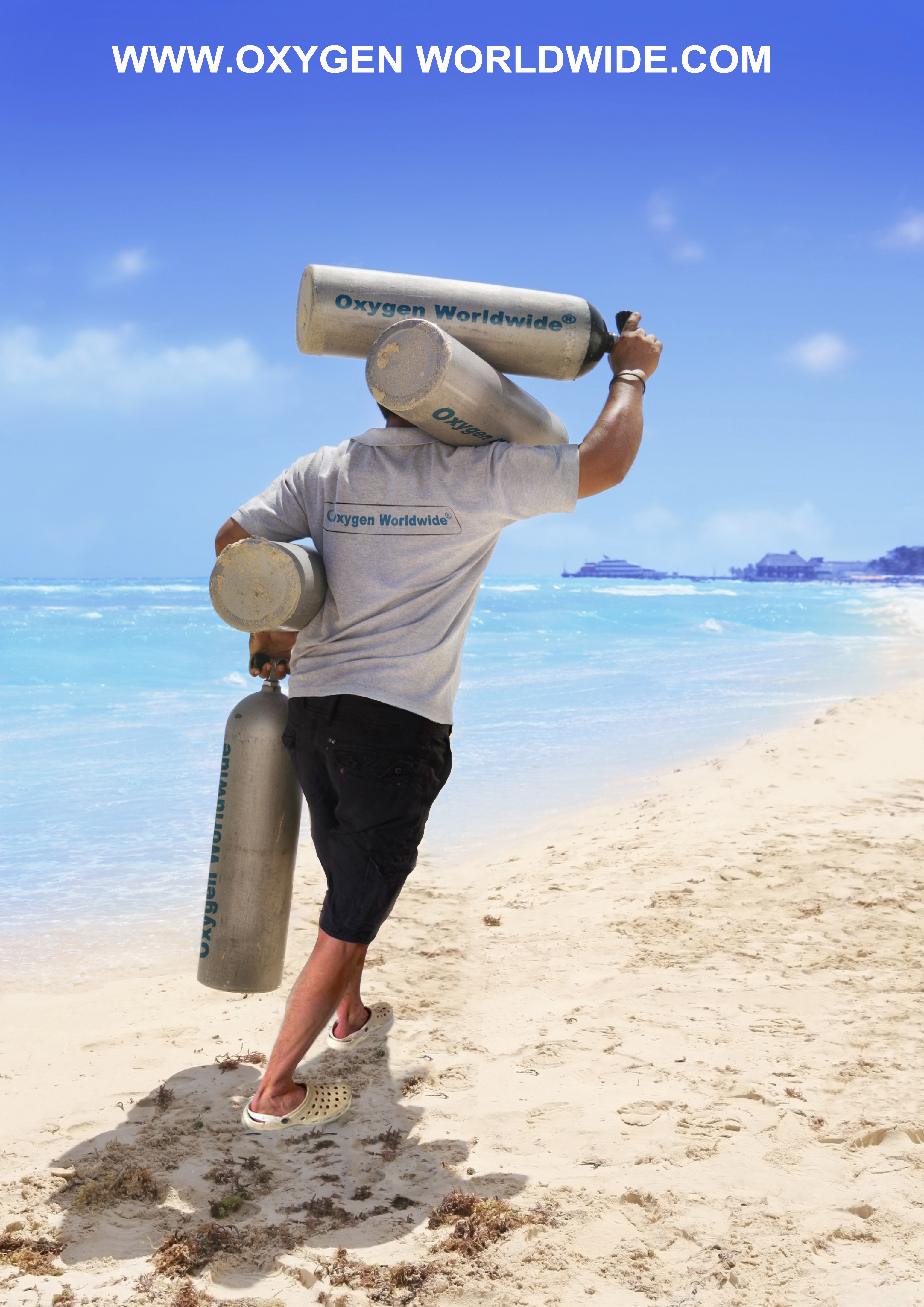
OxygenWorldwide can help arrange your medical oxygen abroad or portable oxygen concentrator plus take a look at our S.O.S Back up service: www.oxygenworldwide.com



7th World Conference of the International Primary Care Respiratory Group (IPCRG)
 7th World Conference of the International Primary Care Respiratory Group (IPCRG)
A Breath of Fresh Air: Multiple Morbidities and Integration
21-24 May 2014
Hilton Hotel, Athens
• Internationally-renowned primary care speakers
• Symposia on primary care case-finding, diagnosis and management
• Cutting-edge real life primary care research from the leading
respiratory units around the world
• Practical workshops to update your skills for everyday practice
• Opportunities to network with like-minded
colleagues from around the world – we expect at least 45 countries
Contact e-mail address
www.ipcrg2014.org
A Breath of Fresh Air: Multiple Morbidities and Integration
The International Primary Care Respiratory Group is delighted to announce that its 7th World Conference will be hosted by the IPCRG and ELEGEIA, the Greek Association of General Practitioners, in Athens 21-24 May 2014, at the Athens Hilton Hotel.
Greece is a country known since ancient times for its philosophers and scientists including Socrates, Plato, Aristotle, Pythagoras and Hippocrates, “the father of medicine”.
In the wake of such a tradition of discussion, philosophy and medicine, the Scientific Programme Committee and International Advisory Panel are creating a thought-provoking programme that features the challenges of multiple morbidity and integrated care. The programme offers:
- Symposia on prevention, primary care case-finding, diagnosis and management in high, middle and low income countries, covering both long term and acute respiratory problems
- Delivered by internationally-renowned speakers, the majority of whom are experienced primary care practitioners and academics
- Sessions on how to integrate care for patients with respiratory symptoms who have multiple morbidities, also including mental health, reducing exposure to tobacco and indoor smoke, the role of exercise, rehabilitation, weight management and nutrition
- Cutting-edge primary care research from the leading respiratory units around the world and opportunities to present your research in oral presentations or poster sessions
- Practical workshops to update your respiratory diagnosis and management skills for everyday practice delivered by expert primary care facilitators
- Opportunities to network with like-minded colleagues from around the world – we expect colleagues from 50 countries and in particular welcome colleagues from the Eastern Mediterranean to join our community of interest and practice.
The programme has been designed to broaden horizons and challenge thinking, update knowledge and develop skills, whilst leaving space to meet and develop links with like-minded colleagues from around the world. We will build on the success of Edinburgh 2012 by offering live and recorded webcasts and language support.
We look forward to welcoming you to Athens, the heart of Greece.
Ioanna Tsiligianni
Chair IPCRG 2014 Scientific Programme Committee
Niels Chavannes
President IPCRG
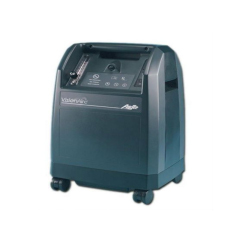
AirSep VisionAir
The AirSep VisionAir Compact Oxygen Concentrator is the lightest (13.6 Kg) and quietest stationary concentrator that OxygenWorldwide can provide. This oxygen machine provides a flow of 5 LPM and is the most power efficient and economical concentrator for in-home use. Beside its attractive styling its noise level does not exceed 40 dBA.
The 5 litres of oxygen is a continuous flow and it is considered a lightweight machine so easy to take around for travel but of course it is not considered a portable oxygen concentrator.
Ltr. per minute < 5 Ltr. p/m
Weight 13.6 kg
Battery life No battery
Ventilator use Yes
Recharge time Power outlet supply required
More Details

The latest edition of the INOGEN ONE portable concentrator
The latest edition of the INOGEN ONE portable concentrator is the INOGEN ONE G3. A smart looking, ergonomically designed and light weight (2.2 Kg) portable oxygen concentrator that provides a flow of up to 4 litres a minute. This way this machine caters for about every medical oxygen user.
Battery life
The Inogen One G3 is available from Oxygen Worldwide with a single or double battery. With the double battery installed it will provide up to 8 hours of oxygen. The G3 can be charged in a car with a 12 Volt DC charger and can be used anywhere around the world with a special multi voltage charger.
The Inogen One G3 has been approved on most airlines which makes going on holiday much easier.
More details
| Price shown for Inogen One G3-Single Battery Inogen One G3-Double Battery € 4,070 Extras: Single Battery - € 605 Double Battery - € 913 |
|
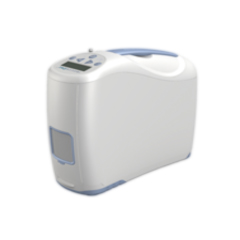
This is definitely a device which will make your life easier.
The Inogen One G2 is a portable oxygen concentrator that provides up to 5 litres per minute on-demand oxygen. This is possible because of its up to 8 hours of battery life (with double battery installed & on setting 1).
It restores your freedom. You are able to use it in a car and on most airlines. So take it away for a weekend trip or long journey you’d never thought you would be able to make. You only go home when you want, not because you’re running out of oxygen.
It’s sound level is as a normal conversation (based on setting 2) and is lower than 37 dbA. It sits discreetly at your feet, next to your bed or behind a chair. It is also light enough (3.2 Kg.) to carry over your shoulder. Day or night, all your oxygen needs can be met with this Portable Oxygen Concentrator. Furthermore is it very easy to operate with just a couple of buttons.
This is definitely a device which will make your life easier.
More Details
| Price shown for Inogen One G2-Single Battery Inogen One G2-Double Battery- € 4,100 Extras: 12 Cell Battery - € 550 24 Cell Battery - € 880 |
|
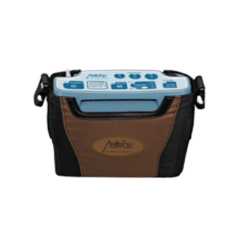
LifeChoice ActivOx provides oxygen up to a unbelievable 15 hours of battery operation time
the LifeChoice ActivOx provides oxygen up to a unbelievable 15 hours of battery operation time.
The LifeChoice ActivOx is the latest lightweight portable oxygen concentrator OxygenWorldwide has added to its range. Its predecessor, the LifeChoice has been a success worldwide. This new portable oxygen concentrator offers the ultimate alternative to cylinders due to its up to 15 hours of battery operation time. Beside that this POC is lighter than the LifeChoice weighing only 2.2 Kg. It is capable of providing medical oxygen up to an equivalent of 3 litres per minute on pulse flow.
Sleep Mode feature
Possibly the only POC with a unique sleep mode feature, the LifeChoice ActivOx enables medical oxygen users to use the machine at night. The very sensitive sleep mode senses every ‘puff’ of breath the patient inhales working in accordance with the breathing pattern to make sure the patient remains fully saturated.
This portable oxygen concentrator delivers medical oxygen to the user in a different way to other POC’s. The technology used is called PulseWave ™ which means that every time a patient breathes in, a ‘puff’ of oxygen is delivered much slower and more synchronised with the actual breath. This new technology eliminates the hiss sound from nasal cannula too.
More details
| Extras: External battery - € 770Package: Lifechoice ActivOx package (incl. External battery) - € 3,520 |
|
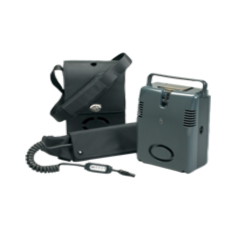
AirSep Freestyle
The very popular AirSep Freestyle has been prescribed for most medical oxygen patients. It is the second lightest concentrator OxygenWorldwide can offer. It provides 3 litres of pulse flow oxygen and only weighs 2.0 kg. and is ideal for a oxygen holiday.
This small portable oxygen concentrator is as small as for example binocular case. Being so small it improves independence. Beside the size and weight the AirSep Freestyle is a very versatile portable oxygen concentrator.
In combination with the ‘AirBelt’, as we named the supplementary battery belt can, this portable concentrator provides up to 10 hours of uninterrupted medical oxygen. The internal battery of the Freestyle can be charged using a normal powerpoint or in-car charger. Beside the fashionable design and exceptional battery life it has an easy to use interface which will give you the confidence you are looking for.
Extras:
Battery belt - € 660
Package:
Freestyle package (incl. Battery belt) - € 3,300
Ltr. per minute < 3 Ltr. p/m - PULSE
Weight 2 kg
Battery life 5+ hrs. battery life with battery belt
Ventilator use No
Recharge time approx. 3 hrs
More details here
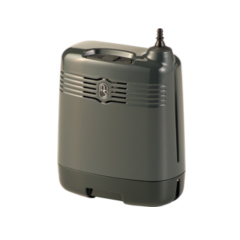
Buying Portable Oxygen Concentrators
Currently this portable oxygen concentrator, the AirSep Focus, is the smallest in the world. The reason why we think this is your ultimate travel companion is, beside the size, its weight (0.8 kg.) This portable concentrator provides an equivalent of 2 litres per minute of medical oxygen on pluse flow and does therefore caters for most medIcal oxygen users.
The AirSep Focus enables oxygen users to be free from the confines of their home and go on holidays or just for everyday use.
2 micro batteries included
Extras:
Micro Battery - € 330
Ltr. per minute < 2 Ltr. p/m - PULSE
Weight 0.8 kg
Battery life 3+ hrs. battery life
Ventilator use No
Recharge 3+ hrs. battery life
approx. 4 hrs., micro batteries are charged externally
More details click here

Going on holiday with a respiratory condition
Going on holiday or just travelling with a respiratory condition can seem daunting, stressful or just too much to think about. Here are some holiday tips to help you on your next planned trip.
Holiday tips
• Make a plan in advance since you can forget anything important if you wait until the last minute. Consider your walking distance, your ability to climb stairs, your access to restrooms, and the types of transportation you can use.
• Be practical: locations you enjoyed in the past might not be appropriate right now. Select a physical task that both you and your caretaker can handle.
• Shop around to get the best bargain possible. varying providers have varying policies for those with lung diseases. Numerous travel agencies provide vacation packages for those with specific needs.
• Travel agencies are accustomed to handling unique requirements, so ask questions. They ought to be capable of responding to any of your questions and worries.
How do I choose my accommodation?
For trips to the UK National Accessible Accommodation Standard assesses all types of accommodation, including self-catering, for accessibility. It puts accommodation into four mobility categories:
Category One – suitable for people able to climb a flight of stairs that have extra fittings to aid balance.
Category Two – suitable for someone who needs a wheelchair some of the time but can manage a maximum of three steps.
Category Three – suitable for people who depend on a wheelchair but who can transfer unaided to and from the wheelchair in a seated position.
Category Four – suitable for a person who depends on the use of a wheelchair and needs help from a carer or a mechanical hoist to transfer to and from the wheelchair.
Holidays abroad
It's a common misconception that individuals with lung conditions cannot travel, but this is untrue. Packages vary, just like in the UK, so compare prices. Prior to choosing a destination, always confirm with your physician or other healthcare provider that you are well enough to travel and make all of your travel plans well in advance.
How do I get there?
By Ferry
People with disabilities can utilise lifts, restrooms and other amenities provided by numerous ferry operators. Vehicles carrying disabled passengers may be eligible for special parking and priority loading.
By Train
Passengers with specific requirements are catered for on Eurostar trains. Certain coaches are wheelchair accessible and permit the use of oxygen tanks. If you're going farther in Europe, find out the applicable European train company's rules regarding oxygen transportation.
By Car
Prior to your trip, be sure the vehicle you are driving has been inspected and/or serviced. Verify if your insurance provider needs a green card, which facilitates unrestricted automobile travel across international borders. Drivers of passengers with severe mobility impairments can park near to their destination in the UK thanks to Blue Badges. You might be allowed to use the Blue Badge overseas because the UK and other European Union (EU) nations have informal parking agreements in place.
Holidaying abroad with oxygen
Prior to your trip, you must plan for the provision of oxygen if you will require it for the duration of your vacation.
- You must get in touch with an oxygen supplier in the nation you will be visiting if you are travelling outside of Europe.
- Renting a portable oxygen concentrator (POC) has proven to be a more cost-effective option for travellers than carrying oxygen supplies for the duration of their trip.
- You might still need to think about setting up a backup oxygen source, though, in case of emergency.
- When taking a plane trip, keep in mind that various airlines have varied guidelines about the use and transportation of oxygen and medical equipment like POCs.
- Make sure you always confirm with the airline you are flying with.