

We don’t take breathing for granted.
Travelling with oxygen

Holiday and travel.
Even if you have a condition which requires oxygen therapy, you may wish to go on holiday either within the UK or abroad. We have put together some key considerations for you if you wish to go on holiday. We can help with many of the details and offer advice. Please give us as much notice of your holiday requirements, however
it is best to request as early as possible.
Going on holiday in the UK
Before you book
→ Contact your planned holiday destination to gain permission for oxygen equipment to be delivered and stored in the accommodation.
→ If you are travelling by public transport – contact the transport company and inform them you will be carrying oxygen.
Remember to advise:
1. Start and end date of your holiday
2. Full postal address and telephone number of the holiday destination.
Holidays outside the UK
(including the Channel Islands)
Before booking a holiday outside the UK it is advisable to discuss your plans with your doctor or
healthcare professional – especially if you are flying. During a flight, the high altitudes will cause the
oxygen concentration levels in the air in the cabin to fall. People without the need for supplementaryBefore you book your flight find out the following information:
→ What the airline’s policy is on oxygen. Taking oxygen on a plane can be easy and free, or
difficult and expensive. Some airlines will not allow oxygen on the plane at all, it depends on the airline. You must find out before you book a ticket. This may also affect your choice of destination or carrier.
→ The exact length of the flight, and whether delays are likely.
→ The facilities available at both airports. This includes assistance required with luggage, boarding the aircraft, wheelchair requirements and whether oxygen is available. If the holiday involves a long-haul flight, you should find out if time will be spent at a third airport for refuelling and how oxygen will be supplied there if required. With the exception of oxygen provision, these services will usually be free.
→ How you confirm your fitness to fly. Some airlines let you travel without a letter from your doctor, while others ask you to fill in a special medical form, verified either by your own GP or by the airline’s medical staff. Most ask for a fitness to fly certificate, obtained from your doctor.

Helping you to breathe at home
If you've been prescribed oxygen therapy, it's because your blood oxygen level is low. Low oxygen levels can potentially damage your heart or brain.
The main purpose of home oxygen treatment is to raise your blood oxygen to a level that prevents such harm. It also helps relieve breathlessness and other symptoms of low blood oxygen, such as ankle swelling and blue lips.
However, using oxygen just for relieving symptoms of breathlessness is not helpful and can cause long term harm by making you less fit. This can also cause a delay in finding out why you are breathless.
How home oxygen treatment can help
If you have a medical condition that leads to a low oxygen level in your blood (hypoxia), you may feel breathless and tired, particularly after walking or coughing. You may also have a build-up of fluid around your ankles (oedema) and blue lips.
Breathing air with a higher concentration of oxygen can help increase the amount of oxygen in your blood. This makes it easier to do activities that might otherwise be more difficult. It also helps reduce the symptoms mentioned above.
Oxygen therapy can help people with a range of health conditions that affect breathing or blood circulation, including:
- chronic obstructive pulmonary disease (COPD) - a long-term disease of the lungs
- severe long-term asthma
- cystic fibrosis - an inherited disease that causes the lungs to become clogged with thick, sticky mucus
- pulmonary hypertension - high pressure inside the arteries to the lungs, which causes damage to the right-hand side of the heart
- obstructive sleep apnoea - a condition that causes interrupted breathing during sleep
- diseases of the nerves and muscles or ribcage
- heart failure - when the heart struggles to pump enough blood around the body
People who have oxygen therapy have different requirements. Some people only need oxygen therapy for short periods during the day, when they're walking about (ambulatory oxygen). Others need it for longer periods and during the night.
Different types of home oxygen
Oxygen can be obtained from:
- compressed oxygen cylinders
- liquid oxygen in cylinders
- an oxygen concentrator machine, which extracts oxygen from the air
Oxygen cylinders
If you just need oxygen for short periods to relieve attacks of breathlessness after an illness, you will probably be prescribed oxygen cylinders. However, this should be reviewed after a certain time so that the short-term relief does not hide more serious underlying heart or lung conditions. If your blood oxygen levels are normal for you during a review, that short-term oxygen should be withdrawn.
You breathe the oxygen through a mask or through soft tubes in your nose, called nasal cannulae. You can talk, eat and drink while using cannulae.
Cylinders containing oxygen compressed into liquid form can contain more oxygen than standard cylinders. This type of oxygen supply will last for longer, and the tank may also be lighter.
Oxygen concentrator machine
An oxygen concentrator machine is convenient if you would benefit from having oxygen for a large number of hours a day, including while you're asleep. It ensures you have a source of oxygen that never runs out.
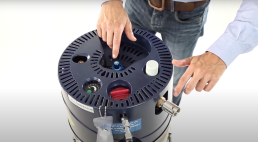
An oxygen concentrator is a machine, about two-and-a-half feet (75cm) high, which plugs into your electrical socket. It filters oxygen from the air in the room and delivers it through plastic tubing to a mask or nasal cannulae.
Long tubing can be fixed around the floor or skirting board of your house, with two points where you can "plug in" to the oxygen supply.
When the machine is installed, the engineer or nurse will discuss with you the length of tubing you’ll need. The machine is very quiet and compact, and the engineer will explain how to use it and will answer any questions you have.
A back-up cylinder of oxygen is also provided in case the machine breaks down. Regular maintenance visits will be made to make sure the concentrator is always working properly.
Portable (ambulatory) oxygen
If you’d like to have a small portable cylinder to take oxygen outside your home, talk to your specialist. You’ll need to be fully assessed to see whether portable oxygen (also known as ambulatory oxygen therapy) is likely to be helpful.
Portable oxygen is not recommended if you have heart failure or if you smoke.
Portable cylinders can provide oxygen at a rate of 2 litres or 4 litres a minute, or have an adjustable scale up to 4 litres a minute. The flow required is determined by your lung specialist or the oxygen service healthcare professional. When full, these cylinders weigh just over five pounds (2.3kg) and hold just under two hours of oxygen (at 2 litres a minute).
Going on holiday
If you are going on holiday in England or Wales, talk to your supplier to see if you can make arrangements to have home oxygen supplied to you at your destination. Try to give them as much notice as possible.
Before you arrange your holiday, check with your doctor that you are well enough to travel.
Safety
Oxygen is a fire hazard and, if you are supplied with home oxygen, it is important to take precautions.
For example:
-
do not let anyone smoke while you are using oxygen
-
keep away from flammable liquids while using oxygen - these include alcohol gel, cleaning fluid or aerosols
-
keep oxygen at least six feet away from flames or heat sources
-
keep oxygen cylinders upright to avoid them getting damaged
Your home oxygen supplier is also likely to let the local fire service know that there is oxygen in your home. They may request a risk assessment, even if you do not smoke.

COPD and Portable Oxygen Therapy
Many people with COPD need supplemental oxygen therapy. Unfortunately, some people who use portable oxygen are wary of traveling with oxygen. So they opt to stay at home instead of going out to see friends, shop, or enjoy a vacation.
However, oxygen therapy can really improve your physical capacity to move around and perform tasks that your advanced COPD was preventing you from performing. You might discover that using oxygen increases your freedom to go where you want to go and do what you want to do once you understand what's involved.
Use portable oxygen therapy instead
For excursions away from home, you'll need to convert to a portable oxygen delivery device if you don't already have one. Small tanks are used by portable oxygen concentrators, or POCs, to store compressed oxygen. Travel carts and carrying bags are typically included with POC tanks. These work great for travelling through airports or just for sightseeing. POCs are battery-operated. A few batteries have a five-hour lifespan. In order to be plugged in when in a car or anywhere with an electrical outlet, POCs also come with AC/DC adapters. You will be able to live a more active life with greater freedom thanks to the portable oxygen delivery system. Always have your oxygen supplier's phone number handy. Whether you're in town or not, you never know when you might run into issues with your portable oxygen supply.
Here are some more pointers for oxygen-powered travel:
Using portable oxygen for land travel
Consult your doctor beforehand. Find out if you can travel safely with COPD. Inform your physician of your intended travel itinerary. If you are travelling outside of the nation or to higher elevations, this is especially crucial.
There won't be many limits on your ability to bring oxygen when travelling by automobile or motor home. If you store your portable oxygen carefully, you can bring it in your car with you. When travelling, keep your oxygen in the car but out of the heat. As gases escape from oxygen containers, partially roll down a window. These gases are dangerous and can accumulate in small areas. The portable oxygen concentrator should never be kept in a heated car or other enclosed space. With portable oxygen, travelling by train while carrying oxygen should be safe. Once more, make sure you can carry portable oxygen on board by giving the railway line a call in advance.
Don't forget to factor in additional oxygen for the journey as well as for getting to and from your destinations.
Day trips and bringing portable oxygen to restaurants
You can visit eateries, retail centres, movie theatres, concerts, religious events and other locations even while receiving oxygen therapy. Once more, follow these safety guidelines when using portable oxygen for a successful day trip:
- Make sure you have enough oxygen in your tank before leaving your house, at least enough for the journey there and back, plus a little extra.
- Verify that your oxygen supply is operating properly.
- When you get to your destination, avoid approaching or sitting next to smokers.
- In restaurants, request that any candles be taken from your table.
Using portable oxygen while cruising
Speak with the cruise line staff before making your arrangements. Find out the ship's regulations on carrying portable oxygen. On board the ship, extra oxygen is occasionally supplied. If not, you'll need to pack extra oxygen in case you need it for the whole cruise. Ask ahead of time to be sure. When the ship arrives at each port of call, you might be able to acquire oxygen refills. Don't forget to bring the right electrical adapters for your portable oxygen apparatus.
Oxygen-related air travel
Many COPD patients require supplemental oxygen to be administered during flying. You will have to establish plans in advance in order to be able to accomplish this.
To help you have a simpler vacation, consider the following guidelines:
- When making your reservation, find out from the airline what its policies are regarding carrying portable oxygen.
- Find out which portable oxygen concentrators can be used throughout the flight that have been given the go-ahead by the Federal Aviation Administration (FAA). To bring portable oxygen on a flight, you need to get your airline to authorise the kind you use.
- Ask your oxygen supplier whether you can rent a portable oxygen concentrator that has been approved by the FAA if you don't already own the appropriate kind of container.
- Ask your oxygen supplier whether you can rent a portable oxygen concentrator that has been approved by the FAA if you don't already own the appropriate kind of container.
- To reduce anxiety about missing a connecting flight or having a layover, try to book a nonstop or direct trip.
Re-contact the airlines forty-eight hours prior to departure. Tell them you're using oxygen to travel. For certain airlines, approving the oxygen tank's use on the aircraft requires an inspection 48 hours prior to takeoff. For a price, other airlines might offer oxygen for use on board. - Find out if you require additional coverage for using oxygen during your flight by getting in touch with your insurance provider.
- Consult your doctor for a prescription for extra oxygen, and carry it with you at all times. This medication ought to confirm the necessity of in-flight oxygen and provide details on the oxygen flow rate and duration.
- Make careful to complete any documents your doctor may need to fill out ahead of time, as the airlines may have their own.
- You could require an increase in the oxygen flow rate when flying, at the discretion of your physician. Make sure you discuss this with your physician so that you can breathe comfortably at high altitudes.
- It's possible that the airlines will ask you to bring a lot of batteries to run your POC. Make sure your battery lasts for at least half as long as the entire distance you're travelling, from the moment you leave your house until you reach your destination.To start planning your travel with medical oxygen contact our team.

Putting autistic children in oxygen chambers twice a day improves their symptoms, research finds
By Fiona Macrae
Pressurised oxygen chambers, similar to those used by divers, could help treat autism, research shows.
Using a hyperbaric oxygen chamber twice a day for four weeks significantly improved the symptoms of autism in a group of five to seven year olds.
Improvements were seen in 80 per cent of those treated, with 30 per cent rated as 'very much improved' or 'much improved', the journal BMC Pediatrics reports.
Irritability and hyperactivity eased, while speech and social interaction improved in the youngsters treated in the chambers, which had higher than usual levels of oxygen.
It is unclear how the treatment works but it may be through raising oxygen levels in the brain, while suppressing inflammation and unwanted immune reactions.
The researchers, from the International Child Development Resource Centre in Florida, said the inclusion of dummy hyperbaric oxygen chambers as well as real ones made the results more reliable than those of previous studies.
They said: 'In the light of the positive results of this study and those of several previous studies, the use of hyperbaric treatment appears to be a promising treatment for children with autism.'
They added that more research was needed to determine if the effects were long-lasting or if on-going treatment would be required.
Richard Mills, of Research Autism, welcomed the research but cautioned that parents can expect to pay thousands of pounds for a course of treatment.
He said: 'Hyperbaric oxygen treatment has been known to be beneficial with children and adults with a range of neurological conditions and there's no reason to suppose some individuals with autism won't show some benefit.
'But it is not clear cut and parents should be aware of the costs and of the dangers.'
Side-effects include fits, short-sightedness and claustrophobia.

Moon could become the world's 'service station' thanks to abundance of oxygen and hydrogen
By Daily Mail Reporter
UPDATED: 16:09 GMT, 28 September 2009
The discovery of water on the moon could pave the way for us to build a rocket refueling station up there.
For man to be able to make sustainable, affordable voyages in the solar system, we need a way to re-fuel off the planet.
Now, with the discovery of hydrogen and oxygen molecules - the components of water - on our neighbouring body, we may now have a staging post to explore the other planets.
A ship taking off from the Earth expends so much fuel escaping the planet's gravitational fuel that there is little to spare for inter-planetary exploration.
But a staging post on the moon could allow a ship to re-fuel with relative ease, and could help speed up the exploration of other planets, such as Mars, where water has also been detected within the last few weeks.
The discovery of water on the moon was made by the Indian lunar mission Chandrayaan-1.
Scientists were looking for a signature of water in the craters near the poles, but were surprised to find evidence of water on the sunlit areas of the Moon instead.
Experts believe the water is trapped in the Moon's surface dirt and in theory can be extracted in large quantities to support life.
Professor Larry Taylor, a planetary scientist at the University of Tennessee and co-author of the research, said: 'Space ships use up to 85 per cent of their fuel getting to the moon - but this [water] will allow the moon to be a gas station in the sky.
'This means missions will be able to load up on hydrogen and oxygen and the moon can act as a stepping stone to other planets such as Mars.'
He said that solar-powered babes could become 'commercially viable', although still a costly process.
American researchers are now figuring out ways of extracting water from the moon, such as using sifting tools to extract metal oxide particles, which can then be heated to produce oxygen, which can then be combined with equally-plentiful hydrogen particles to make water.

Elderly woman who uses an oxygen tank is charged with drug trafficking at her New Mexico apartment
- 84-year-old tried to hide stash of cocaine in raid, police say
- Neighbors say she let son sell drugs so he could care for her
By Daily Mail Reporter
PUBLISHED: 19:58 GMT, 23 May 2013 | UPDATED: 13:51 GMT, 24 May 2013
She may not look like a typical drug dealer, but this 84-year-old woman who uses an oxygen tank has just been charged with drug trafficking and possession.
Lillie Smith is also charged with tampering with evidence after she tried to hide cocaine and marijuana that she had on her when police raided her Albuquerque apartment.
'It's definitely not something you see everyday,' Sgt Aaron Williamson, of Bernalillo County Sheriff's Office, said.
The charges relate to a warrant served at Smith's apartment in 2011, when her son, Nathan Jones, was living with her.
Officers believed that her son was dealing drugs from their home.
'There were scales, money, narcotics things of that nature that we generally find with drug trafficking,' Sgt Williamson said.
Smith's neighbors described the elderly woman as kind to a fault, and told KRQE she had allowed her son to deal drugs from her home because she wanted someone to take care of her.
However, police believe she was involved in the illegal operation and say she had cocaine and marijuana on her when they searched her home.
More...
'When detectives were on scene she did try to take the narcotics that were on her person out and stash them,' Sgt Williamson said.
Jones was arrested on drug charges but because of her medical condition, his mother avoided being charged - until now.
A district attorney's office filed charges against the elderly woman, and a grand jury returned an indictment in February.
After her arrest in April she was bonded out of jail and is due to make her next court appearance in July.
Previous court records show Smith pleaded guilty to drug charges in the 1990s, when she was in her 60s.
Smith is not the first pensioner to be arrested for drug dealing, but she may be the oldest. In April last year 73-year-old Darlene May was arrested in Oklahoma. She faces drug charges after police found 4lb of marijuana and $276,000 in cash at the home she shared with her son.
Follow us: @MailOnline on Twitter | DailyMail on Facebook
Would you pay for oxygen?
It has been made hip by countless celebrities but will we Brits really be rushing to the nearest store to pay for the latest fad to hit the streets - a machine that dispenses oxygen.
It isn't as silly as it sounds. Did we ever think we'd end up paying for bottled water? Who could have imagined that millions of us would ever pay for water rather than drinking it free from the tap!
We need oxygen to breath and it's free in the atmosphere so why pay £2 for a 10 minute shot?
Well oxygen therapy has been researched extensively and the benefits are scientifically proven.
A recent study reported that feeding the brain with extra oxygen can improve mental performance.
Brain power can be increased by up to 20 per cent when people take extra supplies of oxygen, according to researchers at the Human Cognitive Neuroscience Unit of the University of Northumbria.
Volunteers remembered up to 20 per cent more words from a list after they were given a short blast of oxygen through a facemask.
A dose of oxygen also improved performance when playing the computer game Tetris when the game was at its hardest level.
Experts believe that the more oxygen in the body and brain the better your system will function.
Some of the benefits are it: boosts energy, enables recovery more quickly after exertion, gets rid of headaches and hangovers, relieves stress, increases concentration and enables you to feel more relaxed and revitalised.
Oxygen bars have been around for years in Asia and America. Cheers and Natural Born Killers star Woody Harrelson who's also a hemp impresario and Hollywood's man with a social conscience, opened an oxygen bar in LA where hip customers sniff medical grade oxygen to relieve stress and get rid of their hangovers.
Athletes take oxygen before competing, and so do rock stars such as Mick Jagger. Michael Jackson also purportedly favours napping in his personal oxygen chamber.
Now Britain's airheads can inhale extra oxygen from machines installed at night-clubs, bars, gyms and high street stores such as Selfridges and Harvey Nichols which launches an oxygen bar later this month. Oxygen machines will also be available to rent for the office or home.
The specially designed machines supplied by O2Live are simple to use. You put a pre-purchased card into apparatus and oxygen is pumped out via a jetmask, which covers the nose and mouth.
Alternatively you can chat with friends if you opt to use a live wire which is a plastic tubing which pumps oxygen just up the nose.
A minimum of five minutes is needed to start to feel benefits. Three 20 minute sessions per day is the maximum recommended.
Dominic Simler, is Managing Director of O2Live, which patented the oxygen machine, now available at 260 sites across the UK.
He believes that tens of thousands of people are already enjoying the benefits of an extra oxygen boost.
He said: 'Of course with anything that is new or a bit odd or crazy people are going to pass it off as a fad which only celebrities can afford.
'But the same could be said about buying bottled water. If you had asked the same question of people 20 to 30 years ago about would they pay 70p for a bottle of water when it is free out of the tap? They would have said no but now bottled water is brought by millions of people.
'It's essentially a lifestyle choice just as it is with drinking bottled water which you perceive to be purer and healthier.
'There is a hell of a lot of animosity from people to start with but they are eager to try it and once they do they invariably like it and feel the benefits.'
How extra oxygen works?
Oxygen is at saturation level in the red blood cells even when breathing normal air. Extra oxygen is absorbed into the blood by increasing it partial pressure, driving more oxygen into the tissues.
The O2LIVE oxygen system plugs into a normal wall socket and uses minimal electricity.
It works by drawing in air which contains 21 per cent oxygen, 78 per cent nitrogen and one per cent other gases, filtering out the impurities through molecular sieve beds and pumping out up to 95 per cent pure filtered oxygen.
The user breathes an entirely safe mixture of 95 per cent pure oxygen and the surrounding air, which contains 21 per cent oxygen. This means they get between 50 to 100 per cent more oxygen than they would get from the normal sea level air.
A fragrance can be added to enhance the pleasure of breathing a scented, oxygen enriched air mixture.
The aromatherapy scent cartridges include: energy, eucalyptus, passion, relax, lemon and orange.
The system uses an oxygen generator to produce the oxygen because of the advantages it has over cylinders, which have been used in oxygen bars.
Cylinders have to be regularly refilled, have an additional fire risk and have limited oxygen capacity within the cylinder. The length of time you stay on the O2Live depends on you and the benefits you are looking for.
My own verdict on this new phenomenen having had a 10-minute shot of oxygen from the O2Live was that it was refreshing and did make me feel relaxed. I enjoyed the eucalyptus scented cartridge but I couldn't say I felt any long lasting benefits from my 02 blast but I would definitely try it again.
For more information about O2Live contact 020 7431 8585.
Read more: http://www.dailymail.co.uk/health/article-37935/Would-pay-oxygen.html#ixzz2f8Zqjs9x
Follow us: @MailOnline on Twitter | DailyMail on Facebook
Miniature oxygen generator implants to boost effectiveness of cancer treatments
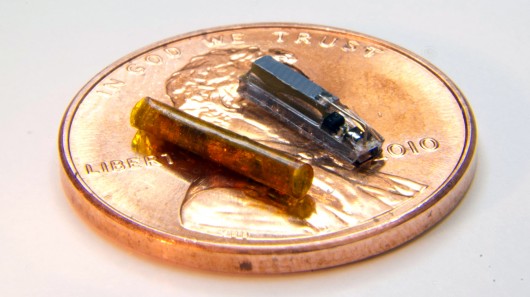
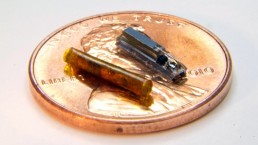
Some cancers, such as pancreatic and cervical cancers, are notoriously hypoxic, which means they contain low oxygen levels. Because radiation therapy needs oxygen to be effective, hypoxic areas of a tumor can be difficult to kill. To combat this, researchers at Purdue University have developed and tested a miniature electronic device that is designed to be implanted into solid tumors to generate oxygen and boost the effectiveness of radiation and chemotherapy treatments.
Once implanted into a tumor, the new "implantable micro oxygen generator" uses ultrasonic signals to generate a small voltage to separate oxygen and hydrogen from water in a chemical process called water electrolysis. The devides are just under one centimeter (0.39-in) long and are inserted into tumors with a hypodermic biopsy needle.

"We are putting these devices inside tumors and then exposing the tumors to ultrasound," said Babak Ziaie, a Purdue University professor of electrical and computer engineering and biomedical engineering. "The ultrasound energy powers the device, generating oxygen.
The devices, which were created at the Birck Nanotechnology Center in Purdue's Discovery Park, have been tested in pancreatic tumors implanted in mice. The tests showed the devices generated oxygen, which resulted in the tumors shrinking faster than tumors without the devices.
The Purdue researchers have filed a patent for the current design and are looking at the possibility of redesigning it to make it more practical for manufacturing and clinical trials.
The results of the team's research appear in a paper published online inTransactions on Biomedical Engineering.
About the Author
 Darren's love of technology started in primary school with a Nintendo Game & Watch Donkey Kong (still functioning) and a Commodore VIC 20 computer (not still functioning). In high school he upgraded to a 286 PC, and he's been following Moore's law ever since. This love of technology continued through a number of university courses and crappy jobs until 2008, when his interests found a home at Gizmag. All articles by Darren Quick
Going on holiday to Norway soon?


DON'T LET THE USE OF OXYGEN CONFINE YOU!
Customers travel on land, air and sea using Portable Oxygen Concentrators .
The following International airlines approve the Inogen One, SeQual Eclipse and the Respironics EverGo: Air France, Air Canada, El Al Airlines, Alitalia, SAS Airlines, Lufthansa, Qantas, All Nipon Airways, ATA Airlines, Cathey Pacific, Icelandair, Norwegian, LTU International, Singapore Airlines, Swiss International, and Virgin Atlantic.
Many satisfied customers have used OxygenWorldwide for travelling to destinations such as Norway for their portable oxygen needs.
We have the equipment, we have the experience:
- International or Domestic Travel
- Back up service
- Air Travel
- Train Travel
- 24 hour service
OxygenWorldwide has been a leader in servicing the needs of medical oxygen travelers. We are experienced in serving your medical, home and airline oxygen needs while you are on the go!

What is fit to fly?

Most travellers with existing medical conditions are able to fly without difficulty. However, occasionally certain precautions need to be taken.
A fitness to fly form is required to be completed when:
- Fitness to travel is in doubt as a result of recent illness, hospitalisation, injury or surgery
- If you have an existing unstable medical condition
- You wish to use medical equipment or therapeutic oxygen on-board
Most medical cases are straightforward, but some require individual assessment. In certain cases, we may ask that you and your doctor complete a “Fitness to Fly' Form.
Carriage of a POC:
Passengers carrying a POC should obtain a Medical Equipment Approval & Baggage Waiver letter. This approval & waiver letter must be presented at the Bag Drop desk or at the boarding gate if travelling with no checked baggage.
Use of POC during Flight:
If you wish to use a POC during flight, for the use onboard you will be required to complete a 'Fit to Fly' form which will be sent to the passenger once the requirement has been notified. This completed “Fit to Fly' form must be returned between 14 up to 2 days prior to travel for validation. The validated “Fit to Fly form must be carried by the passenger on all flights and produced to our cabin crew on boarding the aircraft.
If the POC is to be used onboard it is the passenger’s responsibility to ensure that they have a sufficient number of fully charged batteries for the duration of the flight and any possible delays, as POC or batteries cannot be charged on board.
Individual airline carriers have their own regulations please check before booking departure for full details.
For further info and back up service please contact our team at info@oxygenworldwide.com or www.oxygenworldwide.com
For an example:
Please see below list of models approved for carriage on Ryanair flights: