

Travel with oxygen
TRAVEL WITH OXYGENTraveling with oxygen can be very intimidating but with proper planning it can be accomplished comfortably and safely. You don't have to give up the adventure of travel. You just have to make your arrangements in advance and be willing to take the extra time to confirm details prior to your trip.
If you have COPD and are planning a trip for treatment, business or pleasure, speak to our team or view more useful information and client testimonials www.oxygenworldwide.com |


Wiki Know-how for Oxygen and travel
Oxygen was known to be the only element that supports respiration as early as 1800 and was first used in the medical field in 1810. However, it took about 150 years for the gas to be used throughout medicine. In the early to mid 20th century oxygen therapy became rational and scientific, and today modern medicine could not be practiced without the support that oxygen supplies.
Medical oxygen is used to:
- provide a basis for virtually all modern anaesthetic techniques
- restore tissue oxygen tension by improving oxygen availability in a wide range of conditions such as COPD, cyanosis, shock, severe hemorrhage, carbon monoxide poisoning, major trauma, cardiac/respiratory arrest
- aid resuscitation
- provide life support for artificially ventilated patients
- reduce incidence of surgical wound infection
- aid cardiovascular stability
Read our useful Wiki guide for all the information and explanations to do with travelling with medical oxygen with OxygenWorldwide.
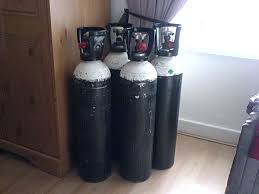
Oxygen Service
Why do you need oxygen?
Your Healthcare Professional has ordered oxygen for you. This may be because the oxygen in your blood is low and you need more oxygen than is available from room air alone.
Your Healthcare Professional will have assessed you, deciding how much additional oxygen your body requires. The Healthcare Professional also decides what flow rate of oxygen and how many hours per day you will need to use it.
Your oxygen equipment has been provided to give you increased independence for activities in and out of your home.
When using oxygen away from your home, you should continue to observe all the safety precautions previously identified.
In particular, you should ensure that:
- No one should adjust or tamper with the equipment
- The safety risk to people around you is minimised
It is possible to transport your oxygen on public transport but there are no fixed national guidelines as to what trains, coaches, buses and taxis will allow.
Portable oxygen can be used on London Underground.
The oxygen equipment should only be used:
- As described in the user manual
- In a carrying bag when supplied
- With the delivery tubing as short as possible
Always ensure that:
- Your equipment is secure while the vehicle is moving
- The valve of the oxygen equipment is securely closed, when not in use
When using the equipment on public transport:
- DO NOT leave the equipment unattended
- DO NOT leave the cannula or mask on the seat or near other absorbent materials when not in use
- DO NOT use a mobile phone
- DO NOT allow children to tamper with the equipment
- DO NOT use a humidifier
- DO NOT cover the equipment with any clothing, bags or other material
Contact us
We have a 24 hour Freephone helpline to address any of your enquiries.
Please contact us on info@oxygenworldwide.com or at www.oxygenworldwide.com

Simply the answer with medical oxygen
OxygenWorldwide provide a service for all medical oxygen users who are travelling and should register.

WHO should register?
If you intend to travel with a portable concentrator and want to be sure alternative oxygen can be supplied in case you encounter problems with your oxygen device you can register below for this service at no cost!
WHY register?
First of all for your peace of mind and secondly to enable us to work out and inform you if we can provide the service you might require in the place and country where you will be going. Although we generally will be able to help you without a pre-registration we can act faster if we have already your details in our database.
WHEN to register?
Any time but the earlier the better as you might want to travel to a certain area where we need to check on availability.
WHO do I call?
In case of an emergency you simply call our 24 hour S.O.S. service on ++ 34 609 657 727
Questions? If you have any questions, please do not hesitate to contact us. OxygenWorldwide can, if needed, also arrange oxygen at your destination before your arrival. There is no charge for this registration Register here FREE today.
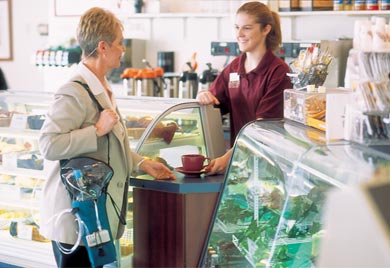

Medical Oxygen Users

What is oxygen
Oxygen is a natural part of the air we breathe, but it makes up less than a quarter of the gases we call air. Our bloodstream collects oxygen from our lungs and transports it to the tissues of our body. The cells within these tissues use both oxygen and the food we eat to create energy.
Why do I need oxygen
If you have chronic lung disease, some areas in your lungs are damaged. These damaged areas act as blockages, preventing oxygen from moving into your bloodstream. You are unable to capture enough oxygen during a breath for your body to thrive. You likely experience difficulties breathing, sleeping and performing daily activities.
Medical oxygen increases the amount of oxygen available to your bloodstream in each breath. The increased oxygen concentration eases the capture of enough oxygen by your bloodstream to supply your body. This helps you breathe more comfortably, so you can enjoy your daily activities.
Can I ever stop using oxygen
Unfortunately, if your lung disease has caused enough lung damage to force the need for oxygen, you will likely need it for the rest of your life. However, some lung conditions are treatable with the use of medications or by curing an infection; in those cases, patients may overcome the need for oxygen.

Scientists Invent Particles That Will Let You Live Without Breathing

This may seem like something out of a science fiction movie: researchers have designed microparticles that can be injected directly into the bloodstream to quickly oxygenate your body, even if you can't breathe anymore. It's one of the best medical breakthroughs in recent years, and one that could save millions of lives every year.
The invention, developed by a team at Boston Children's Hospital, will allow medical teams to keep patients alive and well for 15 to 30 minutes despite major respiratory failure. This is enough time for doctors and emergency personnel to act without risking a heart attack or permanent brain injuries in the patient.
The solution has already been successfully tested on animals under critical lung failure. When the doctors injected this liquid into the patient's veins, it restored oxygen in their blood to near-normal levels, granting them those precious additional minutes of life.
Particles of fat and oxygen
The particles are composed of oxygen gas pocketed in a layer of lipids, a natural molecule that usually stores energy or serves as a component to cell membranes. Lipids can be waxes, some vitamins, monoglycerides, diglycerides, triglycerides, phospholipids, or—as in this case—fats.
These fatty oxygen particles are about two to four micrometers in size. They are suspended in a liquid solution that can be easily carried and used by paramedics, emergency crews and intensive care personnel. This seemingly magic elixir carries "three to four times the oxygen content of our own red blood cells."
Similar solutions have failed in the past because they caused gas embolism, rather than oxygenating the cells. According to John Kheir, MD at the Department of Cardiology at Boston Children's Hospital, they solved the problem by using deformable particles, rather than bubbles:
We have engineered around this problem by packaging the gas into small, deformable particles. They dramatically increase the surface area for gas exchange and are able to squeeze through capillaries where free gas would get stuck.
Kheir had the idea of an injected oxygen solution started after he had to treat a little girl in 2006. Because of a lung hemorrhage caused by pneumonia, the girl sustained severe brain injuries which, ultimately, lead to her death before the medical team could place her in a heart-lung machine.
Soon after, Kheir assembled a team of chemical engineers, particle scientists, and medical doctors to work on this idea, which had promising results from the very beginning:
Some of the most convincing experiments were the early ones. We drew each other's blood, mixed it in a test tube with the microparticles, and watched blue blood turn immediately red, right before our eyes.
It sounds like magic, but it was just the start of what, after years of investigation, became this real life-giving liquid in a bottle.
This is what the future is about. And it's a beautiful one indeed, one that is arriving earlier than we ever could have expected. I wonder if this would find its way to other uses. I can see it as an emergency injection in a spaceship, for example. But what about getting a shot for diving?
Reference article, Gizmodo [ScienceDaily]
Image by Filip Fluxa/Shutterstock
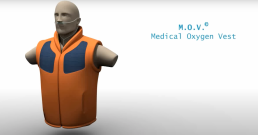
M.O.V. - Medical Oxygen Vest.©
M.O.V. - Medical Oxygen Vest.©
Rutger Berntsen, founder of international company, OxygenWorldwide has designed and named the M.O.V described as a body warmer vest that was based upon the principles of a portable oxygen concentrator (POC). This medical oxygen vest contains the necessary equipment to provide medical oxygen to the wearer. The vest would be ideal for oxygen users who require a constant supply of medical oxygen and the life line of being able to be mobile and freely move around without the constraints of a more conventional oxygen device. The M.O.V is designed for e.g. young children or active sport users to give the ability to move around more freely such as going to play a game of golf or running around in the playground.
A portable oxygen concentrator (POC) is normally carried around by means of a shoulder strap. This is not convenient when one has to make movements beyond normal walking. The main advantage of the M.O.V. is that the weight of the equipment in the vest is equally divided over two sides located under the arm pits. The fact that the equipment is ‘concealed’ inside the vest could take away the burden of having to carry around a medical device, which to many medical oxygen users indicates the appearance that you are in fact a ‘patient’. Flexible solar panels are placed on the chest and back of the vest to provide (at this stage) power to the display panel. To make the system fully operational the batteries should (at this stage) be charged by plugging into a AC outlet.
For more information and/or a 3D animation contact: rutgerberntsen@oxygenworldwide.com

Oxygen Travel in Irene's care

Name: Irene
1 year anniversary at OxygenWorldwide
Nationality: Dutch
Loves: to take away customer worries and make them feel free to travel anywhere anytime in the world
Hi, my name is Irene and I joined the OxygenWorldwide team in October 2011.
I come from the Netherlands and moved to Spain in 2002, to take care of my mother who suffered from dementia. In May 2011 she passed away at the blessed age of 93 years. I now care for three dogs, of which two were stray. In my spare time I enjoy taking my dogs on hikes through the stunning mountains or along the beach. I have a keen interest in nature and take part in several environmental groups.
What I find the most interesting and satisfying whilst working at OxygenWorldwide is that from one place I can help people from all over the world with their need for oxygen, to take away their worries and make them feel free to travel anywhere and at anytime. It feels like being a spider in a web, able to reach all corners of the world.
On a Sunday afternoon once I received a phone call from a patient who was on holiday in Gran Canaria with a portable oxygen concentrator that had broken down. He had already contacted his insurance company back home, but they couldn´t help him any further. It took some urgent calling and emailing, but I managed to find a replacement first thing Monday morning, this shows how quickly we can help our customers in a time of need.
There was another occasion recently from a customer who´s portable concentrator broke down just the evening before his flight back home. He did manage to get something for during the flight, but he was so afraid he wouldn´t make it through the night! That same evening we managed to deliver a concentrator to where he was staying, so he could have a good night´s sleep and be fit for his journey home.
The strangest request I think was from a patient who wanted to rent a portable oxygen concentrator in Singapore, to be shipped to Japan, so he could take it on his holiday to Singapore and back to Japan again, to then ship it back to Singapore!
If I ever get the chance to travel, I would like to see a lot of places, so I think I would opt for a world cruise… in fact, I might book a permanent place, instead of going into an old people´s home when i retire!
I am very proud to be celebrating 20 years of OxygenWorldwide this year and hope to be helping more people travel this year.
Contact me at info@oxygenworldwide.com for further details and information on travelling with medical oxygen abroad or visit www.oxygenworldwide.com to enquire or read more about our team and how we have been supporting customers for 20 years.
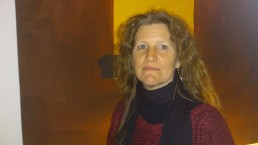
Oxygen Travel in Sophie's care
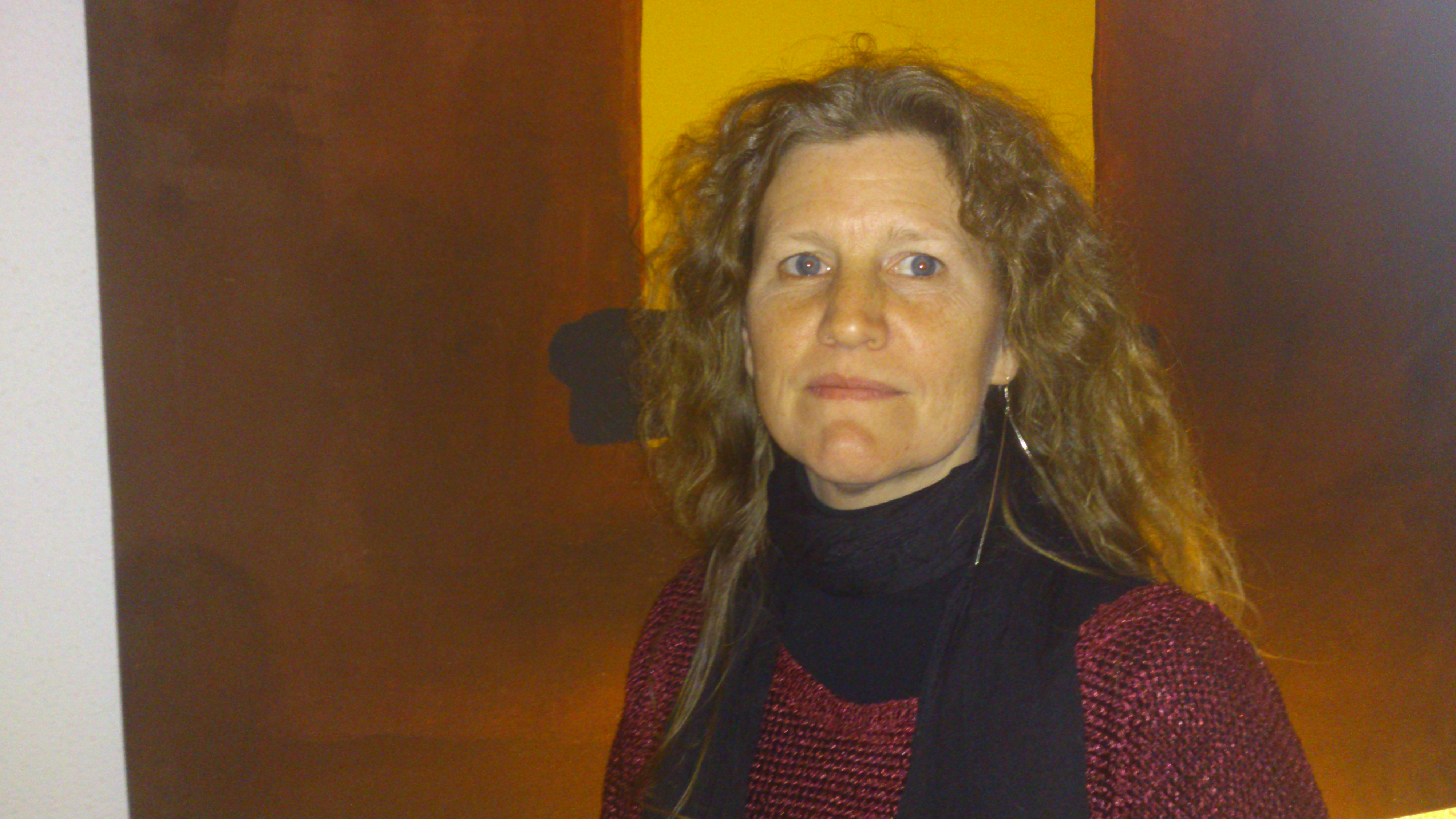
Name: Sophie
3 year anniversary at OxygenWorldwide
Nationality: Belgium
Loves: speaking different languages and being able to communicate with customers from around the world
My name is Sophie Proot and I have been part of the Oxygenworldwide team since September 2010.
I was born in Belgium and have been living in Spain since 1998. Eager to discover other countries, I left Belgium first towards England and after France and Greece, I finally ended up in Spain.
In my search for a new job, possibly in another foreign country, I came across a job offer at OxygenWorldwide. Since the day I joined OxygenWorldwide, each day of my life has been a voyage. Today e.g. we started by finishing off a delivery for a patient travelling to India, next you attend to a patients request for Spain, and before you know it you are talking to your colleagues in Chile regarding the next patient travelling to Santiago.
In my previous job, I had come across the services of OxygenWorldwide who at the time was called Care O2. I remember I had experienced it as a quick, swift and friendly service.
Now I have the opportunity to live the experience and on a global level, it makes it oh so much more interesting and exciting. What I get out of the job for myself? To have contact with people all over the world and to communicate in many different languages. Towards the patients, it feels nice to assist them towards achieving the same dream I have myself, which is travelling. When a patient inquires about whether it is possible to travel with O2, it is great being able to simply answer “yes, of course” when really the person enquiring taught this phone call was the beginning of a long and hard search for a solution.
The strangest or most surprising thing I came across during the time I have been working with the company is that, recently a patient enquired by phone. Whilst waiting for my reply, the patient said: “somebody is happy at her job!” I said: Why? The lady replied: “you were singing!” Well, this lady was right!
If I could book to go any part in the world I would choose to travel to Patagonia.
I feel proud and lucky to be part of a company which has quality and service as its top priority and hope to be part of the OxygenWorldwide team for many more years providing a carefree holiday for many people.
I am very proud to be celebrating 20 years of OxygenWorldwide this year and hope to be helping more people travel this year.
Contact me at info@oxygenworldwide.com for further details and information on travelling with medical oxygen abroad or visit www.oxygenworldwide.com to enquire or read more about our team and how we have been supporting customers for 20 years.