
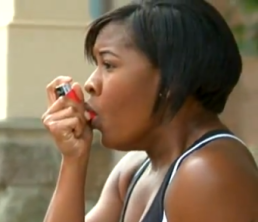
An inadequate supply of oxygen contributed to cause of death
During an asthma attack, the smooth muscles of the bronchi contract, causing them to narrow, and the tissues lining the airways swell due to inflammation and mucus secretion into the airways. The top layer of the airway lining can become damaged and shed cells, further narrowing the diameter of the airway. A narrower airway requires the person to exert more effort to move the same amount of air in and out of the lungs. In asthma, the narrowing is reversible, meaning that with appropriate treatment or on their own, the muscular contractions of the airways stop, and the inflammation resolves so that the airways widen again, and the airflow into and out of the lungs returns to normal.
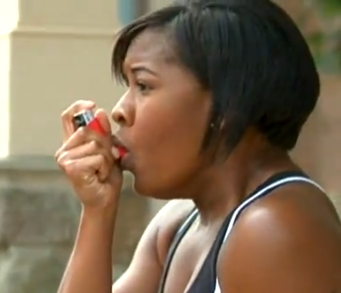
The airways narrow in response to stimuli that usually do not affect the airways in normal lungs (triggers). Such triggers include:
Allergens
Infections
Irritants
Exercise, stress, and anxiety
Aspirin
Many inhaled allergens can trigger an asthma attack, including pollens, particles from dust mites, body secretions from cockroaches, particles from feathers, and animal dander. These allergens combine with immunoglobulin E (IgE, a type of antibody) on the surface of mast cells to trigger the release of asthma-causing chemicals from these cells. (This type of asthma is called allergic asthma.) Although food allergies induce asthma only rarely, certain foods (such as shellfish and peanuts) can induce severe attacks in people who are sensitive to these foods.
Infectious triggers are usually viral respiratory infections, such as colds, bronchitis, and sometimes pneumonia.
Irritants that can provoke an asthma attack include smoke from tobacco, marijuana products, or cocaine, fumes (such as from perfumes, cleaning products, air pollution), cold air, and stomach acid in the airways caused by gastroesophageal reflux disease (GERD).
Additionally, people who have asthma can develop bronchoconstriction when exercising. Stress and anxiety can trigger mast cells to release histamine and leukotrienes and stimulate the vagus nerve (which connects to the airway smooth muscle), which then contracts and narrows the bronchi.
Asthma attacks can vary in frequency and severity. Some people are symptom-free most of the time, with only an occasional, brief, mild episode. Other people cough and wheeze most of the time and have more frequent and severe attacks.
An asthma attack may begin suddenly with wheezing, coughing, and shortness of breath. At other times, an asthma attack may come on slowly with gradually worsening symptoms. In either case, people with asthma usually first notice shortness of breath, coughing, or chest tightness. The attack may be over in minutes, or it may last for hours or days. Itching on the chest or neck may be an early symptom, especially in children. A dry cough at night or while exercising may be the only symptom.
During an asthma attack, shortness of breath may become severe, creating a feeling of severe anxiety. The person instinctively sits upright and leans forward, using the neck and chest muscles to help in breathing, but still struggles for air. Sweating is a common reaction to the effort and anxiety. The pulse usually quickens, and the person may feel a pounding in the chest.
In a very severe asthma attack, a person is able to say only a few words without stopping to take a breath. Wheezing may diminish, however, because hardly any air is moving in and out of the lungs. Confusion, lethargy, and a blue skin color are signs that the person's oxygen supply is severely limited, and emergency treatment is needed. Usually, a person recovers completely with appropriate treatment, even from a severe asthma attack. Rarely, some people develop attacks so quickly that they may lose consciousness before they can give themselves effective therapy. Such people should wear a medical alert bracelet and carry a cellular phone to call for emergency medical assistance. Research suggests a strong link between stress and asthmatic symptoms and experts suggest better treatment, including confident, self management of the condition, could improve the quality of life for asthmatics. The close links between stress and asthma are clear given the potential consequences of untreated attacks.
An asthma attack can be frightening, both to the person experiencing it and to others around. Even when relatively mild, the symptoms provoke anxiety and alarm. A severe asthma attack is a life-threatening emergency that requires immediate, skilled, professional care. If not treated adequately and quickly, a severe asthma attack can cause death.
People who have a mild asthma attack are usually able to treat it without assistance from a health care practitioner. Typically, they use an inhaler to deliver a dose of a short-acting beta-adrenergic drug such as albuterol , move into fresh air (away from cigarette smoke or other irritants), and sit down and rest.
People who have severe symptoms should typically go to an emergency department. For severe attacks, doctors give frequent (or sometimes continuous) treatment using inhaled beta-adrenergic drugs and sometimes anticholinergic drugs. Supplemental oxygen is also given immediately so as to increase the percentage level of oxygen being breathed in to help raise oxygen levels in the blood.
Part two to be continued....


Simply snoring and oxygen
Snoring can be a sign of sleep apnoea or other breathing conditions.
Types of Sleep Apnoea
1. Obstructive Sleep Apnoea: most prevalent, brought on by relaxation of the throat tissue
2. Less frequent, central nervous system involvement in central sleep apnoea
3. Complex sleep apnoea, which combines central and obstructive sleep apnoea
Sleep apnoea symptoms
- Experiencing drowsiness in the daytime
- Headaches when you first wake up
- Loud snoring followed by pauses and gasping for air
- memory loss or difficulty
- Irritable mood swings
- Need to go to the toile often at night
- Sore or dry throat in the morning
Left untreated there are potential risks to health such as:
- Gaining body weight
- Developing diabetes
- High blood pressure
- Potential strokes
Medical Sleep Apnoea Treatments
- Devices that provide continuous positive airway pressure (CPAP)
- Devices for oral hygiene
- Surgery (for more serious situations)
- Additional oxygen treatment
For individualised support, don't let these treatments stop you from travelling. You can take a look more at where and how it works over at OxygenWorldwide's website.
Fit to fly?
Billions of us travel by air each year however we are all individuals with varying needs, including a range of medical conditions and all airlines have different policies regarding this. For example some airlines will require a medical certificate to prove that you fit to fly.
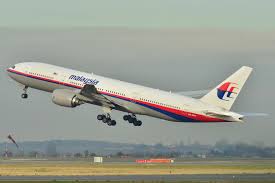
The airline needs to ensure that air travel will not worsen or agitate a pre-existing condition and also that the patient’s ailment will not affect the comfort or safety of other passengers on the flight. Regardless of a doctor’s medical certificate the final decision remains with the airline and the captain of the flight and they may still refuse carriage.
A main considering factor involved in this decision making process is the affect of altitude, humidity and oxygen saturation levels during flight. Modern aircraft have a cabin altitude pressure equivalent of between 5,000 and 8,000 feet above sea level. (source: cyprusairways.com) This means that your blood will not be as saturated with oxygen and can affect breathing, cardiac activity, circulation and brain activity. Sometimes during flight, although not normally for long periods of time, a person’s oxygen saturation level can fall to 90%. A healthy individual can tolerate this temporary change with no problems however a patient with cardiac, anaemia or respiratory problems may find themselves in serious difficulties.
Aircraft cabins have low humidity levels that dry out the air; this can cause dryness of the skin or other mucous membranes within the body such as the throat and lungs and affect respiration.
Reduced cabin pressure can also cause gas volume expansion. Any gas that may have inadvertently been introduced to the body during surgery could then expand and cause pain or even perforation through the membrane.
A main deciding factor in whether or not a person may be considered ‘fit to fly’ is their oxygen saturation level. If a person’s saturation level is equal to, or more than 95%, they do not need oxygen for flying. If an asthma sufferer has a stable status then they should be able to fly as long as they keep their medication to hand. Anyone with an active exacerbation of respiratory disease should wait until their condition has improved before considering to fly. Consultation with a doctor or respiratory specialist will aid in ascertaining whether it is wise to fly or whether additional aids or medication would be wise to use during the flight. This may also help to persuade the airline that you are fit to fly.
As passengers sometimes cannot take their own oxygen equipment on board due to regulatory requirements although this is changing and more and more POC's (portable oxygen concentrators) are allowed on board of the aircraft.
If a passenger has used oxygen provided by the airline company he or she will have to pre-arrange oxygen at the end of the flight. OxygenWorldwide does provide an Airport Service where they have somone waiting at the door of the aircraft to hand over a portable oxygen device so one can travel onwards to their hotel or other holiday destination.
Please check with OxygenWoldwide for availability on your destination
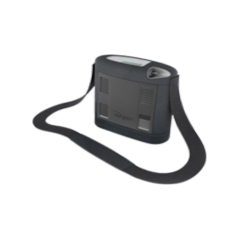
Five reasons why travelling is easy with oxygen
1. Portable oxygen concentrators...
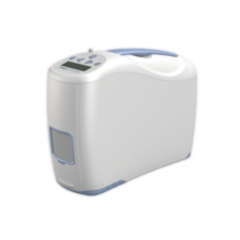
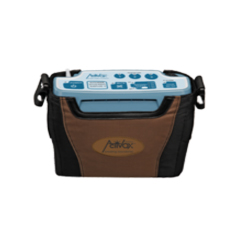
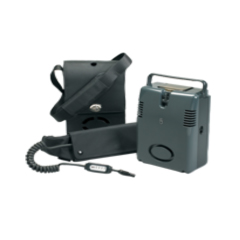
2. Oxygenworldwide has a huge network on a worldwide scale
3. OxygenWorldwide has a team of experts on hand prior to travel and during your holiday (SOS)
4. There are a wide selection of equipment types suitable for most oxygen patients
5. OxygenWorldwide have a multilingual team of staff

How oxygen can aid in severe altitude sickness
An Increasing number of people are now travelling to greater heights as it is becoming more readily accessible and cheaper to do so. However there can be adverse medical implications from doing so. Altitude sickness can affect people that ascend to more than 2500 metres of altitude, whether by climbing or being transported to these heights. It can also affect a person if they ascend too quickly for the body to adapt. It can present with mild symptoms that can subside when the individual has rested or returned to a lower altitude. However more extreme symptoms can be life-threatening if not counter-acted or treated.
Altitude sickness occurs because as you ascend to higher altitudes the air pressure reduces. The air still contains the same proportion of oxygen but as the air is thinner at higher altitudes there are fewer oxygen molecules available in each breath. This means that you have to breathe deeper and faster to obtain the same amount of oxygen that your body requires. If you ascend at a slow rate your body has a chance to acclimatise and adapt to the changing conditions. Your breathing rate will slow down as your body makes more red blood cells to carry more oxygen in your blood.
The most important initial treatment for someone displaying signs of altitude sickness is to stop the ascent and rest to allow the body to acclimatise. If symptoms persist then drop to a lower altitude. Normal symptoms illustrated by the body whilst it is acclimatising can be an increased breathing rate, deeper breathing, shortness of breath on exercise, changes to breathing patterns during sleep, disturbed sleep or passing more urine than normal.
If the affects of altitude are more severe than this then the body can display symptoms of the following three problems; acute mountain sickness, high-altitude cerebral oedema or high-altitude pulmonary oedema.
The exact cause of acute mountain sickness (AMS) is not known but it is thought to be a response of the brain to lower oxygen levels in the blood at higher altitudes which produces some swelling of the brain.
High-altitude cerebral oedema (HACE) usually develops in someone who already has acute mountain sickness (AMS). The swelling of the brain that has led to AMS gets worse and starts to interfere with the function of the brain. So, HACE is really a severe form of AMS.
High-altitude pulmonary oedema (HAPE) is a build-up of fluid within the lungs. The exact reasons why HAPE can develop are unknown. It is thought that the high altitude causes an increase in pressure in the blood vessels around the lungs which leads to smaller blood vessels becoming 'leaky', allowing fluid to escape from the blood vessels into the lungs.
The most important treatment if you start to develop symptoms of mild AMS is to stop your ascent and to rest at the same altitude. For most people, symptoms will improve within 24-48 hours with no specific treatment. Adapting to conditions (acclimatisation) usually occurs after 1 to 3 days at a given altitude. Simple painkillers and anti-sickness medication can help headache and sickness. You should also make sure that you drink plenty of fluids.
However, if your symptoms are severe, they do not improve after 24 hours, or they are getting worse, you need to descend to a lower altitude. You also need to descend urgently if you develop any symptoms or signs of HACE or HAPE.
Treatment of HACE and HAPE is similar and most importantly it is to move down to a lower altitude immediately. If this does not happen, or is delayed, death can occur. Treatment with oxygen and medicine can help to relieve symptoms and can mean that getting someone down to a lower altitude becomes easier. However, these treatments do not remove the need for descent. The descent should be at least to the last altitude at which the person woke up feeling well. A device has been developed called a portable hyperbaric chamber. It is, essentially, an airtight bag that is pressurised by a pump. The person with HACE is placed inside it and it can provide the same effect as a descent. They will be breathing air equivalent to that at much lower altitude. This can be life-saving when descent is not possible and oxygen is unavailable.
You can also use oxygen (small cylinder) to avoid these problems. OxygenWorldwide has on certain occasions arranged medical oxygen for mountain climbing. (For availability on your destination check with info@oxygenworldwide.com.
Let’s Talk About Idiopathic Pulmonary Fibrosis
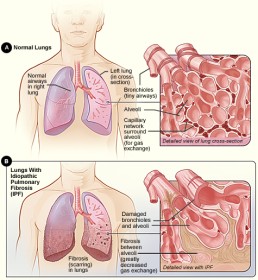
Pulmonary Fibrosis (PF) is a debilitating disease, marked by progressive scarring of the lungs, that increasingly hinders a person’s ability to breathe.
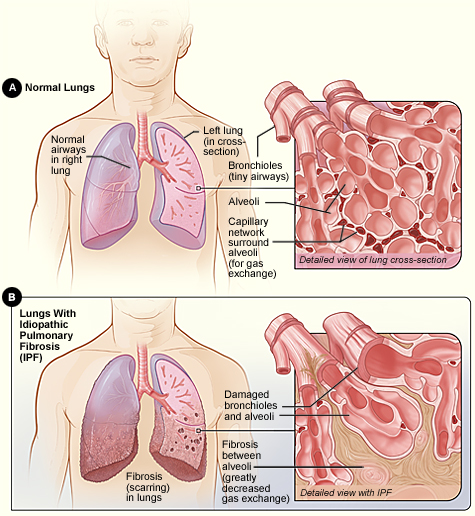
Sometimes pulmonary fibrosis can be linked to a particular cause, such as environmental exposure, chemotherapy or radiation therapy, infection, or autoimmune diseases such as rheumatoid arthritis. However sometimes there is no known cause and is referred to as idiopathic pulmonary fibrosis or IPF.
The cause of Pulmonary Fibrosis still remains a mystery, but it is seems to involve changes in the lung’s normal healing processes. Patients may have an exaggerated or uncontrolled healing response that over time produces excessive fibrous scar tissue, or fibrosis, in the lungs. This scarring causes the lung’s tiny alveoli to thicken and harden, rendering them less able to function and provide the body with the oxygen it needs.
There are a few risk factors that may alter the lung’s healing process and cause scarring. These may include:
- Cigarette smoking
- Occupational exposure to dusty environments (e.g. wood or metal dust)
- Genetic predisposition (10-15 percent of cases)
- Viral or bacterial lung infections
- Acid reflux disease
Pulmonary Fibrosis hinders a person’s ability to take in oxygen. It causes shortness of breath and is usually associated with a persistent dry cough. The disease progresses over time, leading to an increase in lung scarring and a worsening of symptoms. Unfortunately, Pulmonary Fibrosis is ultimately disabling and fatal.
If you have been diagnosed with Pulmonary Fibrosis, there are a number of things you can do to take part in your own treatment and help yourself stay healthy.
- Get your flu vaccine every year.
- Stop smoking.
- Consult your doctor about enrolling in a pulmonary rehabilitation or respiratory therapy program to help increase your strength, learn breathing techniques, and expand your social support network. Many patients report improved breathing and quality of life after adding education and exercise to their treatment.
- Eat a well-balanced diet to maintain in ideal body weight. This helps support your body and keeps up your strength.
- Consider eating smaller, more frequent meals during the course of your day. Many patients find it easier to breathe when their stomach isn’t completely full.
When Pulmonary Fibrosis progresses to a point where your blood-oxygen levels are low, another important tool that can help sufferers is supplemental oxygen therapy. Oxygen can be prescribed by your doctor or via a local oxygen supply company. It contains a higher percentage of oxygen and helps increase the amount of oxygen that is available to be transferred from your lungs into the bloodstream, thereby producing more energy to be used by the cells of your body.
Supplemental oxygen can:
- Decrease your shortness of breath – especially with exercise
- Improve your ability to perform daily activities
- Improve your overall level of fitness
- Improve your quality of life
- Increase life span by decreasing the extra work your heart is doing because of low oxygen saturation levels
And in case you need medical oxygen at any destination worldwide please contact us on info@oxygenworldwide.com and we will try to meet your specific requirements.

7 surprising headache triggers
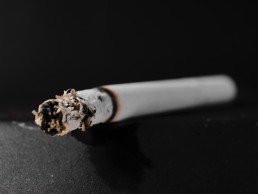
Do not smoke - very dangerous
Fire chief Steve Dirksen says the combination of pure oxygen and open flame is extremely volatile. He says it was quick response by hospital employees that prevented a much more serious situation.
The exact nature of the injuries has not been disclosed because of the patient confidentiality law.
Hospital employees who responded to a smoke alarm early Thursday in the room rescued the patient, had the fire out when firefighters arrived and evacuated patients in nearby rooms. Damage to the room was minor.
The above recent news articles shows how dangerous it is. Oxygen is flammable and patients need to be aware of the dangers faced when using this medical home treatment.

Home Oxygen Supply explained
- chronic obstructive pulmonary disease (COPD) - a long-term disease of the lungs, severe long-term asthma
- cystic fibrosis - an inherited disease that causes the lungs to become clogged with thick, sticky mucus
- pulmonary hypertension - high pressure inside the arteries to the lungs, which causes damage to the right-hand side of the heart
- obstructive sleep apnoea - a condition that causes interrupted breathing during sleep diseases of the nerves and muscles or ribcage
- heart failure - when the heart struggles to pump enough blood around the body.
- compressed oxygen cylinders
- liquid oxygen in cylinders
- an oxygen concentrator machine, which extracts oxygen from the air
- Oxygen cylinders
A safe and happy flight with portable oxygen
Just because you need to travel with medical oxygen, this need not restrict the opportunities to travel overseas it just takes a little bit more planning. Flying with a Disability offers you the following advice to ensure a safe, happy flight.
Travellers who require oxygen for medical use are, unfortunately, subject to a charge per bottle. This rate varies between airline, and can be quite expensive. You will need to contact the airline at least 48hrs prior to flying to advise the flow rate, and to get full medical clearance, though this tends to be minor technicality.
Charges for portable medical oxygen can vary greatly, usually between £30 and £100 ($50 - $150). It is interesting to note that many airlines charge not per canister, but per leg of your trip. So in a flight which involves two legs, you're going to be charge twice as much a direct flight, despite the fact that you may be covering the same distance in the same length of time.
Economically, therefore, it can work out a lot cheaper if you can organise a direct flight, though this may not always be possible.
If you need help with planning your trip use specialised medical oxygen companies who can help answer all your queries and make your journey stress-free and a safe landing.
There is also some planning whilst safely on the ground with back up services available for portable oxygen concentrators whilst travelling overseas so you can ensure to have a great holiday with medical oxygen.