
THE BEST supplements to boost your diet during dark winter months include vitamin D, which has now been found to protect against severe asthma attacks.
The best supplements to take during cold winter months include vitamin D due to the lack of sunshine.
However, a new study has found that topping up on the essential vitamin could also protect against severe asthma attacks too.
Asthma attacks can be more prevalent during winter because cold air in the airways can cause them to go into spasm, according to Asthma UK.
Researchers at Queen Mary University of London discovered that people who took oral vitamin D supplements in addition to standard asthma medication could halve their risk of an asthma attack that required hospital attendance.
"On average, three people in the UK die from asthma attacks every day.
While getting vitamin D from sun exposure is the most efficient way to absorb it, people can struggle to get enough during the winter months and there is also the risk of skin cancer.
Reference: http://www.express.co.uk/life-style/health/861375/best-supplements-vitamin-d-diet-asthma-attack-winter


12 signs of COPD
Short for Chronic Obstructive Pulmonary Disease, the term refers to progressive lung disease that is characterised by increasing breathlessness.
- Wheezing
- Chest tightness
- Increased feelings of breathlessness
- Frequent coughing
- Feeling short of breath, especially when engaged in physical activity
- Clearing your throat of excess mucus first thing in the morning
- A chronic cough that may produce clear, white, yellow or greenish mucus
- Blueness of the lips or fingernail beds
- Lacking in energy
- Having respiratory infections on a regular basis
- Swelling in the ankles, feet or legs
- Unintentional weight loss (as it progresses)
Read more: http://metro.co.uk/2017/08/28/what-is-copd-12-signs-you-need-to-be-aware-of-6885110/#ixzz4sHkcozj5
Oxygen Found on the Moon Could Provide Answers About Ancient Earth
A Japanese spacecraft has discovered oxygen from Earth on the Moon. Scientists believe they may be able to find additional oxygen samples from billions of years ago, which could answer questions related to our planet's ancient atmosphere.
While researchers have known for years that oxygen can be found on the Moon, a Japanese spacecraft has detected lunar samples of the element with a very interesting origin: Earth.
Not only does the team believe the discovery could shed light on our planet’s creation billions of years ago, including the state of its early atmosphere, they also have a theory on how Earth’s oxygen made it to the Moon. The researchers believe oxygen ions slowly made their way from the Blue Planet to the Moon during this brief respite and became embedded in the Moon’s loose top layer of soil and rock.
Our Future with the Moon
Geologic activity on Earth has erased evidence of our ancient atmosphere. However, these oxygen ions on the Moon could remain embedded for billions of years. Therefore, collecting samples of this displaced oxygen could help researchers understand how Earth’s atmosphere has changed over time and how much of an influence these changes had on the evolution of various forms of life.
In addition to helping us understand the Earth’s past, such research could also help us in efforts to colonize space. We do need oxygen to breath, after all, and the Moon seems to be the most likely colonization destination based on the number of plans in the works: Japan aims to put another astronaut on the Moon by 2030, Amazon CEO Jeff Bezos believes it’s time for us to permanently settle there, and the United Arab Emirates (UAE) has its own plans for a Moon colony.

New Smartphone App Could Help COPD Patients

Enter a new smartphone app that aims to use technology to help COPD sufferers to recognize emergencies, and avoid unnecessary doctors’ or ER visits.
Ted Smith is the CEO of Revon Systems, a tech company based in East Louisville, and the developer of the “Smart COPD” app. The app is designed on a simple premise: that some of those emergency room visits could have been prevented if people were able to track their symptoms.
“The focus of the app is helping you keep track of whether your systems are starting to deteriorate so that you don’t have to get to a point where you have to go to the hospital for emergency care” Smith said.
When you open the app, it poses a series of questions: “Shortness of breath?” “Cough?” and “Running nose or feeling like you have a cold?” It also asks for temperature, and for users to punch in the readings from a separate device that measures oxygen saturation and heart rate.
Finally, the app evaluates the information and tells the user whether they need to head to the ER, call their doctor, check back in a few days or that no medical attention is needed.
It’s simple, and requires only a cell phone and a cheap finger oxygen and heart rate monitor.
“People have telephones, they’re our life line. So putting a self-management tool on a cell phone is just a genius idea,” Montague said.
He sees that as a possible opportunity for Smart COPD to reach more people with low-incomes.
“If there’s one thing I wish for, it’s that we take advantage of something we’re already paying for as a society and turn it into health care,” Smith said.
Interested? Search for ‘Revon Systems’ in your App store and look for the “Smart COPD” app.
Reference: http://wfpl.org/local-entrepreneur-creates-copd-app-shows-hope-for-louisvillians/

Thunderstorm Asthma on the Rise

For seasonal allergy sufferers, rain is usually thought of as a friend—it washes the pollen out of the air. However, there are circumstances in which a particular type of wet weather event can make things much worse: thunderstorms. Asthma epidemics have occurred under such circumstances and have affected patients who have never exhibited asthmatic symptoms before. The most recent severe episode occurred in Melbourne, Australia, in 2016, with 8500 emergency asthma visits and nine deaths.[1]
Recently in the Journal of Allergy and Clinical Immunology, Dr Gennaro D'Amato and colleagues[1] explored the nature of this phenomenon and implications for the future. The authors point out that although rare, these events are expected to occur more often with anticipated climate change. According to the authors, the evidence for this so far is limited to pollen and outdoor mold seasons—but even in the northeastern United States, that is about three quarters of the year.
Who Is at Risk?
Certainly, people who are sensitized to the relevant allergens are at risk. Beyond that, we can presume that patients who already have poorly controlled asthma or more bronchial hyperresponsiveness would be at risk, as would patients who have other concurrent risk factors for allergic asthma (such as rhinovirus infection[5]).
What differentiates people who died of asthma from those who did not? Did they have bronchodilating asthma inhalers? Were these fatalities akin to fatal food anaphylaxis in patients who did not have treatment with injectable epinephrine? Many questions remain.
Thunderstorm asthma is an uncommon event that can overwhelm healthcare systems and kill patients. It is yet another reason to screen atopic patients for asthma. Those who are sensitized to pollens or outdoor molds and also wheeze with colds are prime candidates for additional evaluation for undiagnosed asthma. Likewise, patients with exercise-induced asthma (who perhaps have more than just this condition) should probably have spirometry to assess for baseline airway hyperreactivity and perhaps exhaled nitric oxide as well. Perhaps for milder asthmatics who are deemed at higher risk, instead of a bronchodilator alone, we should prescribe a combination inhaler with a corticosteroid and a long-acting fast-onset bronchodilator.
Any views expressed above are the author's own and do not necessarily reflect the views of WebMD or Medscape.
Cite this article: Thunderstorm Asthma on the Rise - Medscape - Aug 11, 2017.

The week oxygen was discovered
references: http://elkodaily.com/lifestyles/professor-hanington-s-speaking-of-science-oxygen/article_e5c5eb04-41cd-599a-94e1-b8585624e8ca.html
Trying to avoid lung disease
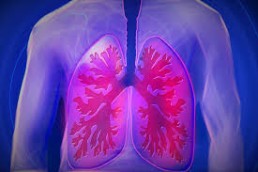
People used to speak of emphysema or chronic bronchitis, but Chronic Obstructive Pulmonary Disease (or COPD as it is generally referred to) is a collective term used to describe several chronic lung diseases, which limit airflow to and from the lungs.

COPD is much more than a so-called "smoker’s cough". It's a serious, progressive life-threatening disease, which causes ongoing breathing difficulties – and, according to the World Health Organization (WHO), in 2015 it killed more than three million people worldwide.
A large international study established that the highest prevalence of Stage 2 or higher COPD was among people in Cape Town, South Africa, and it surmised that both smoking and occupational dust were responsible.
The causes of COPD
Tobacco smoke (this includes second hand exposure), pollution (especially indoor air pollution from cooking fuels in low-income contries) and fumes, as well as frequent lower respiratory infections during childhood can all be causes of COPD. Many people are exposed to fumes, dust and pollution while at work.
Required lifestyle changes if you have COPD
It is essential that you stop smoking, and also avoid spaces where other people smoke. Also avoid polluted or dusty areas. A healthy diet and regular exercise are both also essential to maintain your health and manage your COPD.
To people with COPD, even a common cold can easily lead to a more serious lower respiratory tract infection, making it even more difficult to breathe than usual. People with COPD need to alert their doctor if their COPD symptoms get worse. Treatment may include inhaled medications, oxygen and antibiotics. It is important to note that antibiotics can help to treat a bacterial infection, but not any condition (like the common cold) caused by a virus.
reference: http://www.health24.com/Medical/Asthma/From-our-sponsors/how-to-avoid-chronic-lung-diseases-20170704

Get stronger lungs with these exercises!!
Exercise is a fanastic way to help strengthen muscles and improve heart function all at the same time. It will also give a person overall health benefits and motivation to feel good.

So how does this help you if you have a condition like asthma?
There are breathing exercises that, like aerobic exercises, can strengthen the lungs to relieve asthma symptoms or, in some cases, even prevent the recurrence of asthma attacks.
To make up for the lessened functionality of the lungs through asthma, the body uses other muscles for breathing – such as your neck, back and chest. This, however, doesn’t assist with breathing; it only adds more stress to your body, which is not good for people living with asthma.
With the following breathing exercises, asthma patients can strengthen their lungs and, thus, improve their breathing.
Pursed-Lip Breathing
With a pursed lip, breathe into your nose and breathe out at least twice through your mouth.
Belly Breathing
Breathe into your nose and breathe out through you mouth at least two times. Make sure that each exhale is as long as your inhale. This helps with training your diaphragm to do most of the work while breathing, which builds up the strength to fill and empty your lungs.
If you begin to feel dizzy while practicing any of these exercises, stop immediately.Once you feel better, try again. If the dizziness continues, you should contact your doctor for help.
refernce : Jason Hughes, tricounty

A cold glass of white wine might not be the best option for you
If you suffer from asthma or hayfever - especially at this time of year it has been claimed that some types of refreshing alcoholic drinks may not be a good option for sufferers.

There are some similarities between allergic asthma and hay fever, they are both triggered by an allergen (such as pollen). Summer and al fresco dining are common but your choice of drink may worsen symptons even more.
It's usually the substances found in alcoholic drinks rather than the alcohol itself that can trigger symptoms, says Asthma UK.
Beer contains histimine which is the same substance that's released in the body when you have an allergic reaction. So it could trigger asthma symptoms or make hay fever worse.
And sulphites are preservatives found in many alcohol drinks (like white wine) which can also exacerbate symptoms.
So which ones are better?
Clear spirits like gin and vodka are better options as they're very low in both substances as they're very low in both substances.
When trying to work out which may be best if any trigger your symtoms it is best to avoid...
Any concerns speak with your GP.
reference: netdoctor.co.uk

Interactive Medical Drones
The doctor could give instructions on taking readings such as blood pressure, temperature, heart rate, or sugar or oxygen levels, using equipment dropped by the drone. And the doctor could talk a survivor through ways of giving aid, such as applying tourniquets, cleaning, clotting or bandaging wounds, and injecting medicines.

WILLIAM CAREY UNIVERSITY COLLEGE OF OSTEOPATHIC MEDICINE
Reference:Huff Post