

Crystal takes over POC's
Being able to breathe underwater has long been a fascination for mankind, but the bulky oxygen tanks and face masks take some of the romance out of it.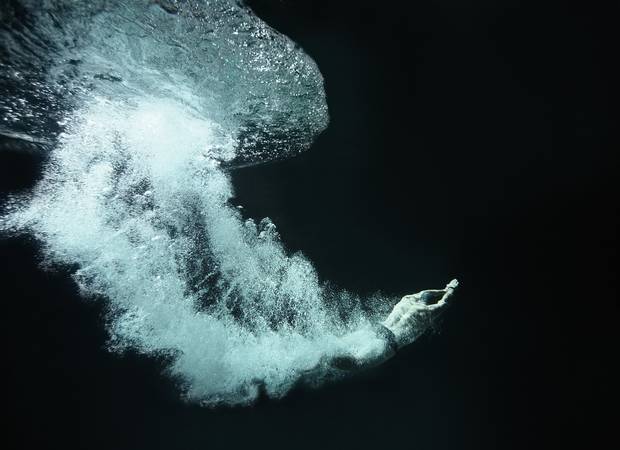
They could soon no longer be needed however, thanks to the creation of the "Aquaman Crystal", or to use its proper name, "[{(bpbp)Co2II(NO3)}2(NH2bdc)](NO3)2 * 2H2O".
Just a spoonful of the crystal can absorb all the oxygen from a room.
The material is able to store the gas at a much higher concentration than oxygen tanks, meaning it would be far smaller and lighter to carry, and can slowly release oxygen when put under a small amount of heat.
Professor Christine McKenzie said the crystal could be valuable for lung cancer patients who must carry heavy tanks around with them, but "also divers may one day be able to leave the oxygen tanks at home and instead get oxygen from this material as it 'filters' and concentrates oxygen from surrounding air or water."
"A few grains contain enough oxygen for one breath, and as the material can absorb oxygen from the water around the diver and supply the diver with it, the diver will not need to bring more than these few grains," she added.
"When the substance is saturated with oxygen, it can be compared to an oxygen tank containing pure oxygen under pressure - the difference is that this material can hold three times as much oxygen."
The "Aquaman Crystal" is sponge-like in consistency and uses cobalt bound in an organic molecule, getting its nickname from the DC comic book character that can swim underwater.
"Cobalt gives the new material precisely the molecular and electronic structure that enables it to absorb oxygen from its surroundings," McKenzie said. "Small amounts of metals are essential for the absorption of oxygen, so actually it is not entirely surprising to see this effect in our new material."
Scientists are now looking at whether the release of oxygen can be triggered by light, though at this stage the crystal is difficult to synthesize in large amounts due to its complex chemical formula.
Update: A representative for Syddansk University has issued a revised estimate of the compound's efficiency. They told Vice in a statement: "I am just updating our story on our website, because it turns out that Prf McKenzie made a calculation error. Pls note that it is not a SPOONFUL of this stuff, that we need to rid a room of oxygen. It is a bucket (10 litres). We apologize."
The material can however draw oxygen from water just as easily as from air, so it remains an interesting proposition for the future of underwater diving
------------------------------------------------------
Ref The Independent,
Friday 03 October 2014


COPD & why you should switch to Portable Oxygen Therapy

Oxygen and Travel – we have it covered
Travelling with oxygen has become much easier with the development of portable oxygen concentrators (POCs). These devices run on a battery pack, can be recharged, plugged into the wall or a cigarette lighter in a car, and can be taken on airplanes.
There are several makes and models, with widely differing features, so it is important to choose the one that is best for you, that delivers enough oxygen to keep your saturation 90 percent or greater at rest and with activity.
Some tips for air travel with POC's:
· Start making arrangements with the airline well ahead of time to find out which POC is allowed. Many airlines list accepted manufacturers and brands on their websites.
· Allow plenty of extra time for check-in.
· Carry several extra battery packs. FAA regulations require enough battery time to cover 150 percent of the flight time.
· POC's and battery packs can be rented.
· Carry an extra three-way plug for recharging your POC in the airport. People often need to recharge their electronic equipment in the airport during layovers, and this will help assure that you will be able to recharge yours.
· POC's are exempt from the carry-on allowance.
· Carry a prescription for oxygen, signed by your doctor.
For more information about oxygen supply whilst on holiday please enquire now at www.oxygenworldwide.com and register for our SOS back up service.

Safe Oxygen Solutions
Medical oxygen adds a higher percentage of oxygen to the air a patient uses to breathe. And fire needs oxygen to burn and if a fire should start in an oxygen-enriched area, the material burning will burn more quickly.
When more oxygen is present, any fire that starts will burn hotter and faster than usual, it is crucial to follow safety precautions when medical oxygen is in use in a home.
Oxygen saturates fabric-covered furniture, clothing, hair and bedding, making it easier for a fire to start and spread, according to the regulator. Smoking is the leading heat source resulting in medical oxygen-related fires, injuries and deaths. Homes where medical oxygen is used need specific fire safety rules to protect people from fire and burns.
Simple, safety tips:
• There is no safe way to smoke in the home when oxygen is in use. Patients on oxygen should not smoke.
• Candles, matches, wood stoves and even sparking toys can be ignition sources and should not be used in the home.
• Keep oxygen cylinders at least five feet from heat sources, open flames or electrical devices.
• Body oil, hand lotion and items containing oil and grease can easily ignite. Keep oil and grease away from where oxygen is in use.
• Never use aerosol sprays containing combustible materials near the oxygen.
• Post “No Smoking” and “No Open Flames” signs in and outside the home to remind people not to smoke.
• Ensure smoke alarms are working by testing monthly. Daylight saving time weekends are great times to replace smoke alarm batteries. Also consider using 10-year batteries for smoke alarms.
• Practice a home fire escape plan with two ways out of every room at least twice a year.
Stay safe with OxygenWorldwide and our care team – register your portable oxygen concentrator with us today at info@oxygenworldwide.com

Traveling with oxygen - you are in good hands
Needing medical oxygen in your life is not the end of getting around, travel, seeing the world or having fantastic vacations to the city breaks in Europe, long haul to live the dream (for 2 weeks at least) in the U. S of A. Wherever you decide to fly to and visit all you need is careful planning and Oxygen Worldwide.
Travelling as an oxygen user dependent on a source of oxygen, means that you will probably have lots of questions when thinking about going abroad – or you may never thought you could. Luckily, Oxygen Worldwide can help, advise and guide you to all those answers when it comes to travelling with oxygen, who deal with organising travel with oxygen 365 days of the year.
But who are we?
Below is a short introduction to our company, the team and what we do and our speciality is due to our knowledge, success and partnership relationships with a network of suppliers across the globe.
- Oxygen Worldwide is a company under Dutch management established in 1993.
- Oxygen Worldwide is based in Spain and operates internationally.
- Our objective is to make travel for those who need oxygen as carefree as possible.
- All Oxygen Worldwide employees are multilingual. Our customer service staff speaks four languages.
- Oxygen Worldwide arranges oxygen delivery worldwide for oxygen users on holiday or staying abroad for a longer period of time, also in case of a tour through several countries.
- Oxygen Worldwide arranges oxygen for individual users, insurance agencies, emergency centres and oxygen suppliers in your home country. Oxygen Worldwide delivers liquid oxygen (LOX), cylinders and concentrators.
- Oxygen Worldwide has an international network of oxygen suppliers and works with associates worldwide.
If you have any question or would like to speak with us do not hesitate to contact our team at info@oxygenworldwide.com

One day we will provide our clients with some 'grains' opposed to a POC to travel with.

Just a few grains of the newly synthesized material could allow us to stay underwater without scuba tanks
Using specially synthesized crystalline materials, scientists from the University of Southern Denmark have created a substance that is able to absorb and store oxygen in such high concentrations that just one bucketful is enough to remove all of the oxygen in a room. The substance is also able to release the stored oxygen in a controlled manner when it is needed, so just a few grains could replace the need for divers to carry bulky scuba tanks.
The key component of the new material is the element cobalt, which is bound in a specially designed organic molecule. In standard form – and depending on the available oxygen content, the ambient temperature, and the barometric pressure – the absorption of oxygen by the material from its surroundings may take anything from seconds to days.
"An important aspect of this new material is that it does not react irreversibly with oxygen – even though it absorbs oxygen in a so-called selective chemisorptive process," said Professor Christine McKenzie from the University of Southern Denmark. "The material is both a sensor, and a container for oxygen – we can use it to bind, store, and transport oxygen – like a solid artificial hemoglobin."

Varying the constituent structure of the material can also bind and release oxygen at different rates. This means it could be used to regulate oxygen supply in fuel cells or create devices like face masks that use layers of the material to provide pure oxygen to a person directly from the air, without the need of other equipment.
Even more interestingly, the material may also be configured in a device that could absorb oxygen directly from water and allow a diver to stay submerged for long periods of time, without the need for bulky air tanks.
"This could be valuable for lung patients who today must carry heavy oxygen tanks with them," explains Professor McKenzie. "But also divers may one day be able to leave the oxygen tanks at home and instead get oxygen from this material as it 'filters' and concentrates oxygen from surrounding air or water. A few grains contain enough oxygen for one breath, and as the material can absorb oxygen from the water around the diver and supply the diver with it, the diver will not need to bring more than these few grains."
Using x-ray diffraction techniques to peer inside the atomic arrangement of the material when it had been filled with oxygen, the scientists realized that once the oxygen has been absorbed it can be stored in the material until it is released by heating the material gently or subjecting it to a vacuum.
"We see release of oxygen when we heat up the material, and we have also seen it when we apply vacuum," said Professor McKenzie. "We are now wondering if light can also be used as a trigger for the material to release oxygen – this has prospects in the growing field of artificial photosynthesis."
There's no word as yet on any possible commercial production or public availability of the material.
The research was published in the journal of the Royal Society of Chemistry, Chemical Science.
Source: University of Southern Denmark.
What we do at OxygenWorldwide
OxygenWorldwide (What We Do) |
| OxygenWorldwide is a company under Dutch management established in 1993. OxygenWorldwide is based in Spain and operates internationally. Our objective is to make travel for those who need oxygen as carefree as possible. All OxygenWorldwide employees are multilingual. Our customer service staff speaks five languages. OxygenWorldwide arranges oxygen delivery worldwide for oxygen users on holiday or staying abroad for a longer period of time, also in case of a tour through several countries. OxygenWorldwide arranges oxygen at airports until the moment you board the plane and from the moment you deplane*. OxygenWorldwide arranges oxygen at home after hospital discharge. OxygenWorldwide arranges oxygen for individual users, insurance agencies, emergency centres and oxygen suppliers in your home country. OxygenWorldwide delivers liquid oxygen (LOX), cylinders and (portable) concentrators. OxygenWorldwide has an international network of oxygen suppliers and works with associates worldwide. OxygenWorldwide can assist you in English, Spanish, German, French and Dutch. * Available in certain countries only. If you have any questions, please do not hesitate to contact us |
Oxygen treatment for acute severe asthma Home oxygenation would be more effective
Yes. Oxygen can be a lifesaving treatment for people with severe asthma.
Some research has shown it's best not to breathe in pure (100 percent) oxygen when you have severe asthma. Breathing in a lower concentration than 100 percent oxygen works better.
How can it help?
Breathing in extra oxygen through a mask helps get oxygen into your bloodstream while you're recovering from your asthma.
One study has found that you'll be able to breathe better if you don't breathe 100 percent oxygen in the A&E department, but breathe a lower concentration.
How does it work?
Every cell in your body needs oxygen to work properly. If you don't get enough oxygen, you'll pass out eventually and you may die.
If your asthma gets very bad, you'll find it hard to breathe. So you won't get much air into your lungs. And your body won't get the oxygen it needs.
So breathing in extra oxygen should help get enough oxygen into your bloodstream and around your body.
But oxygen is unlikely to harm you. It could save your life.
Medical Oxygen
Oxygen was known to be the only element that supports respiration as early as 1800 and was first used in the medical field in 1810. However, it took about 150 years for the gas to be used throughout medicine. In the early to mid 20th century oxygen therapy became rational and scientific, and today modern medicine could not be practiced without the support that oxygen supplies.
Medical oxygen is used to:
- provide a basis for virtually all modern anaesthetic techniques
- restore tissue oxygen tension by improving oxygen availability in a wide range of conditions such as COPD, cyanosis, shock, severe hemorrhage, carbon monoxide poisoning, major trauma, cardiac/respiratory arrest
- aid resuscitation
- provide life support for artificially ventilated patients
- aid cardiovascular stability

The ABC's of COPD
The ABCs of COPD
COPD is a catch-all term for bronchitis, emphysema and in some cases, chronic asthma. All are associated with airflow obstruction, says Andrew Ries, a professor of family medicine and preventive medicine at the University of California--San Diego. While some patients have a lot of coughing and phlegm, breathlessness is the red-flag symptom. "Patients often first notice it with activities -- they're getting older, and they can't keep up with people their own age on inclines or stairs," Ries says. "They're getting more shortness of breath, and their physical activities are getting diminished -- and it's more than just aging."
There's no cure for COPDs. The goal is to slow progression as much as possible to maintain quality of life and keep patients from getting worse.
"C" Is for Cigarettes
About 15 million Americans have been diagnosed with COPD, while millions more may have it without realizing it. It's the third leading cause of death in the United States and a major cause of disability, according to the Centers for Disease Control and Prevention.
Heavy smoking is the common denominator. At least 80 percent of COPD patients are current or former smokers, usually with pack-a-day (or more) habits over many years. Many people struggling with COPD now were kids or teens when the landmark U.S. Surgeon General's report on the health risks of smoking came out 50 years ago. Back then, smoking was still popular and becoming more so among women. However, COPD is not always due to smoking. A genetic condition called alpha-1 antitrypsin deficiency -- a lack of a lung-protective enzyme -- puts people at higher risk for COPD, specifically, emphysema.
Similar to lung cancer, death rates from COPD are declining -- at least in men. From 1999 to 2010, death rates dropped from 57 men per 100,000 men to less than 48 per 100,000, according to the CDC . But rates for women increased slightly in the same period -- from about 35 to 36 women per 100,000 women.
"O" Is for Oxygen
Tony Kanzia, 68, has COPD, which nudged him into retirement. After working in the automobile industry in the Chicago area for 35 years, he called it quits. "I couldn't do my job anymore," he says. "I couldn't even walk out to the lot to show people the car; let alone go on a test drive -- I needed my oxygen."
He used to enjoy air travel but the planning -- let alone the flights -- all became too much. It involved calling the airline in advance and renting an oxygen tank, along with packing his pulse oximeter -- a small device that lets people clip a probe on their finger or ear to show how well blood is saturated with oxygen. Kanzia recalls the last straw flight, when even a trip to the restroom became a hazard. To tolerate the expected minute or two without his oxygen, he did breathing exercises before leaving his seat. But when he exited the restroom, the service cart was blocking the aisle, and his oxygen saturation dropped as he waited. Flight attendants saw he was in distress and got him back in his seat.
Many COPD patients manage without oxygen therapy, or only use it as needed. Others with severe COPD rely more heavily on oxygen.
Jean Rommes, 70, a semi-retired consultant and COPD activist in West Des Moines, Iowa, still travels a lot -- always with an oxygen tank. Her strategy is to "swallow her pride" and get help as needed to save precious energy. She flies via major airports and uses a wheelchair to get from one concourse to another, although she prefers going by an airport cart with other travelers.
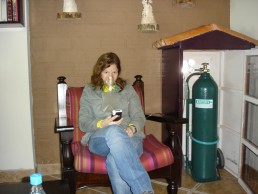
Bunny Music, 70, of Sussex, New Jersey, has used oxygen around the clock for 13 years. She uses liquid oxygen, which she finds easy to carry over her shoulder, rather than a cumbersome gas cylinder (the green tank on wheels). Oxygen concentrators are the third option, but Music says they're heavy and hard to manage with a walker or cane, and "you can't depend upon them if your electricity goes off."
"P" Is for Progressive
To experience how it feels to have COPD, plug your nose and then put a straw in your mouth and try breathing through that, suggests Janet Shaw, 66, of Glendale, Arizona. "That'll give you an idea of what it's like -- and that's on good days," she says with a laugh. "On bad days, it's harder to breathe."
In healthy lungs, the air sacs and airways are elastic. Each time you inhale, the air sacs fill up with oxygen and then deflate as you exhale carbon dioxide waste. But with COPD, this elastic quality is lost, and walls between the airways become damaged, thick and inflamed. Narrowed airways can become even more obstructed with dense, excess mucus, making breathing even harder.
For someone who starts smoking as a teen and persists into adulthood, damage can go on quietly for years, Ries says. "Because you have two lungs and a lot of lung reserve, most lung diseases really don't cause significant problems or symptoms until someone has lost 50 or 60 percent of their lung function." Then a respiratory problem, even a cold, "pushes them over the age, and that's in their 50s, 60s and 70s."
Pneumonia and other respiratory infections often cause symptoms to flare, and COPD care includes keeping up with flu and pneumonia vaccinations.
Early intervention is crucial in staving off COPD progression -- so even if you've never been diagnosed with COPD, but are having breathlessness or other ongoing respiratory problems, it's worth going to a doctor to be screened. You'll likely be given a spirometry test -- a noninvasive way to measure lung function. "Anyone who's got any kind of problem, or is a smoker, [should] see a doctor and get a spirometry test and find out if you have obstruction," Ries says.
"D" Is for Dealing With It
People with COPD can cope by taking prescription medications, keeping up with treatments, building endurance through exercise, accepting limitations and making adaptations in their homes, like rearranging kitchens so they can sit while preparing food. Many use inhalers with drugs called bronchodilators, like Spiriva, to relax muscles in the lungs and widen the airways. Some people also use inhalers that combine a bronchodilator with a corticosteroid to reduce inflammation -- such as Advair and Symbicort.
Lung reduction surgery is sometimes used in severe cases of emphysema. "The surgeons can go in and take out over-expanded parts of the lung, and buy some improvement in symptoms and function for a limited number of patients," Ries explains. For the most severe COPD, lung transplant is an option to improve function, but it's not a cure.
It's possible -- and important -- to build fitness and endurance if you have COPD, says Ries, also the director of the Pulmonary Rehabilitation Program at UCSD. "One of the cornerstones of rehabilitation efforts is getting people to be physically active," he says, "because they often get very sedentary because they're so short of breath."
For her part, Hinkle swears by the UCSD program, which she started in June. Now she tries to make it to the gym to walk on the treadmill three days a week, and she's ramping up her speed and intensity. She's also been introduced to weight machines that will help build up her core strength to support her breathing.
Kanzia's motto for living with COPD is "improvise and overcome." He uses an oxygen concentrator with a 50-foot cord so he can move around his house, and his kitchen is organized for success. "I do a lot of cooking, no problem," he says. "I make a great bowl of spaghetti." Last week he took his grandchildren to the zoo, with the help of other family members and a portable electric scooter.
Hinkle says necessity has taught her the importance of "recognizing when you need help with things and getting it." She strives to remain as self-sufficient as possible -- while taking care of her elderly father. She continues to gain support and encouragement from other members of her pulmonary rehab group. "It's nice to know you're not the only one with these problems," she says, "regardless of what caused them."
Lisa Esposito is a Patient Advice reporter at U.S. News. You can follow her on Twitter, connect with her on LinkedIn or email her at lesposito@usnews.com.