
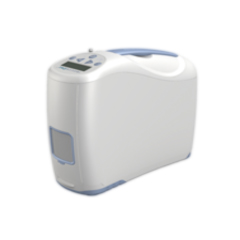
This is definitely a device which will make your life easier.
The Inogen One G2 is a portable oxygen concentrator that provides up to 5 litres per minute on-demand oxygen. This is possible because of its up to 8 hours of battery life (with double battery installed & on setting 1).
It restores your freedom. You are able to use it in a car and on most airlines. So take it away for a weekend trip or long journey you’d never thought you would be able to make. You only go home when you want, not because you’re running out of oxygen.
It’s sound level is as a normal conversation (based on setting 2) and is lower than 37 dbA. It sits discreetly at your feet, next to your bed or behind a chair. It is also light enough (3.2 Kg.) to carry over your shoulder. Day or night, all your oxygen needs can be met with this Portable Oxygen Concentrator. Furthermore is it very easy to operate with just a couple of buttons.
This is definitely a device which will make your life easier.
More Details
| Price shown for Inogen One G2-Single Battery Inogen One G2-Double Battery- € 4,100 Extras: 12 Cell Battery - € 550 24 Cell Battery - € 880 |
|

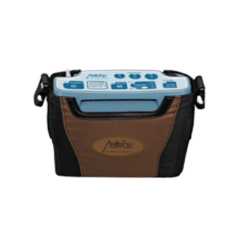
LifeChoice ActivOx provides oxygen up to a unbelievable 15 hours of battery operation time
the LifeChoice ActivOx provides oxygen up to a unbelievable 15 hours of battery operation time.
The LifeChoice ActivOx is the latest lightweight portable oxygen concentrator OxygenWorldwide has added to its range. Its predecessor, the LifeChoice has been a success worldwide. This new portable oxygen concentrator offers the ultimate alternative to cylinders due to its up to 15 hours of battery operation time. Beside that this POC is lighter than the LifeChoice weighing only 2.2 Kg. It is capable of providing medical oxygen up to an equivalent of 3 litres per minute on pulse flow.
Sleep Mode feature
Possibly the only POC with a unique sleep mode feature, the LifeChoice ActivOx enables medical oxygen users to use the machine at night. The very sensitive sleep mode senses every ‘puff’ of breath the patient inhales working in accordance with the breathing pattern to make sure the patient remains fully saturated.
This portable oxygen concentrator delivers medical oxygen to the user in a different way to other POC’s. The technology used is called PulseWave ™ which means that every time a patient breathes in, a ‘puff’ of oxygen is delivered much slower and more synchronised with the actual breath. This new technology eliminates the hiss sound from nasal cannula too.
More details
| Extras: External battery - € 770Package: Lifechoice ActivOx package (incl. External battery) - € 3,520 |
|
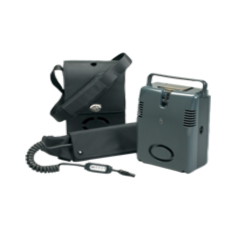
AirSep Freestyle
The very popular AirSep Freestyle has been prescribed for most medical oxygen patients. It is the second lightest concentrator OxygenWorldwide can offer. It provides 3 litres of pulse flow oxygen and only weighs 2.0 kg. and is ideal for a oxygen holiday.
This small portable oxygen concentrator is as small as for example binocular case. Being so small it improves independence. Beside the size and weight the AirSep Freestyle is a very versatile portable oxygen concentrator.
In combination with the ‘AirBelt’, as we named the supplementary battery belt can, this portable concentrator provides up to 10 hours of uninterrupted medical oxygen. The internal battery of the Freestyle can be charged using a normal powerpoint or in-car charger. Beside the fashionable design and exceptional battery life it has an easy to use interface which will give you the confidence you are looking for.
Extras:
Battery belt - € 660
Package:
Freestyle package (incl. Battery belt) - € 3,300
Ltr. per minute < 3 Ltr. p/m - PULSE
Weight 2 kg
Battery life 5+ hrs. battery life with battery belt
Ventilator use No
Recharge time approx. 3 hrs
More details here
Buying Portable Oxygen Concentrators
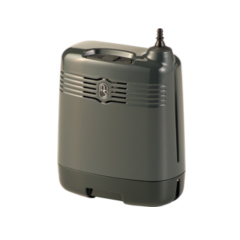
Currently this portable oxygen concentrator, the AirSep Focus, is the smallest in the world. The reason why we think this is your ultimate travel companion is, beside the size, its weight (0.8 kg.) This portable concentrator provides an equivalent of 2 litres per minute of medical oxygen on pluse flow and does therefore caters for most medIcal oxygen users.
The AirSep Focus enables oxygen users to be free from the confines of their home and go on holidays or just for everyday use.
2 micro batteries included
Extras:
Micro Battery - € 330
Ltr. per minute < 2 Ltr. p/m - PULSE
Weight 0.8 kg
Battery life 3+ hrs. battery life
Ventilator use No
Recharge 3+ hrs. battery life
approx. 4 hrs., micro batteries are charged externally
More details click here

Going on holiday with a respiratory condition
Going on holiday or just travelling with a respiratory condition can seem daunting, stressful or just too much to think about. Here are some holiday tips to help you on your next planned trip.
Holiday tips
• Make a plan in advance since you can forget anything important if you wait until the last minute. Consider your walking distance, your ability to climb stairs, your access to restrooms, and the types of transportation you can use.
• Be practical: locations you enjoyed in the past might not be appropriate right now. Select a physical task that both you and your caretaker can handle.
• Shop around to get the best bargain possible. varying providers have varying policies for those with lung diseases. Numerous travel agencies provide vacation packages for those with specific needs.
• Travel agencies are accustomed to handling unique requirements, so ask questions. They ought to be capable of responding to any of your questions and worries.
How do I choose my accommodation?
For trips to the UK National Accessible Accommodation Standard assesses all types of accommodation, including self-catering, for accessibility. It puts accommodation into four mobility categories:
Category One – suitable for people able to climb a flight of stairs that have extra fittings to aid balance.
Category Two – suitable for someone who needs a wheelchair some of the time but can manage a maximum of three steps.
Category Three – suitable for people who depend on a wheelchair but who can transfer unaided to and from the wheelchair in a seated position.
Category Four – suitable for a person who depends on the use of a wheelchair and needs help from a carer or a mechanical hoist to transfer to and from the wheelchair.
Holidays abroad
It's a common misconception that individuals with lung conditions cannot travel, but this is untrue. Packages vary, just like in the UK, so compare prices. Prior to choosing a destination, always confirm with your physician or other healthcare provider that you are well enough to travel and make all of your travel plans well in advance.
How do I get there?
By Ferry
People with disabilities can utilise lifts, restrooms and other amenities provided by numerous ferry operators. Vehicles carrying disabled passengers may be eligible for special parking and priority loading.
By Train
Passengers with specific requirements are catered for on Eurostar trains. Certain coaches are wheelchair accessible and permit the use of oxygen tanks. If you're going farther in Europe, find out the applicable European train company's rules regarding oxygen transportation.
By Car
Prior to your trip, be sure the vehicle you are driving has been inspected and/or serviced. Verify if your insurance provider needs a green card, which facilitates unrestricted automobile travel across international borders. Drivers of passengers with severe mobility impairments can park near to their destination in the UK thanks to Blue Badges. You might be allowed to use the Blue Badge overseas because the UK and other European Union (EU) nations have informal parking agreements in place.
Holidaying abroad with oxygen
Prior to your trip, you must plan for the provision of oxygen if you will require it for the duration of your vacation.
- You must get in touch with an oxygen supplier in the nation you will be visiting if you are travelling outside of Europe.
- Renting a portable oxygen concentrator (POC) has proven to be a more cost-effective option for travellers than carrying oxygen supplies for the duration of their trip.
- You might still need to think about setting up a backup oxygen source, though, in case of emergency.
- When taking a plane trip, keep in mind that various airlines have varied guidelines about the use and transportation of oxygen and medical equipment like POCs.
- Make sure you always confirm with the airline you are flying with.

health warning in UK for air pollution
The government has issued health warnings due to high levels of air pollution spreading across England this week.
The pollution is a mix of local and European emissions and dust from the Sahara desert, and is affecting parts of southern England, the Midlands and East Anglia.
The elderly and those with lung or heart disease are urged to avoid strenuous exercise outside.
British Lung Foundation honorary medical adviser Dr Keith Prowse spoke today about the implications of high levels of pollution for people with lung disease.
“Air pollution can have the greatest impact on people with pre-existing respiratory conditions such as chronic obstructive pulmonary disease (COPD) or asthma, worsening symptoms such as coughing and breathlessness. The dust from the Sahara that we are seeing at the moment are worsening many local air pollution levels.
“When levels of air pollution are high, people with these conditions, or anyone else who finds themselves coughing or wheezing in times of high pollution, should avoid strenuous exercise outdoors and are better off trying to exercise away from pollution hotspots, such as busy roads or during rush hour.
“People who use a reliever inhaler should make sure that they carry it with them. If they feel that their conditions are worsening then they should contact their GPs.”
This is supposed to only last a few days but was high risk for people with asthma and other respiratory conditions.

Another satisfied customer!

Thank you from another satisfied customer on the website today: Read more at https://www.oxygenworldwide.com/en/services/what-our-clients-say.html #Beijing #travel #oxygenworldwide
Do you have or need a portable oxygen concentrator
Q: Why do people on oxygen therapy prefer to travel with a Portable Oxygen Concentrator?
Because, unlike traditional or outdated systems, the Portable Oxygen Therapy Concentrator is specifically designed for the active oxygen user, is welcomed by most commercial airlines (FAA approved), and virtually eliminates all the cost, worry, and hassle of traveling with oxygen. With a Portable Oxygen Concentrator you are no longer held back by the time and distance limitations of your current oxygen therapy. Now, whether you are traveling locally or nationally, you'll enjoy the freedom and convenience of unlimited oxygen anywhere - especially on planes, cruises or in the car.
Q: Which commercial airlines allow the Portable Oxygen Concentrators on board?
The FAA has approved the following Open-Aire Portable Oxygen Concentrators for use on all commercial flights: the Inova Labs LifeChoice Activox, the Invacare XPO2, the Respironics EverGo, the Respironics SimplyGo, and the O2 Concepts OxLife Independence.
Q: Can I bring the Oxygen Concentrator on a cruise?
Most cruise lines will accept passengers who require oxygen with advance notice of at least 10 days and you must arrange for your own oxygen equipment.
Q: Can I use a Portable Oxygen Concentrator while I sleep?
Most patients are able to, but you may want to speak to your doctor and let him/her determine whether or not a Portable Oxygen Concentrator is appropriate for you while you sleep. An overnight pulse oximetry test may be necessary to measure your oxygen saturation level while using a Portable Oxygen Concentrator at night.
Q: How long can a Portable Oxygen Concentrator operate on battery power?
It is important to remember that battery life varies from unit to unit and depends on the patients' liter flow setting. For example, the Respironics EverGo can last up to 8 hours on a set of fully charged batteries on a LPM setting of 2. A Respiratory Consultant can help determine what your own usage time will be based on model and LPM settings.
Q: How do I know which Portable Oxygen Concentrator is right for me?
Ultimately it is a decision for you and your doctor to make. However, please speak with one of our Respiratory Consultants first and they will explain the particular benefits of each unit and help you take the first step to deciding which will be clinically efficient and fit your lifestyle.
Q: Does the unit make its own oxygen?
Yes. So long as the unit has access to its battery power or an external power source, the unit can make unlimited oxygen.
Q: Where are you located?
OxygenWorldwide operates internationally and has experts and advisors who speak many different European languages. Please do look at www.oxygenworldwide.com or contact us today for more information at info@oxygenworldwide.com

Introduction to the IPCRG's Research Strategy
The IPCRG has been consulting experts in primary care, respiratory research, our members and associate members to develop a comprehensive research strategy that we believe is required in primary care respiratory medicine. To be selected, issues have to be of global importance and not just nationally relevant. This provides a framework for the development of our own research programme and should provide guidance to potential researchers and research funders planning to study priority research areas in primary care respiratory medicine.
Our priorities are to conduct research of real practical value to primary care practitioners, policy makers and patients in both developed and developing countries. We expect our research to be conducted by researchers and practitioners with significant experience of primary care and other community settings. We anticipate that our wide international network, and the enthusiasm of our members for such an initiative, will enable studies to be undertaken rapidly, cost effectively and with a high level of applicability.
The scope includes prevention, diagnosis and management across the common respiratory conditions managed in primary care: asthma, allergic rhinitis, COPD, and infectious disease; and the most important cross-cutting intervention: smoking cessation. We have a particular interest in exploring and researching practical approaches to patient-centred care. Click here to see our prioritised research needs statements.
Inevitably, our views may change over time as new evidence is published. Therefore we have chosen to publish this statement on our website so that it can be updated and respond to new information. If you wish to contribute to the agenda please complete the proforma here.
If you wish to discuss a research proposal please contact us via the online proforma here.
To view current information relating to the research of the IPCRG, you can download a copy of a presentation given at our most recent Scientific Meeting in Uppsala in May 2013.
reference: http://www.theipcrg.org/display/RES/Research+Home

Another client thank you!
We have a house at Portugal and found your service browsing the internet. We would like to thank you for arranging the liquid oxygen plus the portable which my husband needed recently so that we still can enjoy our house together which we bought many years ago. Thank you OxygenWorldwide' Mr. and Mrs. Atkinson