

Travelling to visit family? How to arrange oxygen at someone else's home
There is a reason oxygen deliveries to hotels tend to go smoothly. Reception is staffed, the address is unambiguous, and someone is always there to sign for things. The system works because hotels are designed, among other things, to receive.
A family home feels like it should be easier. It rarely is. The house number is obscured by a hedge. The apartment block has a different entrance from the one Google Maps insists upon. The doorbell lists your daughter’s married name. Everyone is at work. Nobody picks up an international number they do not recognise.
Individually, none of this is serious. Collectively, it turns a straightforward delivery into a small crisis of coordination, which is particularly frustrating because it was entirely preventable.
What makes this catch people off guard is that they are not thinking about logistics. They are thinking about the grandchildren. About Christmas. About the new baby, the wedding, the anniversary, the relatives they have not seen in longer than they care to admit. The oxygen feels like a detail to sort later. In practice, it is one of the first things that deserves attention.
Most problems are not caused by the oxygen
Travellers sometimes worry about the equipment itself. Will it arrive? Will it work? Will it be suitable?
Those are important questions, but they are rarely where difficulties arise. The more common problems are surprisingly ordinary. A traveller gives the family address but forgets to mention that the property sits inside a gated community. The apartment number is missing. The host is away for the afternoon. The driver arrives at the correct street but cannot identify the correct building.
The traveller has never actually stayed at the property before and knows very little about it beyond the postcode and a few photographs.
That sounds unlikely until you remember how many people travel to visit adult children living abroad. They know the city. They know the family. They may know almost nothing about the practical details of the building itself.
Your family does not need to become oxygen experts
There is a particular awkwardness that surrounds medical equipment and family visits. Many people travelling with oxygen are reluctant to raise the subject with relatives. They do not want to create extra work. They do not want to be seen as a burden, or to turn what should be a celebration into a conversation about health.
The consequence, predictably, is that family members are often left entirely in the dark.
A courier arrives with unfamiliar equipment. A relative, expecting nothing, turns the delivery away. Someone accepts it and puts it in the garage, assuming it can wait. A family member sees an international number calling repeatedly and lets it ring, not realising the driver is outside and cannot get in.
None of this reflects badly on anyone. You cannot prepare for something nobody has told you about.
The fix is modest. A brief conversation before travelling, explaining that equipment will be delivered and that someone may need to be available to receive it or provide access details, is usually all it takes. Most relatives, it turns out, are not put out by this. They are simply relieved to know what is happening before it happens.
The bedroom matters more than people realise
When people imagine a family visit, they tend to think about the gathering itself: the neighbourhood, the nearby beach, the restaurants, the relatives crowded around a table. What they are less likely to think about is the spare room.
For someone using oxygen, the spare room deserves rather more consideration than it usually gets.
The room that looked perfectly comfortable in photographs may, in reality, contain an exercise bike, three suitcases, a box of Christmas decorations and a wardrobe pushed against the only accessible power socket. It has not been prepared badly. It has simply been prepared for an occasional guest, which is a different thing from being prepared for someone who depends on equipment running reliably through the night.
A short conversation before anyone travels can prevent the kind of awkward reshuffling that nobody wants on the first evening of a visit. Where will the concentrator go? Is there a power supply within reach? Is there enough clearance around the equipment? Will tubing across the floor become a hazard in the dark?
Small questions, asked early. They have a habit of preventing considerably larger problems.
Family homes often reveal details nobody thought to mention
One of the reasons OxygenWorldwide asks so many questions is that travellers frequently assume certain details are obvious. Often they are not. A steep driveway, two security codes on an apartment block, a rural property without clear signage, a building with no lift, a family member who cannot be there before six: these are exactly the kinds of details that rarely appear anywhere because there is no booking confirmation. It is a private home.
Hotels have systems. Family homes have individual circumstances. That does not make private home deliveries difficult. It simply means they benefit from a little preparation.
Occasionally travellers wonder why OxygenWorldwide asks for so much detail. The answer is actually pretty straightforward: the more that we know before the trip, the fewer surprises there tend to be afterwards.
There are all sorts of things that can be confusing. A doorbell name that is different from the traveller’s surname, a host who speaks only German, an apartment inside a holiday complex with restricted access, a narrow delivery window because the family will be out for most of the day at awork and at school. None of these situations are unusual, and all of them are much easier to manage when we know in advance if this is going to be the situation. A potential problem just becomes something that is planned for.
In practice, the oxygen itself is often the straightforward part. The coordination around the delivery is where experience makes the difference.
A visit should feel like a visit
Most people are not travelling because they are thinking about oxygen. They are travelling because somebody they care about lives somewhere else. The goal is to spend time with family, not manage logistics from a distance.
The families who have the easiest visits are rarely the lucky ones. They are usually the ones who sorted the practical details before anyone packed a suitcase: a complete address, a contact number, access instructions, a brief conversation about where the equipment will go.
Nothing complicated. Just enough preparation to avoid unnecessary stress.
OxygenWorldwide has helped travellers arrange oxygen deliveries since 1993 to hotels, apartments, villas, private homes and second residences in hundreds of destinations all around the world. If you are planning to stay with family or friends, complete the travel enquiry form as early as possible. The more information available at the start, the easier it becomes to arrange the details before you arrive.
FAQ
Can oxygen be delivered to a family member’s home abroad?
In many destinations, oxygen can be delivered to private homes, apartments, villas and second residences. Availability depends on the destination and the type of oxygen equipment required.
Why does OxygenWorldwide ask for so many delivery details?
Most delivery problems are caused by access issues rather than the oxygen itself. Information about gates, doorbells, apartment numbers, access codes and host availability helps avoid delays.
Does my family need to operate the oxygen equipment?
In most cases, family members simply need to understand when the delivery is arriving and where the equipment should be placed. They do not normally need specialist knowledge.
What should I tell my family before travelling?
Explain that oxygen equipment will be delivered, who may contact them, and whether they need to provide access to the property or receive the delivery.
Can oxygen equipment be delivered before I arrive?
In many cases, arrangements can be made in advance so that equipment is available when you reach your destination, subject to local supplier procedures and delivery schedules.
Arranging oxygen at a family member’s home abroad often requires more preparation than arranging oxygen at a hotel. Common issues include incorrect addresses, doorbell names that do not match the traveller, gated communities, unavailable hosts, apartment access restrictions, stairs and unsuitable room layouts. The most successful oxygen deliveries usually happen when travellers provide detailed information about the property, host contact details, access arrangements and room setup before travelling. OxygenWorldwide coordinates oxygen deliveries to private homes, apartments, villas and second residences, helping travellers visit family with confidence.


From booking to arrival: what actually happens after you request oxygen abroad
The form is only the beginning
You fill in the request form. Dates, destination, oxygen needs, accommodation, all the details. Perhaps you add a note saying you use oxygen at night, or that you need high flow oxygen, or that you are staying in a hotel but the booking is under your partner’s name.
Then you press send.
From your side, it may feel like the start of a quote. From our side, it is the beginning of a practical check.
- Can oxygen be arranged in that destination?
- What type of equipment is suitable?
- Is the accommodation straightforward, or does it need extra coordination?
- Is the arrival time realistic?
- Are refills likely to be needed?
- Is this a simple one week hotel stay, or a longer arrangement where the equipment has to work as part of normal daily life?
That is the work travellers do not always see.
The aim is simple enough: when you arrive, the oxygen should be where it needs to be, with the right equipment arranged for the trip you are actually taking.
Not an approximate version of your trip. The real one.
First, we check what you need
The first question is not usually “Where are you going?”
It is “What oxygen do you need?”
That means looking at the prescription, the flow rate, the number of hours per day, whether oxygen is needed during sleep, during movement, or at specific times. A traveller who uses oxygen only at night needs a different plan from someone who needs portable oxygen during the day. A person travelling with cluster headaches and high flow oxygen requirements needs a different setup again.
This is why the request form asks for details that may seem repetitive at first. They are not there to slow things down. They help avoid assumptions.
For example, “I need oxygen” is not enough information to arrange safe travel oxygen. The type of oxygen, the flow rate, the hours of use and the destination all affect what can be provided.
Sometimes the answer is clear. Sometimes the team needs to ask follow-up questions. That is normal.
It is much better to clarify before the trip than to discover at the hotel that the equipment does not match the way the traveller uses oxygen at home.
Then we check the destination
Once the oxygen requirement is clear, the next question is whether the right oxygen can be supplied in the requested destination.
This is one reason why early planning helps.
A city hotel in Spain may be relatively straightforward. A remote villa, an island destination, a mountain village or a long-stay rental may need more checking. Cruise arrangements need their own review, especially because cruise routes, ports and embarkation details matter.
There are also limits. OxygenWorldwide does not provide airport oxygen services, oxygen inside aircraft cabins, cross-border travel oxygen, or gaseous or liquid oxygen in the United States.
That may sound like a lot of detail, but it is better to be clear at the beginning. Most trips can be planned with confidence once the real conditions are understood.
The equipment is matched to the trip
Equipment choice is not just a technical decision. It is a travel decision.
A stationary concentrator may be right for someone who needs oxygen in the room, particularly at night. Portable oxygen may be needed for moving around, visiting family, going to restaurants or spending time away from the accommodation. Cylinders or liquid oxygen may be considered in selected countries where they are available and suitable.
The length of the trip also matters.
A short hotel stay may need a simple delivery and collection. A three month winter stay may need a more stable setup, possible refills, clearer support arrangements and more attention to the accommodation itself.
The team looks at how the traveller will actually use the oxygen. Not in theory. In practice.
- Will they be mostly in the hotel?
- Will they be walking each day?
- Will they stay in a private apartment?
- Will they need oxygen immediately on arrival?
- Will the equipment need to be delivered before the traveller gets there?
These questions shape the plan.
Accommodation details are checked carefully
This is where many oxygen travel problems begin.
Hotels, apartments, villas and second homes all behave differently.
A hotel may have reception, but the booking could be under another person’s name. A villa may have plenty of space, but no one on site to receive the delivery. An apartment may be central and convenient, but difficult to access if the building has stairs, entry codes or limited parking.
The delivery address has to be clear. The person receiving the equipment has to understand what is arriving. The timing has to work.
For hotels, the team may need to check the guest name, booking name, arrival date and whether reception can accept the delivery. For private rentals, it may be more important to know who has the key, whether the host will be present, and whether the property manager can be contacted.
These are small details until they are missed.
Then they become the whole problem.
A traveller arriving tired after a flight does not want to explain medical oxygen to a receptionist who has never heard about the delivery. A family member does not want to phone three different people to find out where the equipment has been stored.
The purpose of pre-arrival coordination is to reduce that risk.
Delivery timing is planned around real travel
In a perfect world, every traveller would arrive during office hours, every room would be ready early, every hotel would have one reception desk, and every delivery would be immediately placed exactly where it belongs.
Travel rarely works like that.
Flights arrive late. Rooms are allocated on the day. Hotels have shift changes. Apartment hosts may not be available in the evening. Public holidays and weekends can affect delivery options in some destinations.
If a traveller is arriving late at night, the oxygen may need to be delivered earlier and held safely. If the traveller needs oxygen immediately after arrival, the equipment needs to be available without a long search through hotel storage. If delivery is to a private apartment, someone may need to be there to receive it.
This is not about creating anxiety. It is about making the plan fit the journey.
Good oxygen travel is rarely dramatic. It is usually the result of quite ordinary details being handled properly.
What travellers do not see
A smooth arrival can make the whole process look simple.
That is fine. It should feel simple to the traveller.
But behind that simplicity there may be several checks: destination availability, supplier coordination, equipment matching, hotel contact, delivery timing, address confirmation, reservation names, refill needs, collection planning and emergency support information.
- Travellers often see the result.
- The concentrator is in the room.
- The portable unit is ready.
- The hotel knows about the delivery.
- The collection is already arranged.
What they do not see is the work that prevented the common problems: wrong name, unclear address, no one at reception, unsuitable equipment, missing contact number, difficult access, late arrival or confusion over who should receive the delivery.
That is the coordinator’s job. Not just to arrange oxygen, but to make sure the oxygen arrangement can survive the ordinary messiness of travel.
Before you travel, you receive confirmation
Once the arrangement is in place, the traveller should have clear information about what has been organised.
That may include the equipment arranged, delivery details, accommodation information, support contacts and any practical instructions needed for the trip.
This confirmation matters because it gives everyone the same reference point.
- The traveller knows what to expect.
- The family knows what has been arranged.
- The hotel or accommodation provider is not surprised.
- The supplier has the delivery details.
If something changes, the information can be updated before travel rather than corrected at the last moment.
Changes do happen. Flights move. Hotels change rooms. Travellers adjust dates. Sometimes a booking name turns out to be different from the name first supplied.
When that happens, it is always better to tell the team early.
What happens when you arrive
The best arrival is uneventful.
You check in. The hotel recognises the arrangement. The equipment is there. You understand how it fits into your stay. You can unpack, rest and begin the trip.
In a private rental, the version may be slightly different. The host or property manager has received the equipment. The concentrator is in the agreed place. Access has been handled before you get there.
That is what the process is designed to achieve.
Not a grand moment. Just a calm arrival.
For many travellers, especially those who have worried about leaving home with oxygen, that calmness matters. It means the first evening is not spent solving a problem. It means the trip can begin as a trip, not as an emergency exercise.
Why early requests make better travel possible
Some oxygen arrangements can be made quickly. Others need more time.
The safest advice is simple: do not leave it until the last moment.
Early requests give the team more room to check availability, confirm the accommodation, arrange delivery, ask questions, solve naming issues and plan around arrival times. This is especially important for long stays, villas, cruises, islands, high-flow requirements, liquid oxygen, cylinders or travel during busy holiday periods.
Preparation is not bureaucracy.
It is what allows oxygen travel to feel ordinary.
And ordinary is often exactly what people want. A week by the sea. A winter stay in Spain. A visit to family. A cruise where the route and ports have been checked properly. A hotel room where the equipment is waiting when you arrive.
Since 1993, OxygenWorldwide has helped travellers arrange medical oxygen away from home. Much of the work happens before the journey begins: checking details, coordinating with accommodation, arranging delivery, planning collection and providing support for existing customers during their stay.
If you are planning a trip and need oxygen at your destination, start with the oxygen request form. Send the details you have. The team will check what is possible and guide you from there.
FAQ
What happens after I request oxygen abroad?
After you submit your request, OxygenWorldwide checks your destination, dates, oxygen requirements, accommodation details and equipment needs. The team then reviews what can be arranged and prepares a suitable plan for your trip.
What information do I need to provide?
You should provide your destination, travel dates, accommodation details if known, oxygen prescription, flow rate, hours of use, arrival time and any mobility or refill requirements.
Does OxygenWorldwide contact my hotel or accommodation?
Where needed, OxygenWorldwide coordinates with hotels, apartments, private rentals and second homes to help arrange delivery and make sure the accommodation understands what is arriving.
How far in advance should I request oxygen?
The earlier you request oxygen, the better. Early planning gives more time to confirm equipment availability, delivery details, accommodation access and any special requirements.
Can oxygen be arranged for long stays abroad?
Yes. OxygenWorldwide can arrange oxygen for long stays in many destinations, including winter relocations and seasonal travel. Longer stays may require more planning around equipment, refills and ongoing support.
Can OxygenWorldwide arrange oxygen at airports or on flights?
No. OxygenWorldwide does not provide airport oxygen services or oxygen inside aircraft cabins. The service focuses on oxygen at the destination.
What happens if my travel details change?
If your hotel, arrival time, travel dates or oxygen requirements change, contact OxygenWorldwide as soon as possible so the arrangement can be reviewed and updated where possible.
After a traveller requests medical oxygen abroad, OxygenWorldwide checks the destination, travel dates, oxygen prescription, accommodation details, equipment needs and delivery conditions. The process includes confirming whether oxygen can be supplied in the requested location, matching the right equipment to the traveller’s needs, coordinating with hotels or rentals, planning delivery and collection, and giving the traveller clear instructions before arrival. Much of the work happens behind the scenes so that the oxygen is ready at the destination when the traveller arrives.
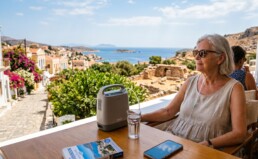
Using oxygen in hot climates: what to expect in Southern Europe
The Mediterranean is wonderful, but it has its own rhythm
Picture a typical summer day on the Mediterranean coast. At eight in the morning, people are already walking along the seafront. Markets are busy. Café terraces are filling up. By midday, the streets begin to empty. Shutters close. Outdoor activity slows. Then, as the sun starts to fall, everything comes back to life again.
Restaurants become busy at nine in the evening. Families stroll through town squares after dark. The promenade fills with people who have waited for the heat to ease. For travellers from northern Europe, this rhythm can feel unusual at first.
Many people arrive expecting to spend the day exactly as they would at home. Breakfast at nine, sightseeing at one, dinner at six. In August, particularly in parts of Spain, Portugal, Italy and Greece, that approach can be uncomfortable for anyone. For someone using medical oxygen, it can be exhausting.
The good news is that the solution is rarely complicated.
You do not need to stop travelling. You simply need to travel in a way that respects the climate.
That sounds obvious, but it is where many successful oxygen holidays begin.
Heat affects people before it affects the equipment
When travellers think about oxygen and hot weather, they often worry about the machine.
- Will the concentrator cope?
- Will the equipment overheat?
- Will the oxygen be affected?
These are sensible questions, but in practice the first thing affected by heat is usually the person, not the machine.
Hot weather places extra demands on the body. Breathing can feel more effortful. Walking uphill becomes harder. A route that seemed manageable at home may feel different in 35°C temperatures. Fatigue often arrives sooner.
This is particularly noticeable during the first few days after arrival. Many visitors underestimate the combination of heat, travel fatigue, disrupted sleep, and dehydration, a holiday that looked relaxing on paper can become exhausting when every activity is planned for the hottest part of the day.
The experienced Mediterranean traveller learns a different approach. Mornings are for walking. Lunch is unhurried. Afternoons slow down. By evening, the town comes alive again, and that’s when the real socialising begins.
For oxygen users, this rhythm often feels surprisingly natural, once they stop fighting it.
What hot weather means for oxygen users
Not everyone responds to heat in the same way. Some travellers notice very little difference between summer and spring, while others find they become short of breath more quickly, particularly when walking outdoors during the hottest hours.
Humidity matters too. The Costa Blanca and Algarve often feel quite different from parts of mainland Greece or inland Spain. A dry 35°C day is a different experience from a humid 30°C afternoon, and the body notices even when the mind is focused on other things.
The practical question is never really whether you can travel. It is how you structure the day. Someone who normally walks two kilometres at home may still enjoy that same walk abroad, just at 8am rather than 2pm. A traveller who loves outdoor cafés learns to choose a shaded terrace over a sun-exposed square. Small adjustments, made early, often matter far more than people expect.
How oxygen concentrators cope with Mediterranean summers
This is usually the part people worry about most.
Fortunately, modern oxygen concentrators are designed to operate in a range of temperatures. Hotels, apartments and villas across Southern Europe routinely use medical equipment throughout the summer.
That does not mean heat should be ignored.
Like any electrical equipment, concentrators need airflow around them. They should not be pushed against curtains, hidden inside cupboards or surrounded by luggage. They should be positioned according to the manufacturer’s instructions and in a location where ventilation is not restricted.
This becomes more important during very hot weather.
A concentrator working in a cool, well-ventilated room will generally perform better than one placed in a cramped corner with limited airflow.
This is one reason why OxygenWorldwide pays attention to accommodation details before arranging deliveries. The practical environment matters. The machine itself may be reliable, but it still needs a sensible place to operate.
Hotels, apartments and villas all behave differently in summer
Accommodation type can influence comfort far more than many travellers realise.
A large modern hotel may have excellent air conditioning and 24-hour reception. An older boutique hotel may be charming but less effective at cooling rooms during heatwaves.
Apartments and villas introduce different considerations.
Is there air conditioning in the bedroom? Does it operate throughout the night? Are there shutters that keep out the afternoon sun? Does the property receive direct afternoon sunlight?
These questions are not unique to oxygen users. They matter to everyone staying in Southern Europe during summer. The difference is that oxygen users often spend more time in the accommodation during the hottest part of the day. A cool, comfortable room can make the difference between feeling refreshed and feeling drained.
Many travellers focus automatically on location when choosing accommodation: the distance to the beach, sea views, nearby restaurants. Those things matter. But in July and August, the quality of the indoor environment matters just as much, sometimes more than people expect.
Hydration becomes more important than many travellers realise
Most advice about hot weather eventually arrives at hydration, and there is a reason for that. The Mediterranean climate encourages fluid loss, often without people noticing. Walking through an old town, sitting on a terrace, spending time by the sea: it all adds up quietly.
Many travellers assume dehydration feels dramatic. Often it does not. It can feel like tiredness, a mild headache, or simply being less comfortable than expected. For oxygen users, staying well hydrated is just part of looking after yourself in warm weather, no different from any other sensible habit.
It does not mean carrying a giant bottle everywhere or counting every glass. It means recognising that your body is working in a different environment from the one you left at home. The people who live in Southern Europe already understand this. Water appears on restaurant tables without asking. Locals seek shade. Activity slows during the hottest hours. Those habits did not develop by accident.
Daytime and night-time can feel very different
One of the pleasant surprises for many visitors is how different evenings feel. A day that reaches 36°C can become genuinely comfortable after sunset. Seafront promenades fill with families, outdoor dining becomes enjoyable, and the air feels easier to breathe.
For some oxygen users, evenings become the best part of the day. That does not mean staying out until midnight. It simply means recognising that Mediterranean life shifts later, and that there is something to be gained by shifting with it.
Many people who initially worry about the heat find that their favourite moments happen after sunset: dinner outside, a gentle walk, watching boats in the marina, sitting in a town square with a coffee. Travel is not cancelled by heat. It just moves to different hours.
What happens during a heatwave?
Every summer, headlines appear about heatwaves in Spain, Portugal, Italy or Greece, and that can sound alarming if you are planning a trip. In reality, heatwaves are usually manageable when anticipated. Locals adapt quickly: outdoor activity reduces during peak temperatures, air-conditioned spaces become more important, routines shift.
Travellers can do exactly the same. A heatwave is not the moment to schedule a long uphill walk through a historic town at two in the afternoon. It may be the moment to enjoy a long lunch, visit an air-conditioned museum, or simply slow down.
The travellers who struggle most with Mediterranean heat are often those trying to maintain a northern European routine regardless of conditions. The ones who adapt generally find the destination just as enjoyable, just structured a little differently.
Preparation matters more than temperature
The biggest mistakes rarely happen because Spain is hot or because Greece is sunny.
They happen because people underestimate the practical details.
- Accommodation is not checked properly.
- Arrival times are unclear.
- The wrong equipment assumptions are made.
- Questions are left until the last minute.
- Heat itself is usually predictable.
The uncertainty comes from poor preparation.
Since 1993, OxygenWorldwide has helped travellers arrange oxygen in destinations across Southern Europe and beyond. The company works with hotels, apartments, villas, holiday rentals and second homes to ensure equipment is delivered and ready when travellers arrive.
That preparation is what allows most trips to run smoothly.
Not because the weather is perfect.
Not because nothing unexpected ever happens.
Because the important details have already been considered.
If you are planning a trip to Spain, Portugal, Italy, Greece or another warm-weather destination, complete the oxygen request form as early as possible. The more time there is to prepare, the easier it becomes to focus on the holiday itself rather than the logistics behind it.
FAQ
Can oxygen concentrators be used safely in hot climates?
Yes. Oxygen concentrators are routinely used in warm destinations throughout Southern Europe. They should be positioned in well-ventilated areas and used according to manufacturer guidance.
Does hot weather make breathing more difficult?
Some people find heat and humidity increase feelings of breathlessness, particularly during physical activity. This varies from person to person.
Should I use oxygen differently during summer holidays?
Always follow your prescribed oxygen therapy. However, many travellers naturally adjust their daily routine, spending more time outdoors during cooler morning and evening hours.
Is air conditioning important when travelling with oxygen?
Air conditioning is not always essential, but it can improve comfort significantly during periods of very hot weather, especially at night.
How can I stay comfortable when using oxygen in Southern Europe?
Good hydration, avoiding peak afternoon heat, choosing suitable accommodation and planning activities for cooler parts of the day can all help.
Can OxygenWorldwide arrange oxygen in Spain, Portugal, Italy and Greece?
Yes. OxygenWorldwide arranges oxygen equipment in many destinations throughout Southern Europe and coordinates deliveries with hotels, apartments, villas and holiday rentals.
What should I do if a heatwave is forecast during my trip?
Adapt your schedule, stay hydrated, spend more time in shaded or air-conditioned areas and follow local advice regarding extreme temperatures.
Travelling with oxygen in Southern Europe is usually very manageable, but hot weather changes how people use oxygen, spend time outdoors and organise their day. Heat can affect comfort, hydration levels and the way oxygen equipment is used, particularly during summer months in Spain, Portugal, Italy and Greece. OxygenWorldwide helps travellers prepare by arranging appropriate oxygen equipment at their destination and coordinating with hotels, villas, apartments and other accommodation before arrival.

Why hotels sometimes get oxygen deliveries wrong, and how we prevent it
The oxygen can arrive, and still not be “there”
Most travellers imagine one simple risk: the oxygen does not arrive. In hotels, a more awkward version is also possible. The equipment arrives at the building, but nobody at reception connects it with the guest who needs it. It may be accepted by a night porter, placed in a luggage room, noted under the wrong surname, or left for housekeeping to deal with later.
From the hotel’s point of view, the delivery has been received. From the traveller’s point of view, the oxygen is missing.
That gap is exactly where good coordination matters.
When you are travelling with medical oxygen, the equipment is not a parcel in the ordinary sense. It is part of the practical plan that allows the trip to happen. A suitcase can be delayed and still leave you annoyed rather than unsafe. Oxygen is different. It has to be in the right place, under the right name, at the right time, and understood by the people who may be asked about it when you arrive.
That is why OxygenWorldwide does not treat hotel delivery as a simple courier task. The work starts before the equipment is moved. The team checks the details, communicates with the accommodation where needed, and helps reduce the small misunderstandings that can become large problems at check-in.
If you are still at the planning stage, the main oxygen travel page explains how oxygen at your destination is arranged. Once you know your dates and accommodation, the most useful step is to complete the oxygen request form so the details can be checked properly.
Hotels are organised, but they are not organised around medical oxygen
A good hotel may be excellent at looking after guests. That does not mean its internal systems are designed for medical oxygen deliveries.
Hotels handle luggage, food deliveries, laundry, maintenance contractors, taxi requests, lost property, room changes, early arrivals, late departures and group bookings. Reception may be dealing with three languages at once. The person who answers the phone in the morning may not be the person on duty when the delivery arrives. The night porter may know nothing about a note added by reservations two days earlier.
None of this means the hotel is careless. It means hotels are human systems and human systems need clear information.
A common problem is that oxygen delivery sits between departments. Reservations may know the guest is arriving. Reception may know there is a medical delivery. Housekeeping may know which room is ready. The porter may know where equipment is stored. But if those pieces are not joined together, the traveller can still arrive to confusion.
This is why pre-arrival coordination is so important. The aim is not to blame the hotel. The aim is to make the oxygen delivery easy for the hotel to recognise, receive and connect to the right guest.
The name on the booking can be the first problem
This sounds almost too ordinary to mention. It is not. Names cause a surprising number of delivery problems.
The oxygen user may not be the lead guest on the hotel booking. A wife may book under her name while her husband uses the oxygen. An adult child may arrange the hotel for a parent. A tour operator may hold the booking under a group reference. A surname may be spelled differently in the hotel system. Accents, double surnames, maiden names and shortened first names can all create small mismatches.
For a normal holiday, this is a mild irritation. For oxygen delivery, it can be the reason reception says, “We do not have anything for that guest.”
The equipment may be there. The hotel may simply be looking under the wrong name.
This is one of the practical details OxygenWorldwide checks when arranging delivery. The name of the oxygen user matters, but so does the name on the hotel reservation. If those names are different, the delivery instructions need to say so clearly.
A simple example:
The oxygen is for Mr Peter Williams.
The room is booked under Mrs Anne Williams.
The hotel reservation was made by their daughter, Sarah Williams.
That is not complicated once everyone knows. But if the delivery note only says “Peter Williams” and the hotel has no guest by that name, the equipment can disappear into the wrong internal process.
That is the sort of problem good preparation can prevent.
Reception is not always the final destination
Travellers often assume that if oxygen is delivered to reception, the job is done.
Sometimes it is. Sometimes it is not.
Reception may accept the equipment but not know whether it should stay there, be taken to the room, be stored securely, or be passed to another department. In large hotels, the entrance used for deliveries may be different from the guest entrance. In resorts, there may be more than one reception. In apartment-style hotels, the check-in office may be on another street. In smaller hotels, reception may close during part of the day.
This is where vague instructions become risky. “Deliver to the hotel” is not enough.
Better information includes the hotel name, full address, booking reference, lead guest name, arrival date, expected arrival time, reception hours if known, and any special access instructions. If the hotel has a separate goods entrance, that should be clarified. If the room will not be allocated until check-in, reception needs to know how the delivery should be held.
OxygenWorldwide’s role is to make that practical chain clearer. The team coordinates the destination oxygen arrangement and, where needed, helps ensure the hotel understands what is being delivered and why it matters.
For travellers who want to understand what hotels and rentals should know before oxygen arrives, the article on how to prepare a hotel or holiday rental for oxygen delivery abroad goes into the practical details.
Shift changes are where good messages get lost
A hotel may receive the right information at 10:00 in the morning. The guest may arrive at 21:30. By then, reception staff have changed. The person who took the message has gone home. The delivery may have been moved. The note may be in the booking system, or it may be on a printed sheet behind the desk.
This is not unusual. It is hotel life.
The risk is higher when the traveller arrives late, when the hotel is full, or when there is a language difference. A receptionist under pressure may search for the booking, not see the oxygen note immediately, and assume nothing has arrived. The guest is tired. The family member is anxious. The situation becomes stressful very quickly.
That is why the timing of arrival matters.
A traveller arriving at midday gives the hotel more time to resolve a small misunderstanding. A traveller arriving late at night needs a cleaner plan. If the equipment must be in the room before arrival, that has to be arranged clearly. If it will be held at reception, the guest needs to know what to ask for and under which name.
Late arrivals are not impossible. They just need more care. If your flight is likely to arrive late, or if there is a realistic chance of delay, it is worth thinking through flight delays and oxygen planning before travel day.
Room allocation can complicate delivery
Hotels do not always allocate rooms days in advance. Sometimes they do it on the day of arrival, especially in busy periods. That creates a practical issue.
If the oxygen is delivered before the room is assigned, where should it go?
Reception may store it. Housekeeping may later move it. A porter may take it to a room that changes before the guest arrives. The guest may be upgraded, moved to an accessible room, or placed in a different building. In a resort, that can mean the equipment is technically “in the hotel” but not where the guest needs it.
This is another reason why coordination is not a small extra. It is the difference between a delivery and a usable delivery.
For some travellers, it may be enough for the equipment to be available at reception. For others, especially those who need oxygen soon after arrival or during the night, the room setup matters much more. The right approach depends on the prescription, the arrival time, the hotel layout and the traveller’s mobility.
This is why OxygenWorldwide asks for details that may feel almost too specific. They are not trying to make the process difficult. They are trying to understand what has to happen in the real world, with real staff, real rooms and real check-in times.
Private rentals have different problems
Hotels have reception desks, shift changes and internal systems. Private rentals have a different set of issues.
A villa or apartment may have no reception. The host may live elsewhere. A cleaner may hold the key. A property manager may only visit at certain times. The delivery driver may need a gate code, parking instructions, a phone number or permission to enter a building.
In some ways, private rentals are easier because there is less internal hotel bureaucracy. In other ways, they are more fragile because there may be only one person who understands the arrangement.
If that person misses a call, forgets the delivery, or cannot be present at the right time, the plan can wobble.
This does not mean villas and apartments are a bad idea. For many oxygen users, they are ideal. They can offer more space, more privacy, a kitchen, a terrace and a calmer daily rhythm. But they need different checks. The article on oxygen and holiday rentals explains why access, power supply, keys and space should be considered before travel.
For hotels, the challenge is often communication through several people.
For rentals, the challenge is usually dependence on one or two people.
Both can work. Neither should be left vague.
What OxygenWorldwide does before you arrive
The visible part of oxygen travel is the equipment. The less visible part is the coordination.
That is often where the value sits.
OxygenWorldwide checks the information needed to make the delivery workable: destination, dates, accommodation, prescription, oxygen use, arrival time, contact details and equipment requirements. The team arranges oxygen in many global destinations and coordinates with hotels, apartments, private rentals and second homes.
For hotels, the work may include clarifying the guest name, booking name, arrival date, delivery address and reception arrangements. For longer stays, or more complex oxygen needs, the questions may go further: where the equipment will be placed, whether refills are needed, whether portable oxygen is required, and how support should be handled during the trip.
This is not about making travel sound complicated. It is about removing the avoidable uncertainty before the traveller leaves home.
A good oxygen delivery plan answers the hotel’s likely questions before staff have to ask them. Who is this for? When is the guest arriving? Is the guest already in-house? Should the equipment be stored or taken to the room? Who should reception contact if there is a problem?
When those answers are clear, the hotel has a much better chance of doing its part well.
What the traveller can do to help
You do not need to manage the whole process yourself. That is why OxygenWorldwide exists.
But there are a few things that make the arrangement stronger.
Use the same names consistently wherever possible. If the hotel is booked under someone else’s name, say so when requesting oxygen. Give the full hotel address, not just the hotel name, especially in cities or resort areas where similar names can cause confusion. Share your arrival time, and update the team if it changes significantly.
If you know the hotel has limited reception hours, mention it. If you are staying in a large resort, apartment hotel or property with several entrances, say so. If you need oxygen available immediately on arrival, make that clear.
Small details help.
They help the supplier. They help the hotel. Most importantly, they help you arrive with less uncertainty.
For travellers who want a wider view of the most common planning errors, this article on common oxygen travel mistakes covers several issues that can be avoided with earlier preparation.
What happens if something still goes wrong?
Even with good planning, travel is travel.
Flights are delayed. Hotels change rooms. Reception staff misunderstand notes. Equipment may need support. A delivery may need checking. None of this should be treated casually, but it also should not be turned into a reason not to travel.
The important question is whether there is a support structure behind the arrangement.
OxygenWorldwide has a 24 hour travel oxygen service, mainly for existing customers who need help with refills or equipment support during their trip. It is not a promise of instant new oxygen delivery everywhere, and it should not replace proper planning. Its value is in supporting travellers who already have arrangements in place and need practical help.
That distinction matters. It keeps expectations realistic.
Good oxygen travel is not built around emergency improvisation. It is built around preparation, clear communication and a team that understands the weak points before they become problems.
The real aim: arrive without having to explain everything yourself
Most people travelling with oxygen do not want a grand service experience. They want something much more ordinary.
They want to arrive at the hotel, give their name, collect the key, find the equipment where it should be, and get on with the trip.
That is the quiet success.
No drama at reception. No tired conversation in a second language. No family member trying to explain oxygen flow rates after a long journey. No search through the luggage room while everyone becomes increasingly tense.
Hotels sometimes get oxygen deliveries wrong because the details pass through busy human systems. Names, shifts, rooms, notes, storage areas, delivery entrances and arrival times all have to line up. OxygenWorldwide’s role is to make that line straighter.
Since 1993, the company has helped travellers arrange medical oxygen away from home. The work is practical: checking bookings, coordinating with accommodation, arranging delivery and collection, and supporting customers during their trip when help is needed.
If you are planning a hotel stay and need oxygen at your destination, start with the oxygen request form. Share the details you have, even if they are not perfect yet. The team will guide you from there.
FAQ
Why do hotels sometimes get oxygen deliveries wrong?
Hotels can get oxygen deliveries wrong because information passes through several people and departments. Reception, reservations, housekeeping and porters may all be involved. If the booking name, delivery name or arrival details are unclear, the equipment may be accepted but not connected to the right guest.
What is the most common hotel oxygen delivery problem?
One common issue is a name mismatch. The oxygen may be ordered for the person who needs it, while the hotel room is booked under a spouse, relative, tour operator or group booking. If this is not made clear, reception may not find the delivery quickly.
Should oxygen be delivered to reception or directly to the room?
That depends on the hotel, the arrival time, the room allocation and the traveller’s oxygen needs. In some cases reception is suitable. In others, especially where oxygen is needed soon after arrival, room placement may need to be arranged more carefully.
What information should I provide before hotel oxygen delivery?
Useful information includes the hotel name, full address, booking name, oxygen user’s name, booking reference if available, arrival date, estimated arrival time, oxygen prescription, flow rate and any special access details.
Can OxygenWorldwide coordinate oxygen delivery with hotels?
Yes. OxygenWorldwide coordinates oxygen delivery with hotels and other accommodation providers in many destinations. The team checks the practical details before arrival so that the equipment is more likely to be received, recognised and available when needed.
What if my flight is delayed and I arrive late?
Late arrivals need careful planning. If your arrival time changes significantly, inform the relevant contacts as soon as possible. OxygenWorldwide can help plan around late arrival where possible, but early preparation is the best way to reduce problems.
Does OxygenWorldwide provide emergency hotel oxygen delivery?
OxygenWorldwide has a 24 hour emergency line mainly for existing customers who need refills or equipment support during their trip. It should not be treated as a replacement for planned oxygen arrangements before travel.
Hotel oxygen deliveries can go wrong because hotels are busy places with changing shifts, multiple departments, different booking names and unclear delivery instructions. The oxygen may be delivered correctly, but not passed to the right person, matched to the right guest, or stored where it can be found when the traveller arrives. OxygenWorldwide helps prevent these problems by coordinating with the hotel before arrival, checking names and booking details, clarifying delivery points, arranging timing and giving travellers a clear plan before they travel.
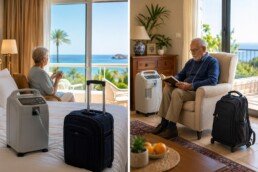
Short Breaks vs Long Stays with Oxygen: What Changes in the Planning
A week away is not planned like three months abroad
A short break with oxygen can be wonderfully simple when it is planned properly.
You arrive. The equipment is already there. The hotel knows what to expect. You can unpack, rest, have dinner, sleep properly and begin the holiday without turning the first afternoon into a logistics exercise.
That is the idea, at least. And it is perfectly realistic.
But a one week trip and a three month stay are not just different lengths of time. They are different kinds of planning. The equipment may change. The delivery setup may change. The costs may be calculated differently. The level of coordination with your accommodation may become more important. Refills, backup arrangements and access issues move from “unlikely inconvenience” to “part of the plan”.
For a short break, the question is usually simple: can we make this trip smooth, safe and practical from arrival to departure?
For a long stay, the question becomes wider: can we make oxygen work as part of normal daily life abroad?
That is a different conversation.
If you are still at the early stage of wondering what is possible, the main oxygen travel page explains how destination oxygen is arranged. If you already know your dates and where you are staying, the most useful next step is to complete the oxygen request form so the details can be checked properly.
Short breaks: keep the plan simple, but not vague
A short break might be five nights in a hotel, a week visiting family, a cruise extension, or a carefully planned holiday after a period of illness. Because the trip is short, every day matters. Losing half a day because reception cannot find the delivery, or because the equipment does not match the prescription, feels much bigger when you only have a few nights away.
So the plan needs to be simple. But simple does not mean casual.
For many travellers, a short stay may involve a stationary oxygen concentrator in the room, portable oxygen for limited movement, or cylinders where available and appropriate. The right option depends on the prescription, the country, the accommodation and the way the traveller actually wants to spend the trip.
A person who uses oxygen only at night has different needs from someone who needs high flow oxygen for cluster headaches. A traveller who plans to sit on a terrace, read, eat well and rest will not need the same setup as someone who wants to visit museums, walk along a seafront or join family meals every evening.
That is why OxygenWorldwide asks for the practical details. Dates. Destination. Flow rate. Hours of use. Accommodation type. Arrival time. Contact details. These are not admin questions for the sake of admin. They shape the oxygen setup.
For short breaks, the most important details are often the ordinary ones: the hotel name, booking reference, reception hours, check-in time, lift access, room access and who can receive the delivery. If the flight arrives late, or the booking is under another person’s name, those details matter.
Late arrival is a good example. It is not dramatic, but it can affect delivery. A traveller landing at 22:30 may need a different arrangement from someone arriving at 11:00 in the morning. If this is likely on your trip, it is worth reading more about flight delays and oxygen planning before assuming everything can be handled in the same way.
Long stays: oxygen becomes part of daily life
A three month stay is not just a longer holiday. It is a temporary home.
That changes the planning.
If you are spending winter in Spain or Portugal, staying in an apartment near the sea, or returning to a second home for several months, oxygen has to work day after day. Not just on arrival. Not just for the first week. All the way through the stay.
That may mean a stationary concentrator for regular use in the home, plus portable oxygen for going out. It may mean planning refills where cylinders or liquid oxygen are available. It may mean checking whether the property has reliable electricity, enough space, safe ventilation, easy access and someone available to receive equipment.
A long stay also raises small practical questions that do not always come up for a week away.
Where will the equipment sit? Is there enough space beside the bed? Is the bedroom upstairs? Are there stairs from the street to the apartment? Is there parking nearby for delivery? Does the property manager understand what is being delivered? Is the address easy to find? Is the traveller changing accommodation halfway through the stay?
None of these questions should put you off travelling. They are exactly the kind of details that make travel more secure once they are answered.
This is where OxygenWorldwide’s work as a coordinator becomes important. The company is not only supplying equipment. It is checking information, communicating with accommodation, arranging delivery and collection, and helping to reduce the chance of problems when the traveller arrives.
For many people planning long stay oxygen travel, the real comfort comes from knowing that the setup has been thought through before they leave home.
Equipment choice: duration changes the logic
For a short break, travellers often want the lightest and simplest option that fits the prescription. That is understandable. Nobody wants to feel as if the holiday is being designed around equipment.
But with oxygen, convenience has to be balanced against clinical need and practical reliability.
Portable oxygen concentrators can be useful for mobility, but they are not suitable for every flow requirement. Some provide pulse dose oxygen rather than continuous flow, which may not match every prescription. Cylinders can be appropriate in selected destinations, especially for certain flow needs, but they require planning around supply and refills. Liquid oxygen can be helpful in some countries and for some users, but availability varies.
For longer stays, the decision is often more structured. A stationary concentrator may be the base setup for the accommodation. Portable equipment may then be added for daily movement, meals out, shopping, short visits or gentle excursions. In selected countries, cylinders or liquid oxygen may be part of the plan if the traveller’s needs make that more appropriate.
This is also where assumptions can cause problems. Someone may have used a particular type of oxygen at home and assume the same setup will be available abroad. Sometimes it is. Sometimes it is not. Availability depends on the country, supplier network, equipment type, delivery address and timing.
That is why it helps to understand the practical difference between a portable oxygen concentrator, cylinders and liquid oxygen before choosing based only on convenience.
The safest route is to start with the prescription and the real travel plan, then build the equipment choice around that.
Cost implications: short stays and long stays are not just priced by the day
Cost is one of the first questions people ask, and rightly so.
For a short break, the cost may feel relatively high per day because delivery, collection, coordination and equipment setup are compressed into a small number of nights. You are not only paying for oxygen use. You are paying for the organisation that makes the oxygen available in the right place at the right time.
For a long stay, the total cost will usually be higher because the equipment is needed for longer. But the daily cost may work differently, depending on the equipment, destination, refill needs and service structure.
That is why comparing “one week” and “three months” is not as simple as multiplying the weekly price by twelve. Long stay arrangements may require a different setup, different delivery planning, scheduled refills, longer equipment rental, or different supplier coordination.
For example, a person staying for seven nights in a hotel may need one delivery and one collection. A person staying for three months in a rented villa may need initial delivery, clear instructions for the property manager, refill planning, possible equipment checks, and a final collection after departure.
It is not more complicated for the sake of it. It is more complete because the stay itself is more complete.
The best advice is not to guess from another person’s trip. Complete the oxygen request form and let the team check the real details.
Setup differences: hotels, apartments, villas and second homes
Accommodation is one of the biggest differences between a short break and a long stay.
Hotels are often easier for short stays because there is usually a reception desk, a delivery point and staff available during the day. That does not mean every hotel is straightforward. Bookings can be under a tour operator’s name. Reception may not understand the delivery. Large resorts may have several entrances. The guest may arrive late. But there is usually some kind of staffed structure.
Apartments, villas, Airbnb-style rentals and second homes need a little more checking.
Who has the key? Will the host accept delivery? Is there a safe place to put equipment? Is the property easy to access? Are there stairs? Is there reliable power? Will anyone be there if the traveller arrives after office hours?
These details matter for a one week villa stay. They matter even more for three months.
A private rental can be a wonderful option for someone travelling with oxygen. More privacy. More space. A kitchen. A terrace. A routine closer to normal life. But the oxygen planning needs to fit that setting. It is not the same as leaving equipment at hotel reception.
If you are staying in a villa, apartment or Airbnb-style property, the extra checks around access, keys, power supply and space are covered in more detail in our article on oxygen and holiday rentals.
Refills and support: when a small issue becomes more important
For a short break, the main focus is usually making sure the equipment is correct from the start. If the stay is only a few nights and the setup is well matched, ongoing support may not be needed at all.
For a long stay, support becomes part of the plan.
If cylinders or liquid oxygen are involved in a country where they are available, refills need to be organised properly. If equipment is used every night, it has to be positioned safely and used according to instructions. If the traveller has questions during the stay, they need to know who to contact.
OxygenWorldwide has a 24 hour emergency line, mainly for existing customers who need support with refills or equipment during their trip. That distinction is important. It should not be presented as a promise of instant new oxygen installations anywhere in the world. Good oxygen travel depends on preparation, not last-minute panic.
For travellers who worry about what happens if something goes wrong, it is helpful to understand the difference between planned support, refill coordination and genuine equipment questions during a trip. The service and support page explains how OxygenWorldwide helps customers before and during travel.
Real examples: what changes in practice
Imagine someone with COPD who uses oxygen at night and wants a week in a hotel by the sea.
The planning may be quite contained. Confirm the prescription. Arrange a concentrator for the room. Check the hotel booking. Make sure reception knows about the delivery. Confirm collection. The traveller arrives, uses the equipment at night, and enjoys a short, manageable break.
Now imagine the same person spending three months in an apartment.
The oxygen use may be the same medically, but the planning changes. The equipment must work for a longer routine. The apartment needs to be checked. Delivery access matters. If the person wants to go out regularly, portable oxygen may become more important. Cost becomes a different conversation. Support and refills may need to be considered.
Another example is someone travelling with cluster headaches and high flow oxygen requirements.
For a short trip, timing and equipment accuracy are crucial. The traveller needs confidence that the correct oxygen setup is available when needed. For a longer stay, supply continuity becomes even more important. The issue is not only arrival. It is whether the oxygen arrangement remains dependable throughout the stay.
The lesson is simple. Duration changes risk. Not necessarily dramatically. But enough to plan differently.
What should you prepare before asking for a quote?
You do not need to have every answer before contacting OxygenWorldwide. That is the point of using a specialist coordinator.
But the more accurate your details are, the easier it is to prepare the right plan.
Useful information includes your destination, travel dates, accommodation type, full address if known, oxygen prescription, flow rate, hours of use, whether oxygen is needed at night, during the day or both, and whether you need mobility outside the accommodation.
It also helps to explain the kind of trip you are planning. A quiet week in a hotel is different from a three month stay in a private rental. A cruise is different again. OxygenWorldwide can arrange oxygen deliveries for cruises in the Mediterranean and for some river cruises in France and Germany, but there are restrictions. The company does not provide cruise services that start in or operate from the United Kingdom, and cruises where the embarkation port differs from the disembarkation port may not be possible.
Also, be clear about what OxygenWorldwide cannot provide. Airport oxygen services are not offered. Oxygen in aircraft cabins is not arranged. Cross-border travel oxygen is not provided. Gaseous or liquid oxygen in the United States is not available through the service.
That may sound like a lot of limitations. In reality, it is what makes the advice trustworthy. Travel is still possible for many oxygen users, but it has to be planned around what can genuinely be delivered.
So which is easier: one week or three months?
A short break is usually easier to arrange, but less forgiving if something has been missed.
A long stay needs more planning, but it can feel more settled once everything is in place.
That is the balance.
For many people, a week away is the first step. It proves that travel is still possible. It builds confidence. It helps the traveller and family understand what works.
A longer stay is different. It gives people back something deeper than a holiday: routine, climate, independence, time with family, or the chance to spend winter somewhere kinder. But it deserves proper preparation.
Since 1993, OxygenWorldwide has helped travellers arrange medical oxygen away from home. The practical work is detailed: checking bookings, communicating with hotels or rental hosts, arranging equipment, managing delivery and collection, and supporting customers when they are already travelling.
That is what makes the difference. Not a dramatic promise. Just careful coordination.
If you are planning a short break, a long winter stay, or something in between, start with the oxygen request form. Send the details you have, and the team will guide you from there.
FAQ
Is a short break with oxygen easier to arrange than a long stay?
Usually, yes. A short break often needs a simpler setup, such as delivery to a hotel for a fixed number of nights. But it still needs accurate planning because there is little time to correct mistakes once the trip has started.
What changes when I stay abroad for several months with oxygen?
Long stays need more detailed planning. Equipment suitability, accommodation access, electricity, refill needs, delivery arrangements, ongoing support and collection all become more important.
Can I use the same oxygen equipment for one week and three months?
Sometimes, but not always. A short trip may only need a simple setup, while a longer stay may require a stationary concentrator, portable oxygen, cylinders or liquid oxygen where available. The right choice depends on your prescription and destination.
Does OxygenWorldwide arrange oxygen for hotels and private rentals?
Yes. OxygenWorldwide coordinates deliveries to hotels, apartments, private rentals, villas and second homes in many destinations. Private rentals often need extra checks because there may be no reception desk or regular staff on site.
Can OxygenWorldwide arrange airport oxygen or oxygen during flights?
No. OxygenWorldwide does not provide airport oxygen services, oxygen in aircraft cabins, or cross-border travel oxygen. The service focuses on oxygen at the destination.
How do I start planning oxygen for a short break or long stay?
Complete the oxygen request form with your destination, dates, accommodation details and oxygen requirements. OxygenWorldwide will review the information and guide you on what can be arranged.
Short breaks and long stays with medical oxygen need different planning. A one week trip usually depends on a simple, reliable setup, clear delivery details and the right equipment for the destination. A three month stay needs more detailed coordination, including equipment choice, refill planning, accommodation checks, cost structure and ongoing support. OxygenWorldwide helps travellers arrange oxygen at their destination, coordinating with hotels, apartments, villas, private rentals and second homes so that the right equipment is ready when they arrive.

What If Something Goes Wrong During Your Trip? A Realistic Look at Support Abroad
Travelling with oxygen is possible, but it needs planning
Travelling with medical oxygen is not the same as packing an extra pair of shoes and hoping for the best. Most people who use oxygen know this already. The real question is rarely just, “Can I go on holiday?” It is usually something much more practical.
What happens if the equipment is not there when I arrive? What if the hotel cannot find the delivery? What if I need a refill? What if something stops working? And who do I call if I am in another country and cannot explain the problem easily?
These questions are not signs of panic or overthinking but are exactly the questions that should be asked before travelling.
At OxygenWorldwide, we have been helping people organise oxygen abroad since 1993. Over that time, we have learned that trust does not come from pretending everything is easy. It comes from explaining how things work, where small problems can happen, and how good preparation reduces the risk of stress during your holiday.
That is why the first practical step is always the same: send us your travel details through the oxygen request form. Once the team knows where you are going, when you arrive, what type of oxygen you use and where you are staying, they can guide you properly.
Support starts before your trip, not after something goes wrong
Many travellers think of support as something that begins when there is a problem. In oxygen travel, real support begins much earlier.
Before you travel, OxygenWorldwide checks the details that matter: your destination, accommodation, arrival date, departure date, equipment needs, oxygen flow, expected use, delivery access and local service availability. The team may need to coordinate with a hotel, an apartment owner, a villa manager, a second home contact, a cruise operator or a local oxygen supplier.
This preparation is not paperwork for its own sake. It is the part that prevents many problems from happening later.
A traveller with COPD who needs a concentrator at night may only need equipment waiting in the hotel room before arrival. That sounds simple. But someone still has to confirm the hotel address, delivery access, reception hours, booking name, room procedure and collection arrangements.
A person using high flow oxygen for cluster headaches may need more detailed planning, especially if cylinders or refills are involved. Availability can depend on the country, local supplier, timing and whether the trip includes weekends or public holidays.
Someone staying in a private villa in Spain or Portugal may need extra access arrangements because there is no reception desk. The owner, host or keyholder may need to understand that the delivery is medical equipment, not an ordinary parcel.
This is where OxygenWorldwide’s wider oxygen travel service matters. The service is not only about providing equipment. It is about coordinating the practical details so that the traveller is not left trying to solve everything alone.
If you are unsure which details matter, it is still better to start early. Complete the request form and include as much information as you can. The team can then tell you what else is needed.
What can go wrong with equipment?
Oxygen equipment is generally reliable, but any equipment can occasionally cause concern. A concentrator may alarm. A cable may come loose. A plug socket may not work. A filter may need checking. The machine may sound different from the one you use at home. Sometimes the issue is not a fault at all, but the traveller quite reasonably wants reassurance.
In hotels, equipment may be moved by staff. In apartments, the best position for a concentrator may not be obvious. In villas, there may be questions about ventilation, safe placement, power supply or access to the bedroom.
This is why it helps to have a support structure in place.
If you are already an OxygenWorldwide customer and you have a concern during your trip, the team can help you understand what to do next. Depending on the situation and location, this may mean checking simple setup questions, contacting a local supplier, arranging technical support, or helping coordinate a replacement if that is possible and necessary.
The phrase “depending on the situation and location” is important. Support abroad is real, but it is not magic. A large city on a weekday morning is different from a small island on a Sunday evening. A hotel with 24 hour reception is different from a private rental where the owner lives elsewhere. A summer holiday weekend can be more complicated than an ordinary working day.
This is one reason travellers should not wait until the last moment. If your trip is already booked, send your oxygen request as soon as possible so the team can check the practical arrangements.
Refills need realistic information
Refills are one of the most common reasons people need support during a trip, especially when cylinders or liquid oxygen are involved.
OxygenWorldwide can coordinate refills in selected countries where these services are available. This is particularly relevant for travellers who use oxygen for longer periods each day, people who require higher flows, or those staying abroad for several weeks.
Some people use more oxygen on holiday than they expected. Their routine changes. They may go out more often. They may rest at different times. They may need oxygen at night and then use extra periods during the day. Hot weather, walking, stairs, excursions and travel fatigue can all affect how someone manages their oxygen.
Refills are much easier to coordinate when the need is anticipated. They are much harder when a traveller calls very late, with equipment almost empty, in a place where same-day service is not available.
This is why OxygenWorldwide asks for clear information before travel. It is not to complicate the booking. It is to make the supply plan safer and more realistic.
If your oxygen use varies, say so. If your doctor has recently changed your prescription, mention it. If you are staying for several weeks, explain your normal daily and nightly pattern. If you are not sure how much to request, use the oxygen request form and ask for guidance.
Communication problems are often the real problem
Many travel oxygen issues are not medical or technical. They are communication problems.
A hotel may not recognise the traveller’s name because the booking was made by a spouse, son, daughter or travel agent. A reception team may not know where delivered equipment has been stored. A villa host may not understand why access is needed before arrival. A delivery driver may arrive while the traveller is still in transit. A local supplier may not speak the traveller’s language.
This is one of the areas where OxygenWorldwide’s role as a coordinator is especially useful.
The team regularly communicates with hotels, apartments, private rentals, second homes and local partners. They understand that oxygen delivery abroad is not always straightforward. It may involve several people, several languages and a delivery window that has to fit around travel plans.
This is part of the wider oxygen service and support that travellers rely on. The goal is to make the process manageable before arrival, during the stay and at collection.
There are also things travellers can do to help. Use the same name on the oxygen booking and the accommodation booking where possible. Provide the full address, not just the hotel name. Include arrival and departure times. Tell the team if you will arrive late at night. For private rentals, provide the host or keyholder’s contact details early.
What the 24 hour line is actually for
The 24 hour emergency line is an important part of the OxygenWorldwide service, but it should be understood correctly.
It is for existing OxygenWorldwide customers who are already travelling and need urgent support with equipment, refills or oxygen-related logistics during their trip. For example, if a concentrator has a serious issue, if a refill arrangement needs attention, or if delivered equipment cannot be located at the accommodation, the line gives customers a way to reach support outside normal office hours.
You can access the number on the 24 hour travel oxygen service page.
The 24 hour line is not designed as a general last-minute booking service. It is not a guarantee of immediate oxygen installation in every country. It is not for airport oxygen, aircraft cabin oxygen or cross-border oxygen while moving between countries.
This distinction matters.
A 24 hour line is reassuring, but the safest travel experience still comes from arranging oxygen properly before departure. The emergency line supports customers during their trip. It does not replace preparation.
If you are planning a trip and have not yet arranged oxygen, the correct next step is not to wait for an emergency. It is to complete the oxygen request form before you travel.
Late arrivals, missed connections and hotel confusion
Late arrivals are common. Flights are delayed. Traffic is worse than expected. Ferry schedules change because of the weather. Hotel check-in takes longer than planned because a tour bus has arrived just in front of you!
If oxygen equipment is being delivered to accommodation, arrival timing matters. In many hotels, equipment can be delivered before the traveller arrives, provided the hotel accepts it and knows what to do with it. In private rentals, the situation can be more complicated because someone may need to open the property.
This is why OxygenWorldwide checks accommodation details and delivery arrangements in advance.
A hotel delivery can usually be traced if the right information has been shared. Who accepted the equipment? Was it left at reception, in a luggage room or in an office? Was the booking under another name? Does the night receptionist know about the arrangement made with the day team?
Without preparation, this becomes a stressful conversation at reception. With preparation, there is a clearer trail to follow.
If you expect to arrive late, mention it on the oxygen request form. If the property has restricted access hours, include that too. If there is a gate code, keyholder or separate property manager, the team needs to know.
A full address is not always enough. A large resort may have several entrances. An apartment block may have no reception. A villa may have a locked gate. These are ordinary travel details, but for oxygen delivery they can make a real difference.
Cruises need special care
Cruise travel is possible in some cases, but it needs careful planning.
OxygenWorldwide can arrange oxygen deliveries for cruises in the Mediterranean and for some river cruises in France and Germany, depending on the itinerary and service availability. However, there are clear limits. OxygenWorldwide does not provide cruise services that start in or operate from the United Kingdom. Cruises where the embarkation port differs from the disembarkation port are also not normally possible, because delivery and collection become much more complicated.
This is the kind of detail that should be checked before booking, or at least before committing to a travel plan that depends on oxygen support.
If you are considering a cruise, provide the full itinerary, ship name, embarkation port, disembarkation port, dates and cabin details as early as possible. The team can then check whether support is possible.
For any cruise-related oxygen request, start with the oxygen request form and include the itinerary details in full.
What OxygenWorldwide cannot provide
Honest support includes clear limits.
OxygenWorldwide does not provide airport oxygen services. It does not arrange oxygen for use inside aircraft cabins. It does not provide cross-border travel oxygen for people moving between countries with equipment. It cannot provide gaseous or liquid oxygen in the United States. Liquid oxygen and cylinders are only available in selected countries outside the USA.
These limits are not small print. They are part of safe planning.
If you need oxygen during a flight, you should speak directly with your airline and healthcare provider. If you are planning to cross borders during your trip, you should explain that before arrangements are made. If your journey includes several countries, the team will need to assess what is realistic.
This is also why many travellers choose OxygenWorldwide. The value is not only in arranging equipment where possible. It is also in explaining what cannot be done, before the traveller makes a risky assumption.
Learn more about the company’s experience and approach.
What you can do to reduce the chance of problems
Good oxygen travel support works best when the information is accurate from the beginning.
Before you travel, make sure you know your oxygen requirements. OxygenWorldwide coordinates logistics, but your medical oxygen needs should be based on advice from your healthcare provider.
Give full accommodation details. A hotel name alone may not be enough. Include the full address, booking name, reception contact, arrival time and departure time.
For private rentals, include host, owner or keyholder details. This is especially important for villas, apartments and Airbnb-style stays where there may be no reception desk.
Be realistic about your oxygen use. If you sometimes use more than usual, include that information. If you are staying for longer than a normal holiday, say so. If refills may be needed, raise this before you travel.
Do not leave arrangements until the final days before departure. Some countries and oxygen types require more coordination than others.
Keep your OxygenWorldwide contact details accessible while travelling. If something does happen, you do not want to search through old emails while tired, breathless or under pressure.
The aim is confidence, not false reassurance
Most oxygen-supported trips go as planned because the details have been checked before arrival. Equipment is delivered. Hotels cooperate. Refills are scheduled where available. Travellers enjoy their holiday.
But travel is travel. Things can occasionally go wrong. The reassurance is not that every situation is instantly solvable in every country at every hour. That would not be honest.
The reassurance is that OxygenWorldwide understands the practical problems that can arise and knows how to coordinate support when customers need help during their trip.
Since 1993, OxygenWorldwide has supported thousands of travellers who use medical oxygen. The company is Dutch managed, based in Spain, and works with a multilingual team that understands how personal these journeys can feel. For many travellers and families, that combination of experience, coordination and clear communication makes the difference.
If you are planning a holiday, a long stay, a cruise, or a visit to family abroad, start early. Fill in the travel oxygen request form and the team will guide you from there.
FAQ
Can I call OxygenWorldwide if my equipment stops working during my trip?
Yes, if you are an existing OxygenWorldwide customer and you are already travelling with equipment arranged through the service. The team can help assess the situation, contact local support where available, and coordinate the next practical step. What is possible will depend on the destination, timing and type of equipment.
Is the 24 hour line for new bookings?
No. The 24 hour line is for existing customers who need urgent support during their trip, such as equipment issues, refill concerns or delivery-related problems. New bookings should be arranged in advance through the normal request process.
Can OxygenWorldwide arrange emergency oxygen at the last minute?
Travellers should not rely on last-minute oxygen arrangements. Urgent support may be possible in some circumstances for existing customers, but oxygen availability depends on the country, equipment type, local supplier capacity, delivery access and timing. Planning before departure is always safer.
What happens if my hotel cannot find the oxygen equipment?
OxygenWorldwide can help trace delivery details and communicate with the hotel or local supplier where needed. This is why accurate accommodation details are important, including the booking name, hotel address, arrival time and reception contact.
Can I get refills while abroad?
Refills can be arranged in selected destinations, depending on the type of oxygen, country and local availability. If you expect to need refills, this should be discussed before travel so the supply plan can be organised properly.
Does OxygenWorldwide provide oxygen at airports or on planes?
No. OxygenWorldwide does not provide airport oxygen services or oxygen for use inside aircraft cabins. Travellers should discuss in-flight oxygen or portable oxygen concentrator requirements directly with their airline and healthcare provider.
Can OxygenWorldwide support cruise travel?
OxygenWorldwide can arrange oxygen deliveries for cruises in the Mediterranean and for some river cruises in France and Germany, depending on the itinerary. It does not provide cruise services that start in or operate from the United Kingdom, and cruises with different embarkation and disembarkation ports are generally not possible.
What information should I provide before travelling?
You should provide your destination, travel dates, accommodation details, arrival and departure times, oxygen type, flow rate, daily or nightly usage, and any special access information. For villas, apartments or Airbnb stays, host or keyholder contact details are especially useful.
This article explains what kind of support travellers can expect when using medical oxygen abroad with OxygenWorldwide. It covers practical concerns such as equipment issues, oxygen refills, communication with hotels or local suppliers, and the real purpose of the 24 hour support line. It also explains why careful planning before departure is the best way to reduce stress during the trip.
If you already know your travel dates and destination, the best starting point is to fill in the oxygen request form so the team can check what is possible before you travel.
Oxygen and Holiday Rentals: Why Villas and Airbnb Stays Need Extra Checks
A hotel reception desk can solve a lot of small problems. A private villa cannot.
That is one of the biggest differences when you travel with medical oxygen and choose a holiday rental instead of a hotel. Villas, apartments, Airbnb stays and private rentals can be wonderful for comfort, privacy and longer holidays. You may have more space, your own kitchen, a terrace, a quieter bedroom and a more relaxed daily rhythm.
For many oxygen users, that sounds ideal.
But holiday rentals also need more careful checking before you travel. The reason is simple. There may be no reception team. The host may live in another town. The cleaner may only have a narrow arrival window. The property might be behind a locked gate. The delivery driver may not be able to find the entrance. The owner may not understand what oxygen equipment is, why timing matters, or why “just leave it outside” is not a suitable answer.
None of this means a villa or Airbnb is a bad choice. Quite the opposite. With the right planning, a private rental can work very well for people who need oxygen on holiday.
It just needs to be organised properly.
Why holiday rentals are different from hotels
Hotels are used to receiving deliveries. They usually have a reception desk, staff on duty, storage areas and someone who can accept equipment before a guest arrives. Even then, details still have to be checked carefully.
With a holiday rental, those built-in systems may not exist.
A villa might have a key box at the entrance. An apartment may be in a residential block where nobody knows the visitor’s name. A rural house may have an address that works on paper but not in real life. Some hosts are very helpful, but others may not fully understand why medical oxygen cannot be treated like a normal parcel.
That is where problems can begin.
A concentrator, oxygen cylinder or liquid oxygen unit is not something you want delivered to the wrong doorway. Nor is it something you want left in a hot courtyard, locked storage room or inaccessible garage. If you arrive tired after a flight or a long journey, the last thing you need is uncertainty about where your oxygen is.
This is why OxygenWorldwide checks the accommodation details in advance and coordinates the delivery around the real situation on the ground. The goal is not only to deliver the equipment. It is to make sure it can actually reach the right place, at the right time, and be ready when the traveller arrives.
Access is often the first challenge
Access sounds like a small detail until it becomes the detail that delays everything.
Many holiday rentals have practical complications: gated communities, intercom systems, steep driveways, narrow village streets, locked apartment entrances, missing house numbers, or local names that do not match the address on Google Maps.
In some areas, the property may be known by a villa name rather than a street number. In rural places, the driver may need extra directions. In apartment buildings, a delivery may require access through several doors before reaching the actual flat.
These checks matter.
Before travel, it is useful to confirm:
- the full property address
- the name of the villa, apartment complex or building
- the floor number and lift access, if relevant
- whether there is a gate, key box, concierge or intercom
- who can open the door for delivery
- whether a delivery van can park nearby
- whether the property is easy to find after dark
This is especially important for late arrivals. A traveller may land in the evening, collect luggage, transfer to the rental and arrive after the host has gone home. If oxygen equipment has not already been delivered and correctly placed, there may be little time to fix the problem.
OxygenWorldwide deals with these questions before the holiday starts. The more accurate the information, the smoother the delivery.
Hosts do not always understand medical oxygen
Many holiday rental hosts are kind and willing to help. That does not mean they understand oxygen.
Some imagine a small portable device that fits on a bedside table. Others may think it is similar to a suitcase delivery. Some may be nervous when they hear the word oxygen and worry about safety, liability or damage to the property.
Clear explanation helps.
In most cases, the host does not need medical details. They need practical information. They need to know that equipment may be delivered before arrival, that it must be placed somewhere safe and accessible, and that it should not be moved, unplugged or stored carelessly.
For example, a host should understand that a stationary oxygen concentrator may need to be positioned near a suitable power socket, normally in the bedroom if the traveller uses oxygen at night. If cylinders are being supplied in a country where that service is available, they must be kept upright and placed safely. If liquid oxygen is being arranged in a selected destination outside the USA, delivery and refill arrangements may need even more coordination.
This is not something every host will know instinctively.
That is why it helps when OxygenWorldwide communicates with accommodation providers directly where needed. A short, practical explanation can prevent misunderstandings. It also reassures the host that the equipment is being managed by a specialist provider, not improvised by the guest on arrival.
Power supply needs to be checked before arrival
For many oxygen users, the power supply is not an afterthought. It is central to the stay.
Stationary oxygen concentrators need electricity. If the traveller uses oxygen through the night, the bedroom layout becomes important. Is there a suitable socket close enough to the bed? Is the socket already used for lamps, air conditioning, chargers or medical devices? Is the property old, with limited plugs? Are extension leads allowed or available? Is the wiring reliable?
In some villas, especially older or more rural properties, electricity may not be as straightforward as in a hotel. There may be occasional power cuts. The fuse box may trip if too many appliances run at once. Air conditioning, pool pumps, ovens and water heaters can all add load.
Most holidays run without a problem. Still, this is worth checking, especially for travellers who depend on oxygen for many hours each day or overnight.
A sensible question for the host is: “Is there a reliable power socket beside or near the bed, and does the property have any regular electricity problems?”
It is also useful to know who to contact if there is a power issue during the stay. In a hotel, reception can usually help. In a private rental, the emergency contact may be a host, agency, keyholder or maintenance person.
OxygenWorldwide can advise on the oxygen equipment side, but property power remains the responsibility of the accommodation provider. The best result comes when both parts are checked before arrival.
Space matters more than many people expect
Holiday photos rarely show the practical corners of a property.
They show the pool, the terrace, the view, the dining table, the bedroom in flattering light. They do not always show whether there is enough space beside the bed for a concentrator, whether the hallway is narrow, whether the bedroom is up two flights of stairs, or whether the main living area is already crowded with furniture.
Medical oxygen equipment needs a sensible place to stand. It should not block exits. It should not be squeezed behind curtains, placed in damp areas, hidden under furniture or positioned where children may knock into it. Concentrators need ventilation around them. Cylinders, where supplied, need stable placement. Tubing should be arranged so the traveller can move safely without creating a trip hazard.
For a person with COPD who mainly needs oxygen at night, the bedroom is the main concern. For someone using higher-flow oxygen for cluster headaches, the arrangement may be different. They may need quick access to equipment at specific times, sometimes in a living area rather than only beside the bed. For a couple staying long term in Spain or Portugal over the winter, the question may be broader: where will the equipment sit comfortably for several weeks or months?
These are not dramatic problems. They are practical ones. But practical problems can feel very stressful if they are discovered at 10 o’clock at night after a long journey.
A good rental is not only beautiful. For oxygen users, it must also function properly.
Safety is about common sense, not fear
People sometimes become anxious when oxygen and holiday accommodation are mentioned together. That anxiety is understandable, but it should not be exaggerated.
The aim is not to make oxygen travel sound risky. It is to prepare properly.
Basic safety checks include keeping oxygen equipment away from open flames, smoking areas, barbecues, candles and heat sources. In villas, this can matter because outdoor cooking and terrace living are often part of the holiday. If the traveller uses oxygen mainly indoors, the equipment should stay in a suitable place indoors. If cylinders are supplied, they should not be moved casually around the property.
The same applies to cleaning staff or maintenance visitors. They may not know what the equipment is. They should not unplug it, cover it, move it into a cupboard or use the socket for something else.
This is another reason why host communication matters. A simple note can avoid confusion: the equipment is for medical oxygen, it should remain where placed, and it must not be handled unnecessarily.
Safety is usually straightforward when everyone understands the basics.
Late arrivals and key boxes need special attention
Many holiday rentals now use self-check-in. This is convenient for ordinary travel. For oxygen travel, it can create complications.
If equipment has to be delivered before arrival, who opens the door? If the host is not there, can the delivery team access the property? Is there a key box? Will the code be available in time? Is there an agency nearby? Can the cleaner receive the equipment? Can the driver leave it inside safely?
A key box alone may not be enough. Some delivery providers cannot use access codes without proper authorisation. Others may need a named person on site. Rules vary by destination and supplier.
Weekend arrivals can also be more complex. In some places, delivery options are more limited on Saturdays, Sundays or bank holidays. That does not mean travel is impossible. It means timing needs to be arranged before plans are fixed too tightly.
This is where early preparation is valuable. If OxygenWorldwide knows the arrival date, accommodation details and oxygen needs in advance, the team can check what is realistic and explain the options.
Collections also need planning
Most travellers think first about delivery. Collection matters too.
At the end of a villa or Airbnb stay, guests often leave early in the morning. The cleaner may arrive later. The host may not be local. The next guests may arrive the same afternoon. If equipment is still inside the property, someone needs to provide access for collection.
This is particularly important for private rentals, where checkout may be automated. A hotel can usually store equipment after checkout. A villa may not have that option.
Before travel, it is worth confirming who will be available when the equipment is collected. Sometimes this is the host. Sometimes it is a rental agency. Sometimes a neighbour or keyholder is involved. The important point is that the plan is clear.
A good oxygen arrangement includes both ends of the trip: delivery and collection.
Private rentals can work very well with the right preparation
There are many reasons why oxygen users choose villas and apartments.
A person who needs oxygen at night may sleep better in a quiet private bedroom. A family supporting an older parent may prefer a villa where everyone can stay together. Someone travelling with cluster headaches may value privacy and predictable access to equipment. A retired couple spending two months on the Costa Blanca or the Algarve may want a home-like setting rather than a hotel.
These are all reasonable choices.
The key is not to assume that the rental will work automatically. It needs the same kind of attention as flights, transfers and medication, perhaps more. Access, electricity, host understanding, space and safety are all part of the holiday plan.
OxygenWorldwide has been supporting travellers with medical oxygen since 1993. The team is Dutch managed, based in Spain, and works with travellers, families, accommodation providers and local suppliers in many destinations. Depending on the country and the traveller’s needs, arrangements may include stationary or portable oxygen concentrators, and in selected countries outside the USA, liquid oxygen or cylinders.
There are also clear service limits. OxygenWorldwide does not provide airport oxygen services, oxygen inside aircraft cabins, cross-border oxygen arrangements, or gaseous and liquid oxygen in the United States. The 24 hour emergency line is mainly for existing customers who already have equipment during their trip and need support with refills or equipment issues.
That transparency matters. It means the right plan can be made before the holiday begins.
What to do before booking a villa or Airbnb
Before confirming a rental, it is sensible to gather a few details.
Ask the host whether the property is easy to access for deliveries. Check whether there is someone who can receive equipment before arrival. Confirm whether the bedroom has a suitable power socket. Ask about stairs, lifts, parking, gate codes and any known power problems. Make sure the address is complete and easy to locate.
Then share those details with OxygenWorldwide when you complete the travel form.
The team can then look at the oxygen requirement, destination, accommodation type and arrival schedule together. If something looks difficult, it is better to know early. Most problems are much easier to solve before travel than after arrival.
For many travellers, this preparation is what makes the holiday feel possible again.
Not rushed. Not improvised. Properly arranged.
Fill in the travel form and OxygenWorldwide will guide you from there.
FAQ
Can I have oxygen delivered to an Airbnb or holiday rental?
Yes, in many destinations oxygen can be delivered to private accommodation such as villas, apartments and holiday rentals. The property details need to be checked carefully, especially access, delivery timing, host availability and where the equipment will be placed.
Is a villa better than a hotel for travelling with oxygen?
It depends on your needs. A villa may offer more privacy, space and comfort, especially for longer stays. A hotel may be easier for reception, deliveries and storage. The best choice is the one where oxygen delivery, power supply and access can be properly arranged.
Does the host need to know I use medical oxygen?
The host does not usually need detailed medical information, but they may need to know that oxygen equipment will be delivered and must be placed safely inside the property. Clear communication helps avoid confusion.
What should I check before booking a rental property?
Check the full address, access arrangements, parking, stairs or lifts, gate codes, power sockets near the bed, host availability and whether someone can receive the equipment before you arrive.
Can oxygen equipment be left outside a villa?
No, oxygen equipment should not be treated like an ordinary parcel. It should be delivered to a safe, suitable and accessible place inside the property.
What happens if I arrive late at night?
Late arrivals need extra planning. Oxygen equipment may need to be delivered earlier, and someone must be able to provide access. This should be arranged before travel.
Does OxygenWorldwide provide oxygen in aircraft cabins?
No. OxygenWorldwide does not provide oxygen inside aircraft cabins or airport oxygen services. Travellers should arrange flight oxygen requirements directly with the airline where applicable.
Can OxygenWorldwide arrange oxygen for long stays?
Yes, long stay arrangements can often be made, especially for seasonal travel or winter relocations. The exact arrangement depends on the destination, oxygen requirement and equipment availability.
This article explains why travellers who use medical oxygen need extra preparation when staying in holiday rentals, villas, apartments, Airbnb properties or private homes. It covers practical issues such as access, host communication, power supply, space, equipment safety, delivery arrangements and collection planning. OxygenWorldwide coordinates medical oxygen for travellers in many destinations, including stationary and portable oxygen concentrators, and liquid oxygen or cylinders in selected countries outside the USA. The company works with accommodation providers, checks delivery details before arrival, and helps travellers prepare so their oxygen is ready when they reach their holiday rental.

Travelling Alone with Oxygen: What You Need to Think About Before You Go
Why Travelling Alone with Oxygen Feels Different
A surprising number of people stop travelling before they actually need to.
Not because their health suddenly changes dramatically. Not because a doctor tells them to stay home. Often it happens earlier than that. The confidence goes first.
A small worry starts growing in the background.
- What if something goes wrong at the airport?
- What if the hotel has stairs?
- What if the oxygen delivery does not arrive?
- What if I feel unwell abroad and I am on my own?
That thought process is understandable. Travelling alone always carries some level of uncertainty, even for healthy people in their thirties. Add oxygen into the equation and the planning becomes more complicated.
Still, many people continue travelling independently for years after starting oxygen therapy. Some take regular city breaks. Some visit family abroad. Others continue doing exactly what they always did: winter sun holidays, cruises, cultural trips, long weekends away.
The difference is rarely courage. It is preparation.
One thing experienced travellers with oxygen often learn quite quickly is that stress usually comes from uncertainty rather than the oxygen itself. Once the arrangements are clear, the trip begins to feel manageable again.
Independence Matters More Than People Admit
For many older travellers, the loss of independence feels harder than the oxygen itself.
Friends and relatives often become protective after oxygen enters the picture. Adult children start worrying. Partners become cautious. Gradually, assumptions begin forming around what is “safe” or “realistic.”
Many OxygenWorldwide clients travelled independently for decades before oxygen became part of daily life. That history matters. People do not suddenly lose the instinct to explore because their medical circumstances change.
And frankly, some people travel better alone because you move at your own pace, you rest when needed, you do not feel guilty slowing someone else down. And at the end of the day you return to the hotel early without negotiation. There is less pressure to keep up socially or physically.
That kind of travel can actually suit oxygen users very well.
What tends to make the biggest difference is planning the trip around how you genuinely travel now, not how you travelled twenty years ago.
Planning Reduces Stress More Than People Expect
A packed itinerary involving rushed train changes, multiple internal flights, or long sightseeing days can become draining very quickly. Most experienced oxygen travellers adapt by simplifying rather than stopping altogether. Some itineraries genuinely stop making sense. Tight one-hour airport connections, inaccessible accommodation, or destinations with unreliable infrastructure can turn a holiday into an exhausting logistical exercise.
The travellers who cope best are usually the ones who become more selective, not more fearful. They choose direct flights where possible. They stay longer in one location. They avoid unrealistic transfer times. They leave margin for delays and tiredness.
That margin often determines whether a trip feels enjoyable or stressful.
One practical issue many solo travellers underestimate is decision fatigue. When you travel with someone else, responsibility is shared. Alone, every confirmation, timing check, document, and backup plan sits in your own head.
- Did I confirm the oxygen delivery?
- Did I pack the chargers?
- What happens if the flight is delayed?
Simple systems help enormously. Printed confirmations. Written schedules. Backup phone numbers. Physical copies of prescriptions and airline approvals.
That is not over-preparing. It is simply organised travel.
Flights, Airports, and Airline Oxygen Rules
Air travel is usually where anxiety builds fastest.
People imagine dramatic medical emergencies mid-flight. In reality, most travel problems happen much earlier: paperwork submitted too late, airline requirements misunderstood, battery regulations missed, or airport assistance never properly confirmed.
Different airlines have different rules regarding portable oxygen concentrators, medical forms, and battery capacity. Some carriers are straightforward. Others require several stages of approval.
This is one reason specialist coordination becomes valuable.
Arranging travel support through Oxygen Worldwide reduces much of the administrative burden because airline processes, destination coordination, and oxygen logistics are already familiar territory.
Many experienced travellers say the emotional strain of organising everything alone is harder than the flight itself.
Once arrangements are confirmed properly, confidence usually returns quite quickly.
If you are travelling alone for the first time with oxygen, shorter direct flights are often a sensible starting point. Familiar destinations help too. Confidence tends to build through experience rather than reassurance alone.
Choosing Accommodation More Carefully Than Before
Accommodation descriptions online are not always reliable.
A hotel described as “accessible” may still involve steps at the entrance. A lift may exist but require navigating corridors that are physically tiring. Reception may close overnight. Bathrooms may technically comply with regulations while remaining awkward in practice.
Experienced oxygen travellers often become more direct before booking accommodation.
- How far is the room from reception?
- Is there step-free access throughout the building?
- Is there reliable air conditioning?
- Can equipment be delivered safely before arrival?
Those questions are practical, not excessive.
Location also matters more than people sometimes expect. A beautiful hillside town with steep streets and summer heat may look appealing online while becoming physically exhausting in reality.
That does not mean travel becomes impossible. It means choosing destinations more intelligently.
Why Many Oxygen Users Prefer Slower Travel
One interesting thing happens when people adapt their travel style around oxygen and that is that many discover they actually enjoy travelling more.
Slower mornings and fewer rushed transfers means that travel becomes calmer.
That shift often suits older independent travellers surprisingly well. The pressure to maximise every day starts fading. Enjoyment becomes more important than endurance.
People also recover differently while travelling. Excitement sometimes pushes travellers to do too much during the first two days of a holiday. Long walks, late dinners, excessive heat, dehydration, and poor pacing can leave someone exhausted halfway through the trip.
Building recovery time into the schedule is not laziness. It is sensible planning.
Travel Insurance and Medical Paperwork
Travel insurance is one of the subjects people postpone because it feels tedious or expensive.
Ignoring it is risky.
Medical declarations matter. So does understanding exactly what is covered abroad. Many travellers assume EHIC or GHIC arrangements automatically solve healthcare access within Europe. They help in certain circumstances, but they are not replacements for proper travel insurance.
OxygenWorldwide also provides useful guidance regarding EHIC travel considerations and additional practical support through its travel help resources pages.
It also helps to carry physical copies of:
- prescriptions
- emergency contacts
- airline approvals
- oxygen confirmations
- insurance documents
- medication lists
Phones fail. Batteries die. Internet access disappears at awkward moments so paper backups still matter.
The Mental Side of Travelling Alone with Oxygen
There is an emotional adjustment that people rarely discuss openly.
Using oxygen makes some travellers feel more visible in public spaces, particularly airports. Equipment attracts attention. Occasionally curiosity. Sometimes unwanted sympathy.
For people who spent decades travelling independently before oxygen therapy entered their lives, that change can feel uncomfortable at first.
Most adapt faster than they expect.
Airlines, hotels, transfer companies, and cruise operators deal with medical support requests far more frequently now than they did years ago. Calm communication and organised planning solve most problems surprisingly quickly.
And people are usually kinder than anxious travellers expect them to be.
Building Confidence After Your First Solo Trip
The first successful trip often changes everything psychologically.
Once you have managed one airport, one hotel check-in, one oxygen delivery abroad, the situation stops feeling theoretical. Experience replaces anticipation.
You learn how much battery reserve feels comfortable. Which airlines communicate clearly. Which style of luggage works best. How early you prefer arriving at airports. Which destinations feel physically manageable.
Eventually the oxygen stops feeling like the centre of the holiday, it simply becomes part of how you travel now.
Support Makes Independent Travel More Realistic
If you are currently hesitating about travelling alone with oxygen, it is worth separating practical concerns from imagined ones.
Some trips may genuinely require adaptation. Others simply need more planning and coordination than they once did.
That is manageable.
Professional support also removes a significant amount of uncertainty. Services such as travel oxygen coordination from Oxygen Worldwide help travellers organise oxygen deliveries, destination arrangements, and practical travel support before departure.
For many people, the real goal is not adventure in the dramatic sense.
It is maintaining access to ordinary pleasures and familiar experiences. Seeing family abroad. Returning to a favourite destination. Taking a cruise that still matters to you. Continuing to move through the world independently for as long as possible.
That is a realistic goal. Even with oxygen.
Frequently Asked Questions
Can you travel alone while using oxygen?
Yes. Many people travel independently with oxygen every year. Successful trips usually depend on preparation, realistic pacing, and arranging the correct support before departure.
How far in advance should I arrange travel oxygen?
Earlier is better, especially for flights, cruises, and international travel. Several weeks' notice allows time for airline approvals, oxygen coordination, and backup planning.
Do airlines allow portable oxygen concentrators?
Many airlines do, but rules vary. Some require medical clearance forms, approved equipment lists, or additional battery capacity. Always check directly with the airline before booking.
Is travelling alone with oxygen stressful?
It can feel stressful if arrangements are unclear or rushed. Most anxiety comes from uncertainty rather than the oxygen itself. Structured planning usually reduces stress significantly.
What documents should I carry when travelling with oxygen?
Carry prescriptions, medical letters, airline approvals, insurance documents, emergency contacts, and printed confirmations of oxygen arrangements.
Are cruises suitable for oxygen users?
Often, yes. Cruises can reduce physical strain because accommodation, dining, and transport remain in one location. Oxygen delivery can usually be organised in advance.
What kind of support does Oxygen Worldwide provide?
Oxygen Worldwide helps coordinate travel oxygen arrangements, destination deliveries, and practical support for people travelling with oxygen internationally.
This article addresses the practical and psychological aspects of travelling alone while using supplemental oxygen, aimed at older independent travellers who use oxygen therapy but have not yet stopped travelling. The central argument is that most hesitation comes from uncertainty rather than genuine medical limitation, and that thorough preparation restores confidence more effectively than reassurance alone. The article covers airline rules and paperwork, accommodation selection, pacing and itinerary planning, the benefits of cruises and structured tours for solo oxygen users, travel insurance, and the importance of physical document backups. It also addresses the emotional adjustment of becoming more visible in public spaces due to medical equipment. The company referenced throughout is Oxygen Worldwide, a specialist service that coordinates international oxygen delivery and travel logistics for people on oxygen therapy.

How Much Oxygen Do You Really Need for a Holiday? (And Why People Get It Wrong)
Please note: OxygenWorldwide is an oxygen equipment coordination service, not a medical provider. The information in this article is intended for general guidance only and does not constitute medical advice. We are not able to recommend oxygen flow rates, prescribed quantities, or specific equipment settings, and nothing in this article should be taken as a substitute for professional medical guidance. Before making any arrangements with OxygenWorldwide, please speak with your doctor or respiratory specialist to confirm your oxygen requirements, ensure your condition is suitable for travel, and obtain the relevant prescription details. Our role begins where your medical team's guidance ends.
A holiday with medical oxygen is rarely just about choosing flights and hotels. For many travellers, the hardest part begins much earlier, trying to work out how much oxygen they will actually need once they arrive.
Some people worry about running out and request far more oxygen than they normally use at home. Others underestimate what travel, heat, walking, disrupted routines, or poor planning can do to their oxygen consumption. Both situations are understandable. Neither is unusual.
This article explains the practical side of planning oxygen for a holiday without offering specific medical advice. It explores why people often miscalculate their needs, the difference between daytime and night-time use, the importance of backup planning, and why good preparation matters more than people realise.
How Much Oxygen Do You Really Need for a Holiday?
One of the most common conversations we have with travellers begins with a question that sounds deceptively straightforward: how much oxygen should they arrange for their trip?
On the surface, it seems like it ought to be simple. You already use oxygen at home. You know your flow rate, you know your equipment, and you have a routine that works. Surely travelling is just a matter of replicating that routine somewhere sunnier.
The difficulty is that holidays change behaviour in ways that are easy to underestimate, and behaviour matters more than most people expect when it comes to oxygen use. People walk further than they do at home. They sleep differently, sit outside for longer in warmer weather, climb stairs in unfamiliar buildings, spend more hours awake, eat later, and rest less. Or sometimes, somewhat paradoxically, they do far less than they would at home because anxiety about managing their oxygen away from familiar surroundings causes them to hold back.
That is where uncertainty tends to creep in.
Some travellers respond by overestimating everything, adding mental safety margins at every turn. Others assume their usage abroad will mirror their usage at home almost exactly. In practice, neither assumption tends to hold up particularly well, and this is worth acknowledging clearly from the outset.
It is also important to state from the beginning that OxygenWorldwide does not provide medical advice or prescribe oxygen levels. Your oxygen requirements should always be discussed with your doctor, respiratory specialist, or medical provider before you travel. What we can do is handle the practical coordination of delivering the prescribed equipment safely and reliably to your destination.
Why People Often Overestimate Their Oxygen Needs
The anxiety behind overestimating is usually straightforward to understand, even if the overestimation itself is not always helpful.
People are not, at heart, afraid of using too much oxygen. They are afraid of being in an unfamiliar country without enough of it, and for someone who depends on supplemental oxygen, that thought can escalate quickly, particularly if they have never travelled with oxygen before.
And so the mental calculations begin to stack up. What if usage increases at night? What if the equipment develops a fault? What if the hotel mishandles the delivery? What if there are travel delays that push everything back? What if their condition worsens while they are away? By the time someone has worked through all of these scenarios, they may be requesting considerably more oxygen support than they use during a normal week at home.
Occasionally this creates practical complications rather than the reassurance it was intended to provide. A villa may not have the electrical capacity to run multiple machines simultaneously. A modest hotel room can quickly become cluttered with backup cylinders that were never likely to be needed. Cruise ships have real storage constraints. And in certain destinations, requests for large quantities of specialist equipment can affect local availability and complicate transport planning.
There is also a less obvious consequence that people rarely think about in advance. Overestimating can sometimes heighten anxiety rather than reduce it, because the holiday begins to feel less like a break and more like a medical operation that happens to take place somewhere warm.
Underestimating Can Happen Just as Easily
The opposite problem is equally common, and it tends to catch people off guard for a different reason.
Some travellers focus exclusively on their normal home routine without fully considering how travel reshapes daily behaviour. A person with COPD who spends much of a typical day sitting quietly at home may walk considerably more on holiday, often without intending to or particularly noticing it while it is happening. The cumulative effect of walking through airports, navigating unfamiliar hotel corridors, going out for meals, dealing with warmer temperatures, enjoying longer evenings and absorbing poor sleep after a long journey can meaningfully alter oxygen use patterns over the course of several days.
Night-time planning is another area that travellers frequently underestimate. Someone might spend considerable effort thinking through their daytime portable oxygen requirements while giving relatively little thought to the sleeping environment abroad. Bedrooms in holiday accommodation tend to be warmer. Air conditioning systems can dry the air more aggressively than people are used to. There may be greater distances between the bed and the equipment, or electrical sockets may not be positioned conveniently. In apartments and holiday rentals, bedrooms are sometimes upstairs while the main living area is on the ground floor, which adds its own complications.
None of this constitutes medical advice, but these are practical considerations that people often only discover once they have already arrived, at which point solving them requires considerably more effort.
Daytime Use and Night-time Use Are Not Always the Same
One of the more persistent misunderstandings in holiday oxygen planning is the assumption that oxygen use remains consistent throughout the day. For many people, it does not, and holidays tend to make that variability more pronounced rather than less.
Some travellers rely mainly on a stationary concentrator overnight and use portable oxygen only occasionally during the day. Others need continuous daytime support but have relatively stable night-time routines. High flow users present a different picture again. The common thread is that travel disrupts normal rhythms in ways that can shift usage patterns even when prescribed flow rates remain constant.
People stay awake later on holiday. They socialise more than they might at home, spend longer periods outside, nap less readily, and often become more active without fully registering that they are doing so. All of this can alter how oxygen is used across a given day, sometimes significantly.
There is a psychological dimension to this as well. Many travellers consciously ration their oxygen when they are abroad because they feel anxious about running low, while others find themselves relying more heavily on portable equipment simply because they feel less secure away from home. Neither of these responses is irrational. Travelling with oxygen involves a kind of emotional planning that runs parallel to the logistical kind, and it is worth acknowledging that both are real and both take effort.
Backup Planning Is About Reassurance, Not Crisis Management
The word "backup" has a tendency to conjure images of emergencies and worst-case scenarios in people's minds, and that association is understandable but usually unhelpful.
In practice, backup planning is almost always much more prosaic than that. It is about thinking through questions like: what happens if your arrival is delayed until late at night? What happens if the hotel reallocates your room? What happens if a local public holiday affects the refill schedule? What happens if you use slightly more portable oxygen one afternoon than you had anticipated? These are not catastrophic situations. They are simply the ordinary unpredictability of travel, and anticipating them calmly in advance tends to make them far less stressful when they occur.
At OxygenWorldwide, a significant portion of the work takes place before the traveller has even left home. This involves confirming hotel details and access arrangements, coordinating delivery windows, clarifying electrical requirements, and understanding whether someone is staying in a hotel, an apartment, a cruise cabin or a private villa. The assumption that travel oxygen coordination is mainly about delivering a machine to a location underestimates what is actually involved. The organisational side is at least as important as the equipment itself, and in many cases it is where the difference between a smooth trip and a stressful one is made.
Holidays Are Emotional Decisions Too
There is another layer to all of this that tends to go unspoken in most planning conversations.
Many people travelling with oxygen feel a quiet sense of guilt about what they perceive as being difficult or demanding. They worry about becoming a burden on family members or travel companions, about slowing everyone down, or about making the holiday feel complicated in ways they believe other people should not have to accommodate. This can lead them to minimise their own needs during the planning process, which creates its own set of problems further along.
Others respond in the opposite direction, becoming intensely vigilant and checking every detail repeatedly because the weight of responsibility feels enormous and the consequences of something going wrong feel very high.
Both of these reactions are entirely understandable, and neither requires any particular reassurance beyond accurate information. What tends to help most is simply clarity. Knowing what equipment is being delivered, where it is being delivered, when it is expected to arrive, and who to contact if something changes gives people a foundation that no amount of optimism can quite replicate. Preparation reduces uncertainty more reliably than positive thinking alone.
The Importance of Talking to Your Medical Team Before You Travel
This point is worth restating clearly, because it matters enough to deserve more than a passing mention.
Only your doctor or respiratory specialist can advise you about your oxygen prescription, appropriate flow rates, or whether your planned trip is medically suitable for your current condition. No article, no matter how detailed, should substitute for that conversation, and any reputable oxygen travel provider should be the first to tell you so.
A travel oxygen provider coordinates equipment based on the medical information that you and your healthcare professionals supply. They do not diagnose conditions or determine clinical requirements. Before you travel, it is sensible to discuss your prescribed oxygen settings, your expected activity levels, your night-time requirements, any portable equipment you will need, recent changes in your condition, and what the emergency contact procedures are if you need medical assistance abroad. Having those conversations in advance tends to make people feel considerably more settled before departure.
Most Problems Are Prevented Long Before the Holiday Begins
It is worth noting that the smoothest trips are not always the ones with the simplest medical pictures. Some of the least eventful journeys involve travellers with quite complex oxygen requirements who began planning carefully several weeks before departure. Meanwhile, last-minute arrangements with limited information can become stressful even for relatively straightforward cases, simply because there is no time to resolve small issues before they become larger ones.
This does not mean that planning should be complicated. If anything, the goal of good preparation is to simplify things enough that the traveller can stop turning the logistics over in their mind and actually be present for the holiday itself. A quiet breakfast on a terrace in Spain. A family gathering in Portugal. A winter stay somewhere warm near the Mediterranean. A river cruise through Germany. These experiences remain entirely possible for many oxygen users, provided the groundwork has been laid with reasonable care and realistic expectations.
The aim is not a flawless trip. Travel rarely works flawlessly for anyone, regardless of their health situation. The aim is confidence, and that is something that thoughtful preparation can genuinely provide.
If you are ready to start thinking about your next trip, filling out our travel form is the simplest first step. Tell us where you are going, when you are travelling, and what equipment you currently use, and we will take care of the rest. Many travellers find that just getting the details down on paper makes the whole thing feel far more manageable. Whenever you are ready, we are here.
FAQ
Can OxygenWorldwide tell me how much oxygen I medically need? No. OxygenWorldwide does not provide medical advice or prescribe oxygen levels. Your oxygen requirements should always be discussed with your doctor or respiratory specialist before you travel.
Why do people often overestimate their oxygen needs for holidays? Many travellers fear running out of oxygen while abroad, particularly on their first trip. This concern can lead to requests for significantly more equipment or oxygen support than they normally use at home.
Can holidays increase oxygen usage? Sometimes, yes. Travel tends to involve more walking, disrupted sleep, warmer weather and longer periods of activity, all of which can affect how oxygen is used over the course of a trip.
Is night-time oxygen planning different from daytime planning? Often it is. Sleeping arrangements, room layouts, electrical access and changes to daily routine can all affect how oxygen needs to be set up practically in holiday accommodation.
Does OxygenWorldwide provide backup oxygen? Backup arrangements depend on the destination, the equipment type and local logistics. OxygenWorldwide helps coordinate practical solutions and support based on the traveller's confirmed requirements.
What should I discuss with my doctor before travelling? It is sensible to discuss your prescribed oxygen settings, expected activity levels, portable oxygen use, overnight requirements and whether your condition is stable enough for the travel you are planning.
Can OxygenWorldwide arrange oxygen for hotels and holiday rentals? Yes. OxygenWorldwide coordinates oxygen deliveries for hotels, apartments, villas, cruises in selected regions and longer stays across many destinations worldwide.
How far in advance should I organise travel oxygen? Earlier planning is generally preferable, particularly during busy travel periods or for travellers with more complex requirements. Preparing well in advance helps to avoid unnecessary pressure in the days before departure.
OxygenWorldwide is a travel oxygen coordination service that helps supplemental oxygen users arrange equipment delivery for holidays abroad, including hotels, apartments, villas, cruise ships and longer stays across a wide range of destinations. This article explains why estimating oxygen needs for a holiday is more complex than simply replicating a home routine, exploring the practical and emotional reasons why travellers commonly either overestimate or underestimate their requirements, and why both carry real consequences. It covers how holidays alter behaviour in ways that affect oxygen use, why daytime and night-time needs are often different, and how advance planning resolves most problems before they arise. OxygenWorldwide does not provide medical advice or prescribe oxygen levels; all clinical decisions remain the responsibility of the traveller's own doctor or respiratory specialist.

Arriving Late at Night with Oxygen: What Happens When Your Flight Is Delayed?
Arriving late at night with medical oxygen is a common concern, especially when flights are delayed and hotel receptions are closed. This guide explains what actually happens in these situations, how oxygen delivery is coordinated in advance, and the practical steps that ensure your equipment is ready when you arrive. With the right planning and communication, late arrivals are manageable, and travel remains safe and realistic.
What happens if your flight is late?
Not cancelled. Not diverted. Just delayed enough to create doubt.
You land at midnight instead of 19:30. The hotel reception might be closed. The delivery window has passed. And you're relying on oxygen.
It's a reasonable thing to worry about, because this is exactly where things can go wrong, when nobody has thought it through in advance.
Delays are the norm, not the exception
Flights into Spain, Portugal, Italy, and Greece run late all summer. It doesn't matter whether you're on Ryanair, Lufthansa, KLM or British Airways. Delays are part of travelling.
So the question isn't really "what if my flight is delayed?" It's: what has been put in place before you travel to handle that delay?
Oxygen delivery shouldn't depend on your flight landing on time.
The scenario that worries most people
A delivery booked between 16:00 and 18:00. A hotel expecting you at 19:00. Reception closing at 22:00. Flight lands at 23:45.
Everything unravels.
That image is understandable. It's also not how oxygen for travel is actually organised — at least, not when it's done properly.
How it works in practice
When oxygen is arranged well, delivery is not tied tightly to your landing time. In many cases, the equipment is in your room, or securely stored at reception, hours before you arrive. A delayed flight changes nothing. You get in, go to your room, and it's there.
But reaching that point requires groundwork. The accommodation needs to be checked before anything is booked:
- Is there 24-hour reception?
- If not, who holds keys?
- Can equipment be placed in the room before arrival?
These aren't formalities. Hotels lose reservations. Apartments change check-in procedures. Private rentals depend on individuals being available. Getting answers to these questions before travel is what prevents problems when something shifts.
What happens when reception closes
Smaller hotels, boutique stays, and apartments often have no night staff. If you're arriving late and reception shuts at 21:00, that needs to be solved before you travel — not on the day.
Usually, one of a few approaches works:
- The equipment is delivered directly to your room earlier in the day
- A key holder or property manager receives and stores it
- A secure handover point is agreed in advance
What doesn't work is leaving this open and hoping for the best.
A real example
A couple travelling to the Costa Blanca expected to land at 20:15. They were staying in a small apartment complex with no reception after 21:00 and an off-site property manager. Their flight was delayed by three hours.
But because they had used Oxygen Worldwide, the concentrator had already been delivered that afternoon, set up inside the apartment. Access instructions had been confirmed with the manager.
They arrived after midnight, tired, a little frazzled, but everything was ready. The delay was an inconvenience, not a problem.
The part most people overlook
Late arrivals rarely cause problems because of the time itself. They cause problems when the accommodation doesn't know oxygen is being delivered, when the delivery team has no accurate arrival information, or when nobody has confirmed access after hours.
It's not usually one failure. It's a series of small gaps that only become visible when something changes.
Your portable concentrator matters here too
You won't be flying without oxygen, your airline-approved portable concentrator covers the journey. So even if you land late, you're not immediately without support. You have time to get to your accommodation without urgency.
The delivered equipment supports your stay. Your portable unit covers the journey. Together they remove the gaps.
Weekends and bank holidays
Worth thinking about: late arrivals on Sundays or public holidays leave less room to adjust. Delivery teams can't always change schedules at short notice. If you're arriving late on a weekend, the safest option is to arrange delivery the day before, or earlier that morning.
It's a small thing to plan for, but easy to miss.
If something still goes wrong
Good preparation makes problems rare. But if something unexpected does happen, a dramatic flight change, a last-minute issue with the accommodation, there's a 24-hour support line for customers already travelling. It's mainly there for equipment and refill queries, but it's available if you need it.
The aim, though, is never to need it.
What to check before you travel
These are the things worth confirming:
- Your accommodation knows oxygen is being delivered
- Delivery is scheduled before your arrival
- Late-hour access to the property has been confirmed
- A contact person is identified if reception is closed
- Your flight details have been shared in advance
- You have your portable concentrator for the journey
When those are covered, a delayed flight is an inconvenience. Not a risk.
One final thought
Most people don't cancel travel because of what they know will happen. They cancel because they don't know what will happen.
Late arrivals sit right in that uncertainty. Once the logistics are genuinely prepared for, not just assumed, the uncertainty goes away.
Travel with oxygen doesn't require perfect timing. It requires proper planning.